
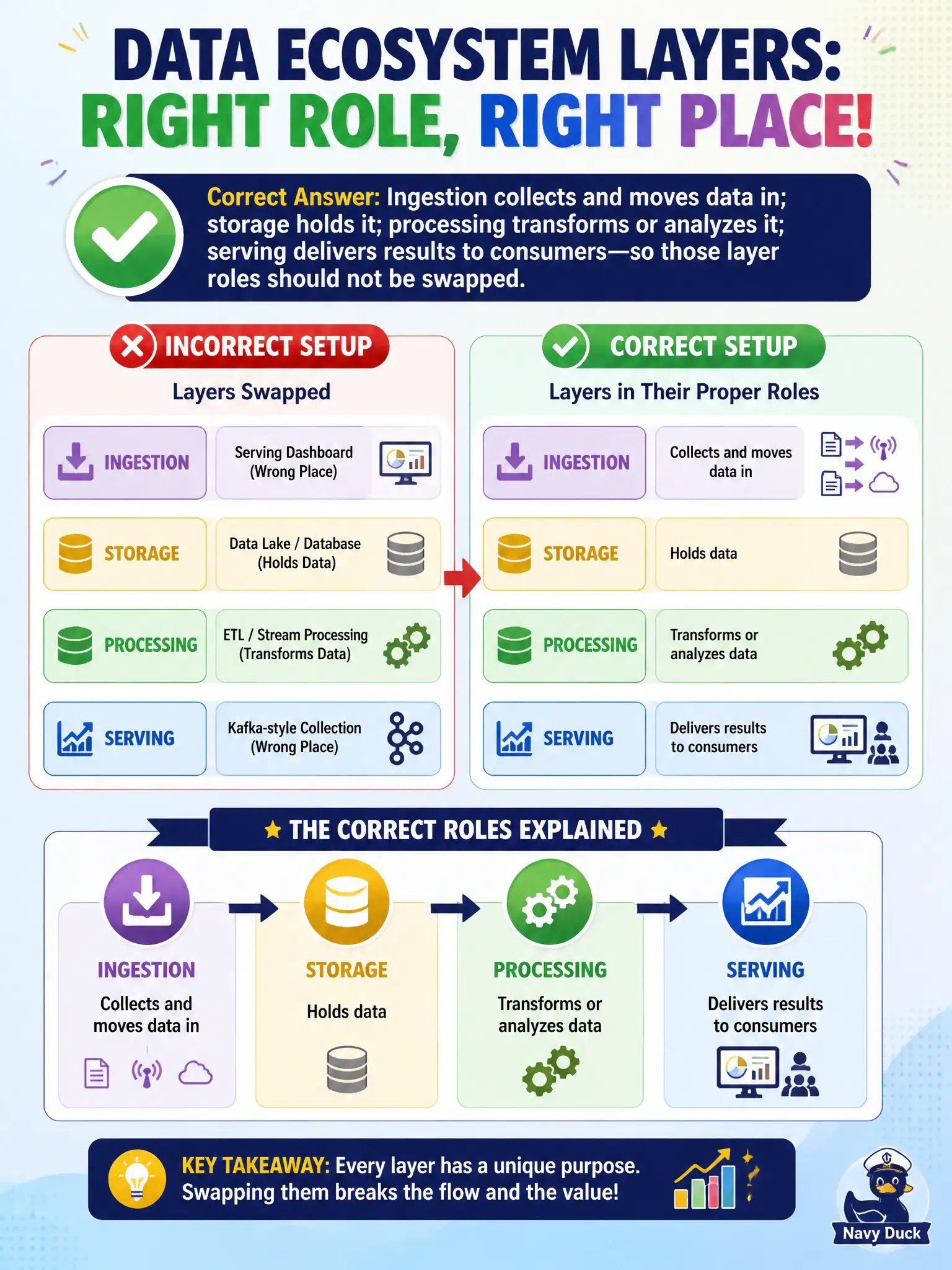
A mid-size city sketches an ecosystem diagram and places a serving dashboard in the ingestion layer while putting Kafka-style collection in the serving layer. Which correction reflects conceptual ecosystem roles?
Select an answer to reveal the explanation.
Short Explanation
Layers are jobs on an assembly line, not stickers you can peel and swap for fun. Ingestion brings data in, storage holds it, processing works it, and serving shows results. Put the dashboard at the end of the line and the collection bus at the start.
Full Explanation
At a conceptual BDPC level, Big Data ecosystems separate concerns: ingestion for collection and movement, storage for persistence, processing for transformation and analysis, and serving for delivering insights to users or applications. Placing a serving dashboard in ingestion while putting collection buses in serving swaps those civic roles and confuses who owns latency, durability, and user delivery.
Treating layer labels as interchangeable fails by concept: roles are distinct. Putting serving dashboards in raw ingestion and collection only in final presentation fails by concept: that is exactly the swap to avoid. Showing only marketing logos and omitting technical layers fails by concept: ecosystem literacy requires layer roles, not brochure stickers.
Exam caveat: Know ingestion, storage, processing, and serving as distinct roles—do not swap serving with collection or erase layers for logos.
Operational check: Redraw the city's ecosystem diagram with one sentence purpose per layer, move the dashboard to serving and the collection bus to ingestion, and assign an owner per layer before the next architecture review. Document residual risk for civic operators and revisit after the next production change window.