
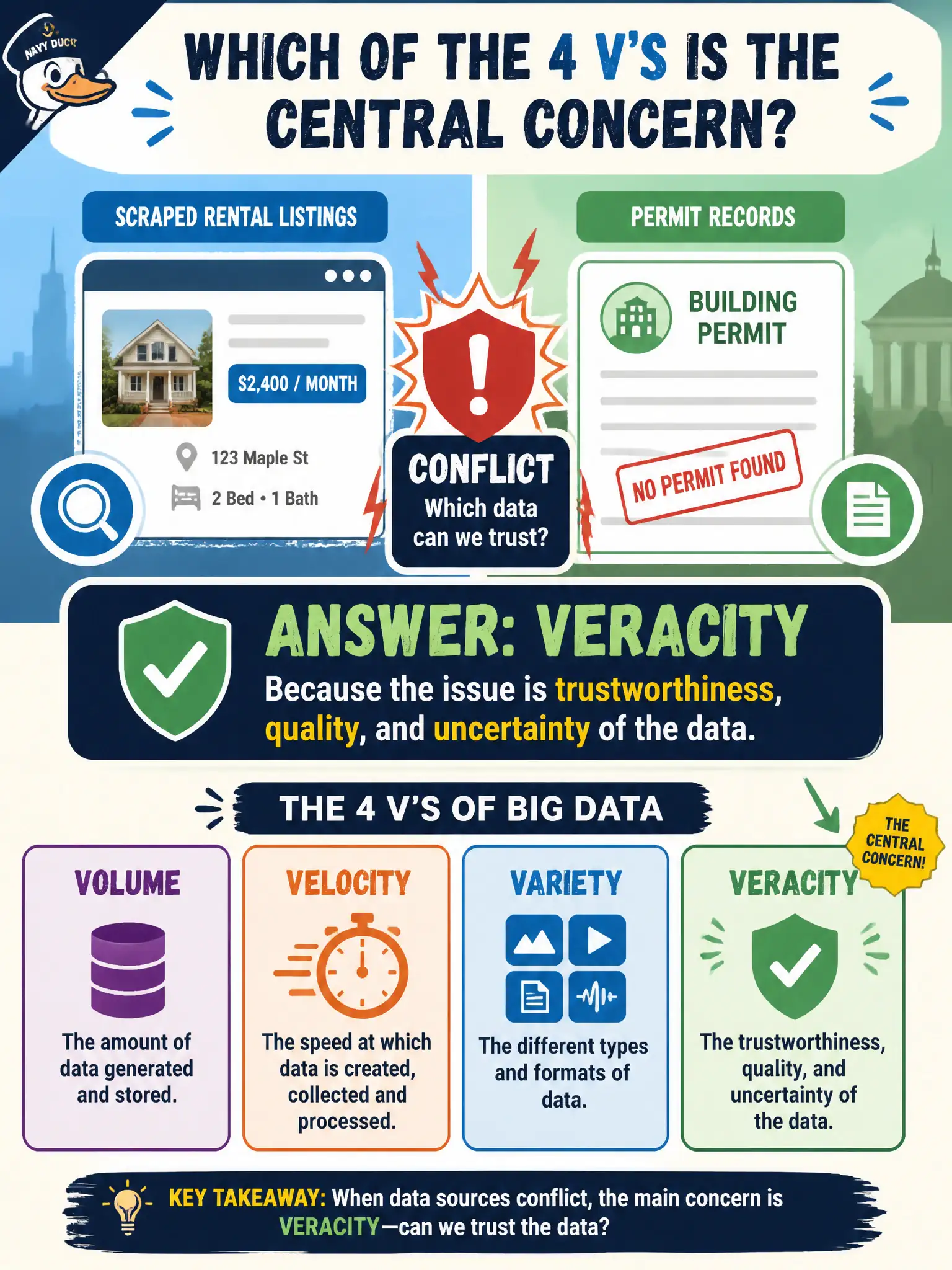
A housing authority distrusts scraped rental listings that conflict with permit records. Which of the 4 V's is the central concern?
Select an answer to reveal the explanation.
Short Explanation
When two sources tell different stories about the same building, the problem is trust—not disk space. Veracity is the V for "can we believe this?" Scraped listings fighting permit records are a quality and uncertainty fight.
Full Explanation
Veracity concerns trustworthiness, quality, and uncertainty of data. When a housing authority distrusts scraped rental listings that conflict with permit records, the central 4 V issue is Veracity: which source to believe, how uncertain the scrape is, and what quality controls precede policy use. Civic housing enforcement and renter protection depend on that judgment.
Calling the issue Volume because disks are nearly full fails by concept: storage fullness is not the conflict described. Calling it Velocity because of sub-millisecond trading latency fails by concept: trading latency is irrelevant to conflicting housing sources. Calling it Variety because of chart color choices fails by concept: visualization cosmetics are not a 4 V.
Exam caveat: Veracity is about quality and trust—especially when civic sources disagree—not about disk space, ultra-low latency, or dashboard styling.
Operational check: Cross-check scraped listings against permit systems of record, score confidence, document conflicts, and withhold automated enforcement actions until Veracity rules are defined. Document residual risk for civic operators and revisit after the next production change window. Confirm owners, SLAs, and rollback criteria in the runbook.