
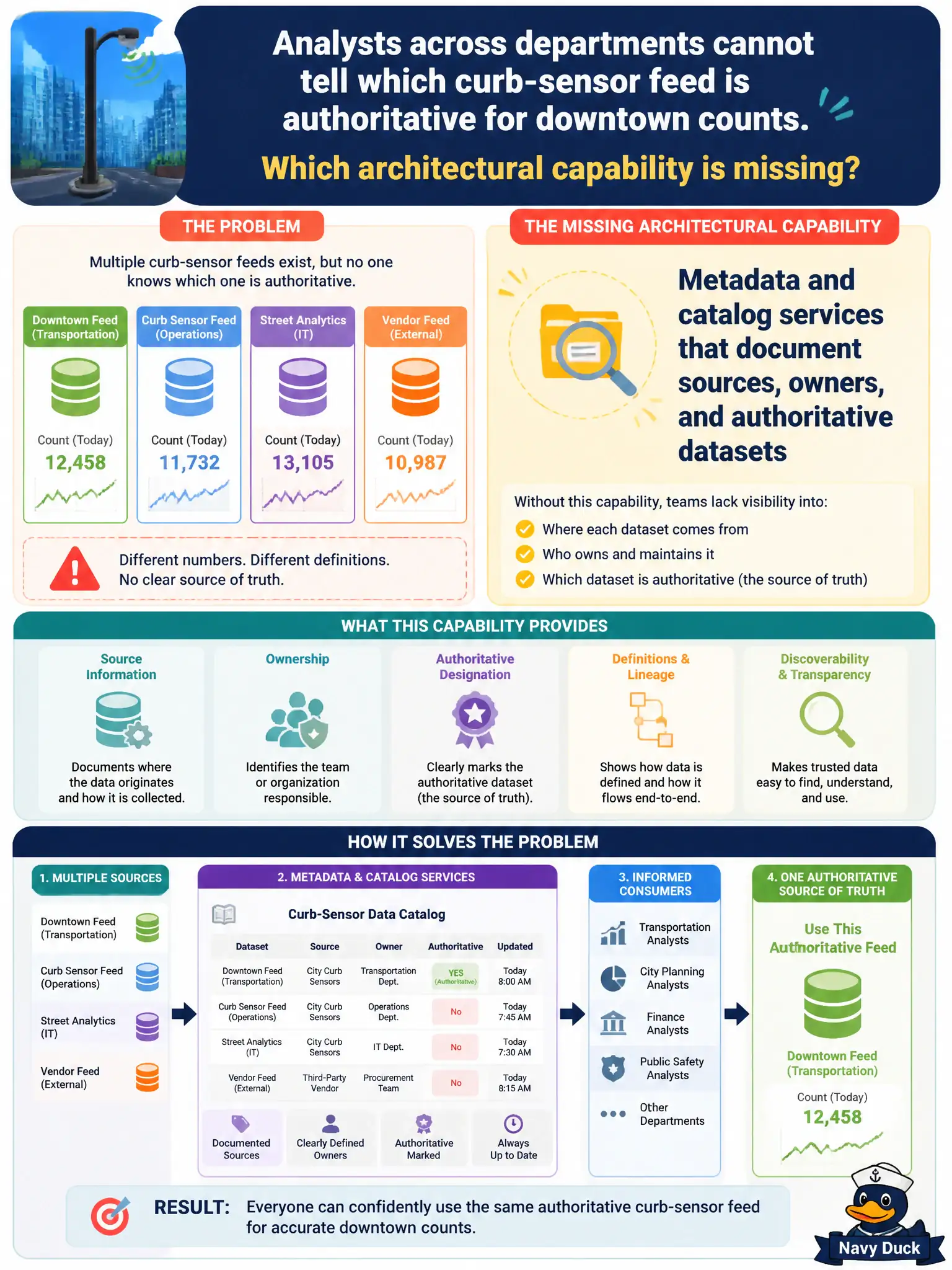
Analysts across departments cannot tell which curb-sensor feed is authoritative for downtown counts. Which architectural capability is missing?
Select an answer to reveal the explanation.
Short Explanation
If nobody can find the official sensor feed, the platform is a junk drawer. Catalogs and metadata turn piles of files into something people can trust and reuse.
Full Explanation
When analysts across departments cannot identify the authoritative downtown curb-sensor feed, the missing architectural capability is metadata and catalog services that document sources, owners, freshness, schemas, and which dataset is the official system of analytical record. Without a catalog, a municipal platform becomes an untrusted junk drawer, duplicate near-official feeds proliferate, and council metrics become contested. Faster Wi-Fi in the city hall cafeteria improves laptop connectivity but does nothing to declare data authority or lineage. A larger plotter for wall-sized PDF maps only addresses presentation aesthetics, not ownership, stewardship, or trust in the underlying feed. Deleting all historical feeds so only today’s file remains destroys auditability for after-action reviews and still fails to name which source is authoritative. Exam caveat: catalogs and metadata are first-class Big Data architecture components alongside storage and compute; treating them as optional wiki pages is a common exam miss. Operational check: register the downtown curb-sensor dataset with owner, SLA, schema, and retention in the city data catalog; deprecate unofficial copies; require analysts to cite the catalog entry in mobility reports before figures reach council packets; and re-verify catalog links after each sensor vendor change.