
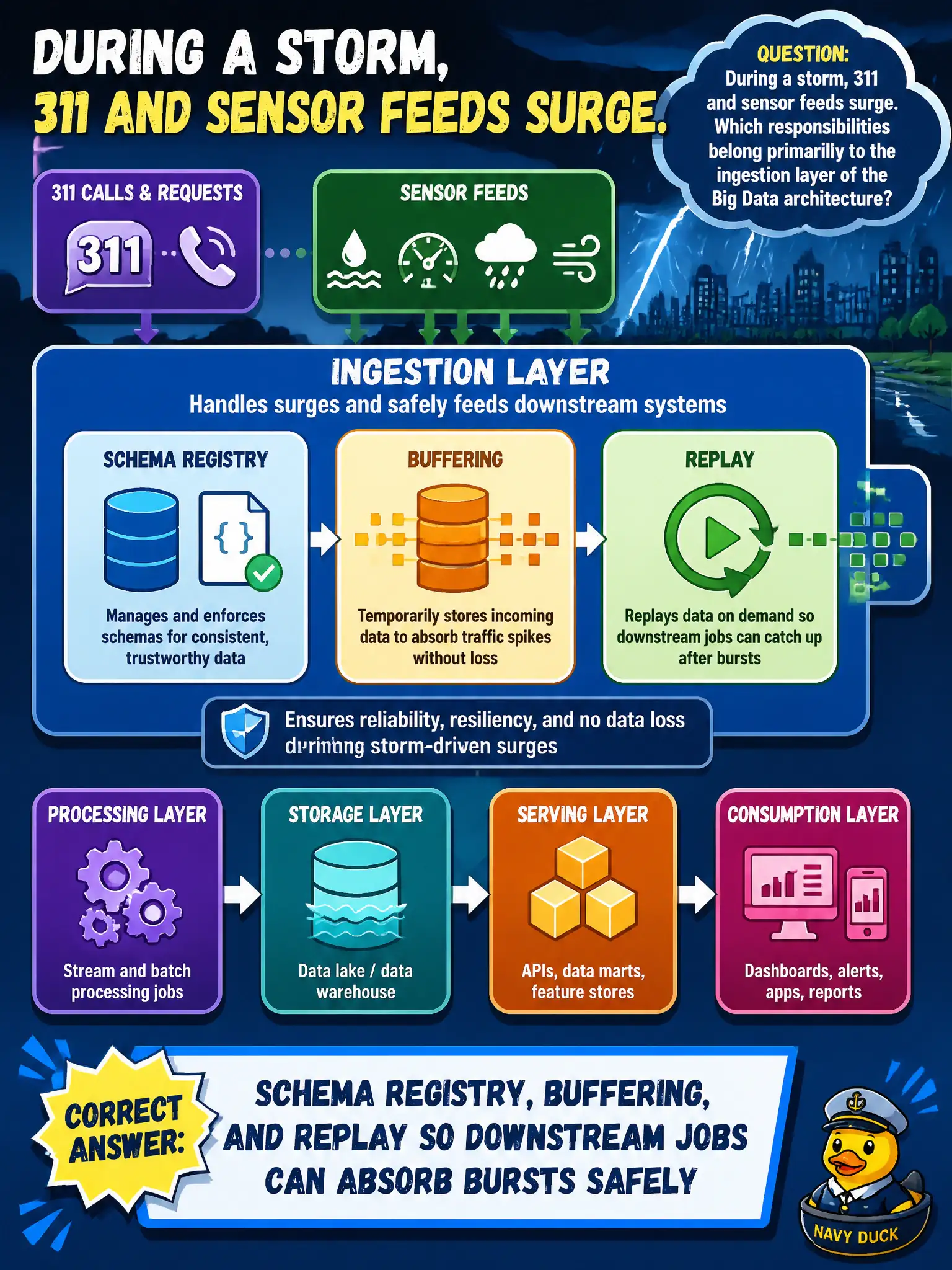
During a storm, 311 and sensor feeds surge. Which responsibilities belong primarily to the ingestion layer of the Big Data architecture?
Select an answer to reveal the explanation.
Short Explanation
When sources flood the gates, ingestion is the shock absorber. Schemas, buffers, and replay keep analytics jobs from getting trampled at the door.
Full Explanation
During a storm surge of 311 and sensor feeds, the ingestion layer’s primary responsibilities are absorbing and organizing arrival—schema registry or contracts, buffering and back-pressure, and replay—so downstream processing and serving can catch up safely without dropping civic signals. Ingestion is the municipal shock absorber between chaotic source rates and analytics jobs that must remain correct. Rendering final council dashboards and PDF packets belongs to serving or presentation, not ingest. Training citizen-facing chatbots on historical open-data narratives is an application or ML workload downstream of curated data. Rewriting the city’s accounting chart of accounts is a finance master-data change, unrelated to storm-time ingest duties. Exam caveat: do not conflate ingestion with serving or with business-process redesign; exam scenarios stress buffering, schema validation, and replay under burst conditions. Operational check: during a storm drill, confirm topics or queues buffer, the schema registry rejects incompatible payloads, replay rebuilds a failed hour of 311 without re-polling citizens, and EOC dashboards remain a separate serving concern with documented upstream dependencies.