
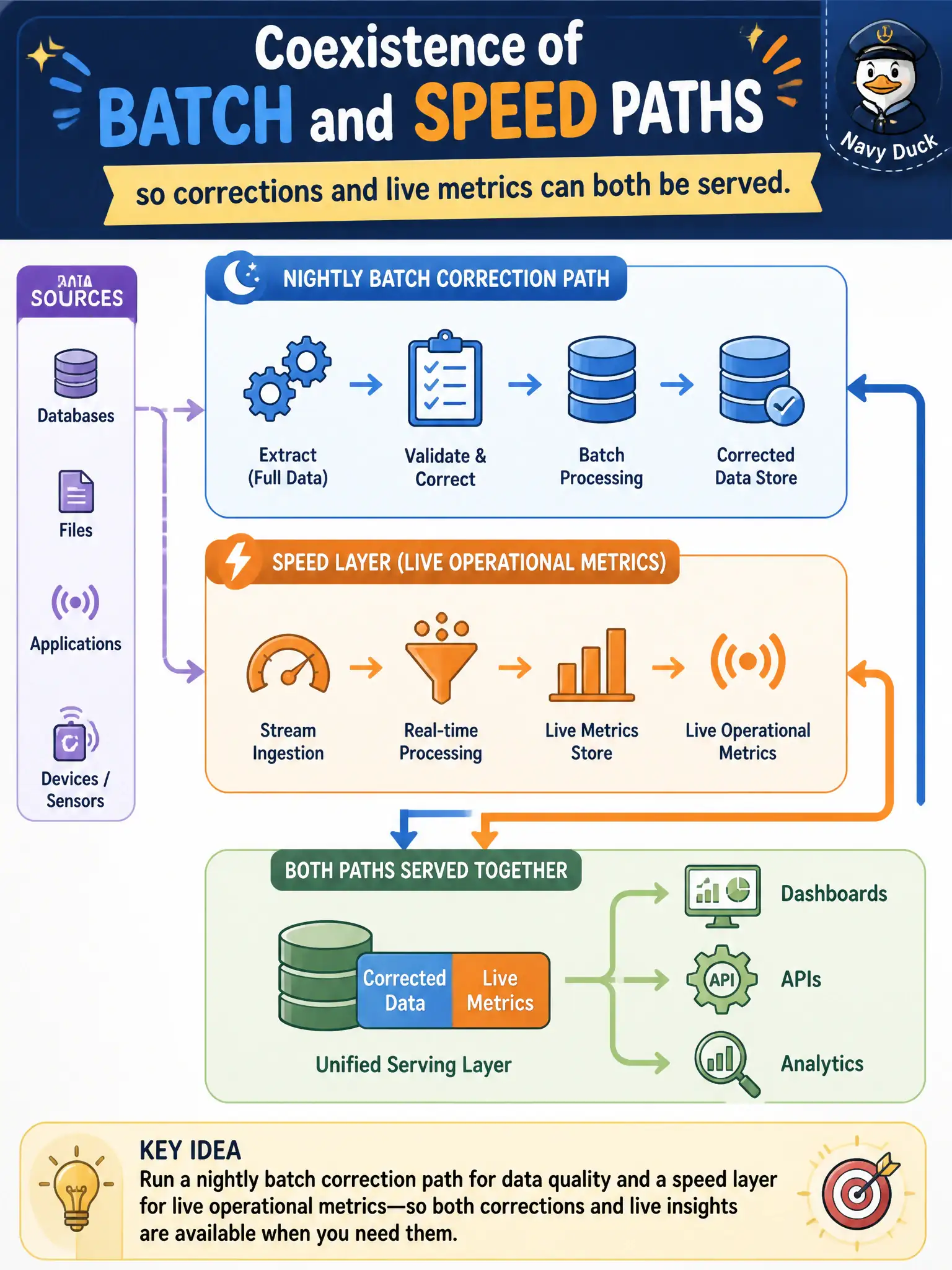
Architects describe a nightly batch correction path alongside a speed layer that feeds live operational metrics. What architectural idea are they applying?
Select an answer to reveal the explanation.
Short Explanation
Nightly cleanup and live gauges can share the stage. Keep the batch path for hard corrections and the speed path for right-now metrics — do not fire one because the other exists.
Full Explanation
Lambda-style architectural awareness (without jargon fetish) means batch and speed paths coexist: batch recomputes authoritative views while speed serves low-latency metrics. Civic ops often need both correction quality and live visibility. Serving layers then merge or present views appropriate to each consumer.
Eliminating all batch jobs because live metrics make history irrelevant fails by concept: batch corrections still matter. Eliminating the speed layer because nightly batches satisfy every operational need fails by concept: many ops need live metrics. Replacing both paths with manual whiteboard tallies each shift fails by concept: that discards scalable architecture.
Exam caveat: Coexistence of batch and speed paths serves corrections and live metrics—do not unilaterally remove either path or revert to whiteboard-only tallies.
Operational check: Keep a nightly correction batch and a speed feed for live metrics, document how serving reconciles them, and test a known bad event through both paths. Document residual risk for civic operators and revisit after the next production change window. Confirm owners, SLAs, and rollback criteria in the runbook before go-live. Record the decision in the architecture decision log for auditors.