
Finance accepts T+1 batch closes, while traffic operations needs minute-level metric refresh. How should architecture reflect both needs?
Select an answer to reveal the explanation.
Short Explanation
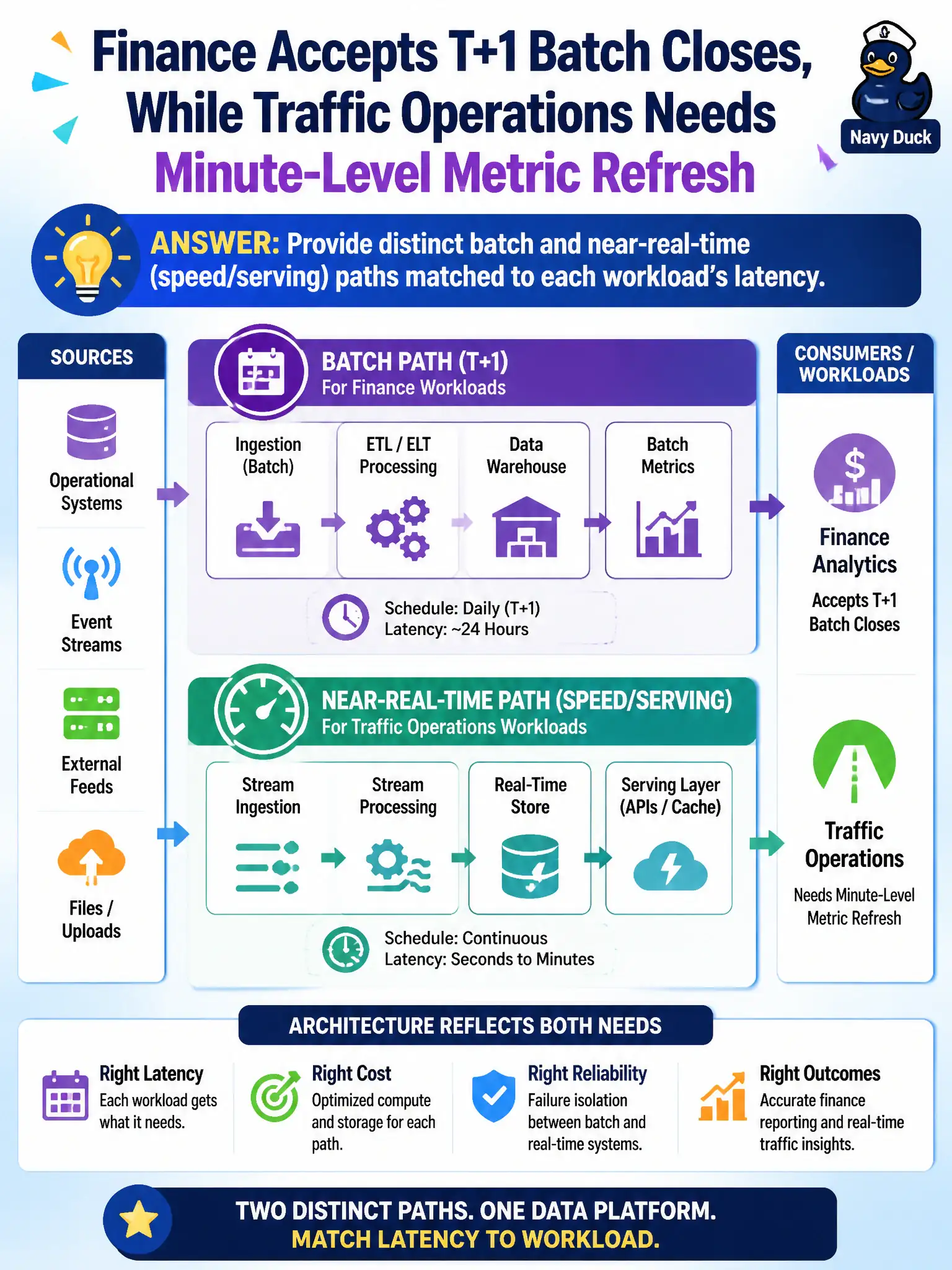
Payroll can wait overnight; a jammed arterial cannot. Architecture should keep a batch path for finance and a faster path for traffic instead of bullying both into one SLA. Different clocks, different lanes.
Full Explanation
Big Data architectures commonly separate batch processing from speed or serving layers that refresh near real time. Finance T+1 workloads and traffic operations minutes-level metrics exemplify why one latency class cannot serve every stakeholder. Dual paths with clear SLAs are the architectural answer for civic cost control and public safety awareness.
Forcing traffic ops onto monthly batches to share one SLA with finance fails by concept: life-adjacent ops need fresher metrics. Forcing finance onto sub-second streams when daily close suffices wastes cost. Storing nothing until both teams agree on one forever refresh rate fails by concept: paralysis is not architecture.
Exam caveat: Provide distinct batch and near-real-time paths matched to each workload’s latency—avoid single-SLA absolutism and storage freezes.
Operational check: Publish separate SLAs for finance close and traffic metrics, implement batch and speed paths, and review cost vs freshness quarterly with both owners. Document residual risk for civic operators and revisit after the next production change window. Confirm owners, SLAs, and rollback criteria in the runbook before go-live. Record the decision in the architecture decision log for auditors.