
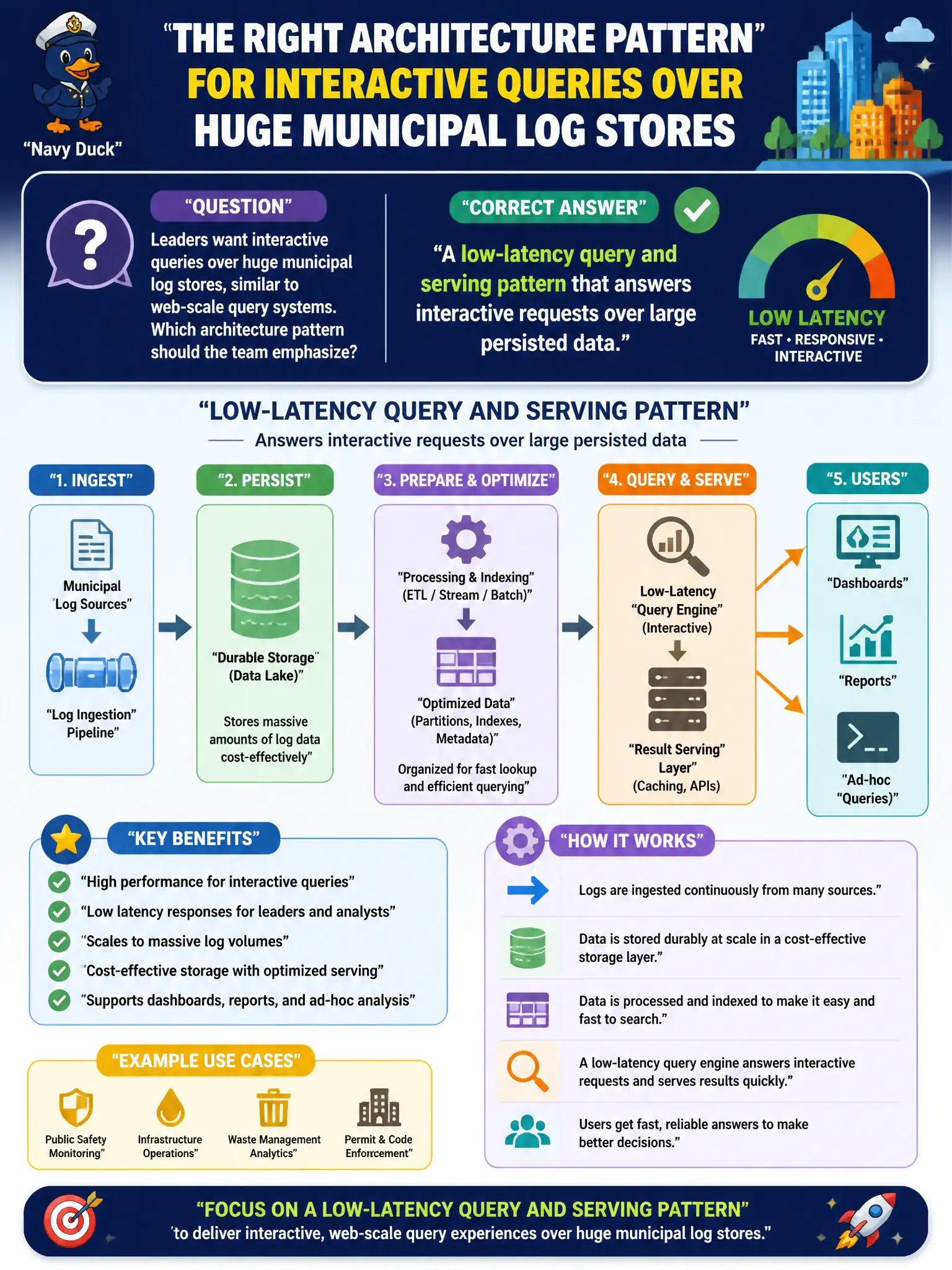
Leaders want interactive queries over huge municipal log stores, similar to web-scale query systems. Which architecture pattern should the team emphasize?
Select an answer to reveal the explanation.
Short Explanation
Huge logs with snappy answers need a serving pattern built for questions, not a paper newsletter. Think indexed, cached, query-ready stores — not empty folders or offline tape treasure hunts.
Full Explanation
Reference architectures for large-scale interactive query separate durable storage from low-latency serving paths. Municipal log analytics borrows that pattern: persist at scale, then serve interactive requests with appropriate indexes and engines. Pattern awareness matters more than copying any single vendor’s private stack when staff explore huge civic log stores.
Nightly printed digests as the only exploration path fails by concept: that blocks interactive query. Deleting historical logs so every query hits empty storage fails by concept: interactive value needs persisted history. Forbidding indexes and caches so every click rescans raw tape offline fails by concept: that defeats low-latency serving.
Exam caveat: Emphasize low-latency query/serving over large persisted data—not print-only digests, history wipes, or mandatory full offline rescans.
Operational check: Keep durable log storage, add a serving/query path with indexes or an interactive engine, and time a sample analyst query against the SLA before calling the pattern complete. Document residual risk for civic operators and revisit after the next production change window. Confirm owners, SLAs, and rollback criteria in the runbook before go-live.