
At 10:30 a.m., a newly transferred carpenter joins a formwork crew that already completed its morning safety huddle and signed the Job Hazard Analysis (JHA) at 7:00 a.m. What should the carpentry foreman do before assigning the carpenter to strip wall forms?
Select an answer to reveal the explanation.
Short Explanation
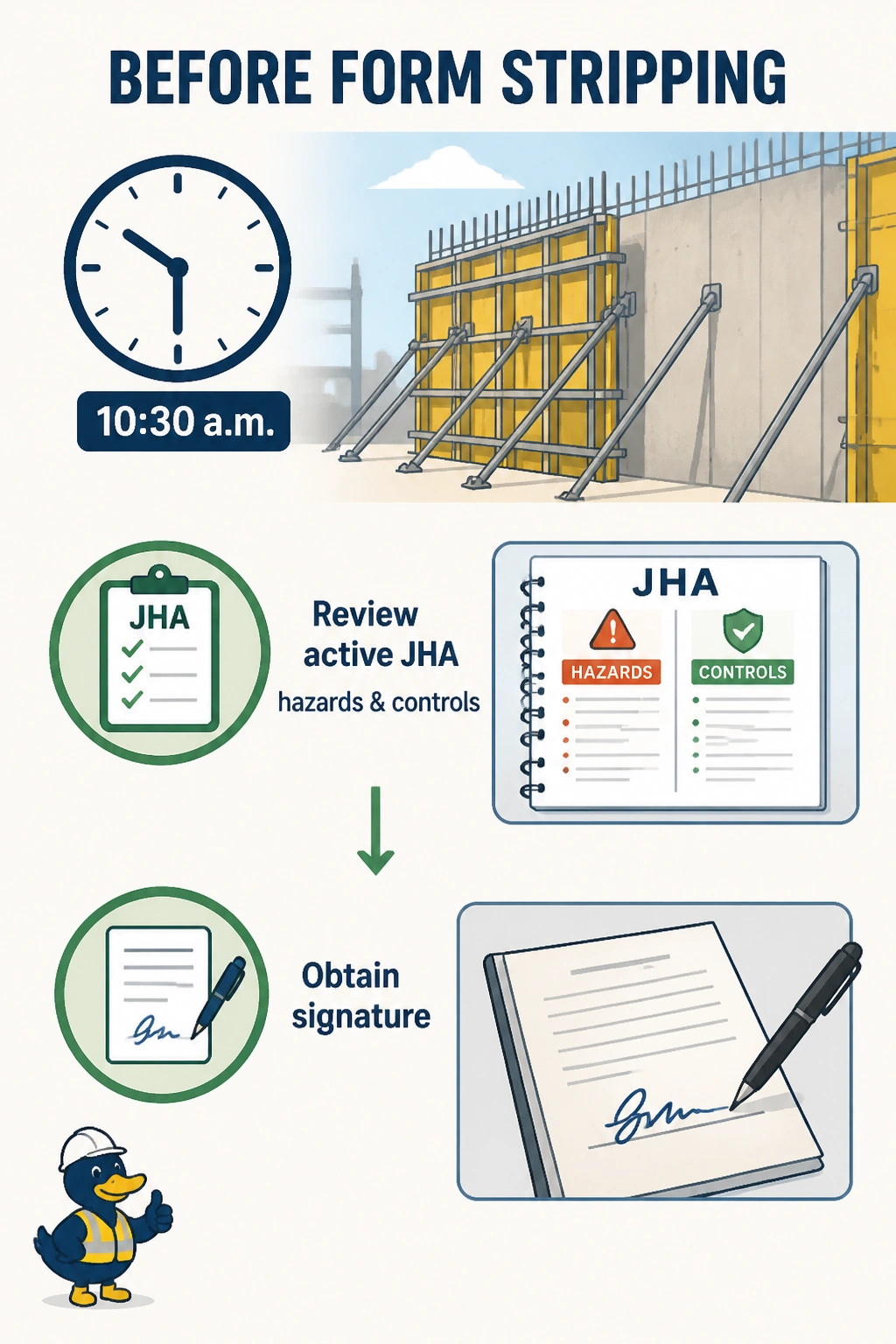
When a new teammate joins mid-shift, you want them to feel supported and ready before starting the task. Review the active JHA hazards and controls with them now and get their signature so they understand the plan before stripping forms.
Full Explanation
A Job Hazard Analysis protects workers only when everyone performing the task understands the work sequence, site-specific hazards, and required controls before exposure begins. Since the carpenter arrived mid-morning, the foreman should review the active JHA hazards and controls with them now and obtain a signature. This helps the carpenter understand the fall, struck-by, and pinch-point controls for stripping wall forms and confirms their participation. Having the carpenter shadow a coworker and sign the JHA at the end of the shift leaves them exposed to hazards they have not been briefed on and makes the JHA after-the-fact paperwork. Letting them start because they attended a different crew’s morning huddle overlooks that the other JHA may cover different tasks, tools, and work-zone conditions. Posting the morning JHA inside the gang box for a lunch-break read still permits hours of unbriefed work and gives the carpenter no timely chance to ask questions about controls. Caveat: if the task or site conditions changed since 7:00 a.m., update the JHA for the whole crew as well. For a practical check, keep the active JHA at the work area and brief late arrivals or mid-shift transfers before they pick up tools.
Prefer to study offline? Printable PDF study book + test engine ($7.50, unofficial). These questions stay free here.