
During interior drywall sanding where air sampling confirms dust levels are well below exposure limits, a taper asks to wear a personal tight-fitting elastomeric half-mask respirator brought from home. What must the foreman require before approving its use?
Select an answer to reveal the explanation.
Short Explanation
Voluntary dust masks only need Appendix D, but a rubber elastomeric half-mask is a whole different animal. Because a tight-fitting elastomeric mask adds breathing resistance and can trap skin irritants, you must still clear the worker medically and enforce cleaning rules under 29 CFR 1910.134. Don't fall for the trap that 'voluntary' means zero paperwork.
Full Explanation
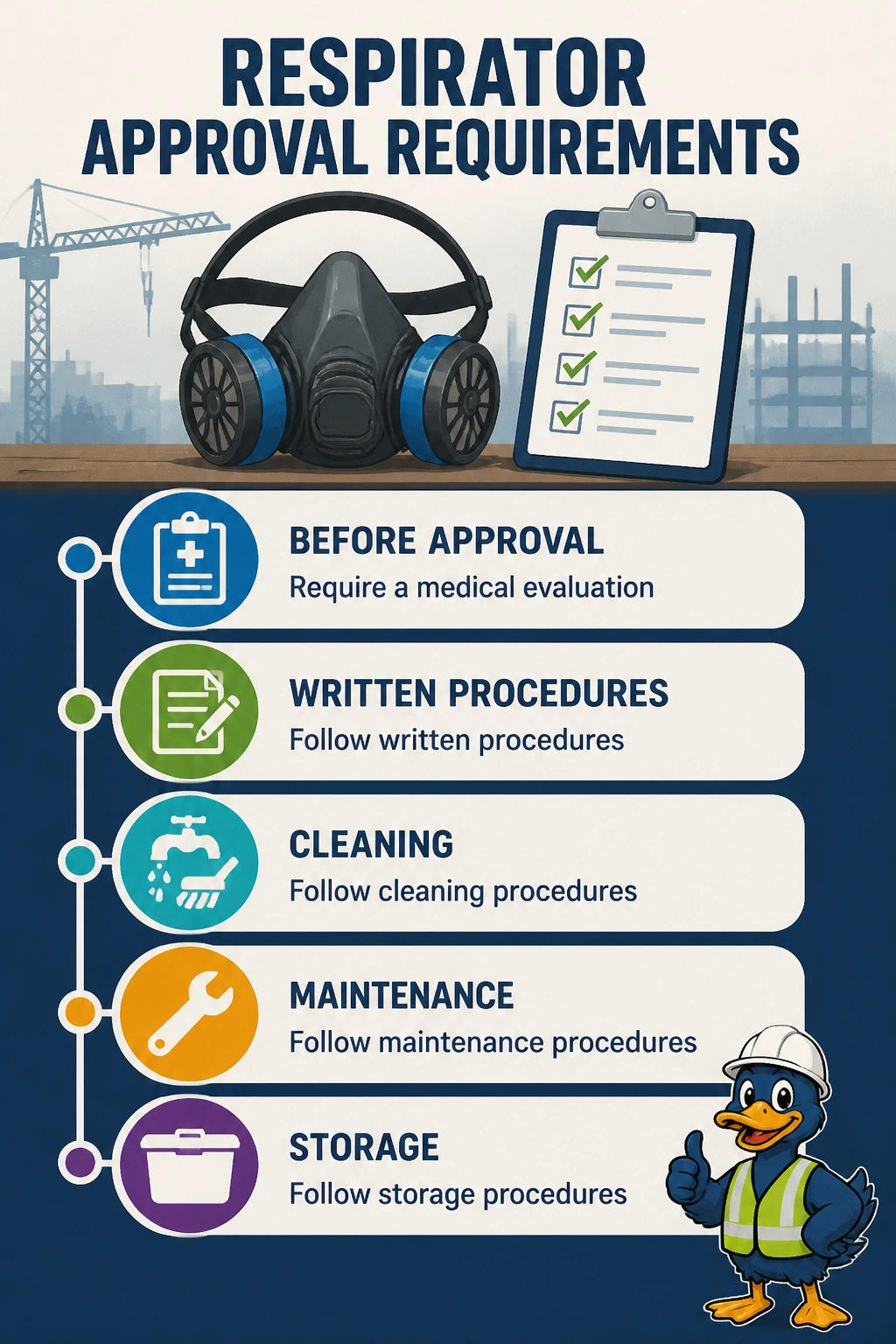
Under 29 CFR 1910.134, even when air levels are below permissible limits, voluntary use of a tight-fitting elastomeric respirator requires the worker to Complete a medical evaluation and follow written cleaning, maintenance, and storage procedures. Elastomeric facepieces create breathing resistance and can become unsanitary or degraded if not cleaned and stored properly, so OSHA exempts only disposable filtering facepieces (dust masks) from those program elements. Choosing to Provide only OSHA Appendix D information because all voluntary respirator use is exempt from medical checks applies to filtering facepieces, not elastomeric respirators. Deciding to Allow immediate use without documentation because the worker purchased the elastomeric respirator personally ignores the employer's duty to ensure any respirator used on site does not itself create a health hazard. Trying to Require only a daily user seal check because elastomeric respirators never require medical clearance leaves a worker with potential cardiopulmonary risk unscreened before wearing a tight-fitting seal. Caveat: voluntary elastomeric use does not require formal fit testing under OSHA's voluntary-use rule, though if exposure later rises above limits, full program compliance including fit testing becomes mandatory. Operational check: verify the worker's written medical clearance on file and inspect the respirator's valves, straps, and sealed storage container before shift start.
Prefer to study offline? Printable PDF study book + test engine ($7.50, unofficial). These questions stay free here.