
During a commercial steel erection project, a worker suffers a fatal crush injury when a stacked bundle of steel joists shifts during unloading. Within what timeframe must the employer report the fatality to OSHA under 29 CFR 1904.39?
Select an answer to reveal the explanation.
Short Explanation
In OSHA reporting, a fatality triggers the fastest clock—treat it like an urgent dispatch rather than routine paperwork you can file later. The trap is confusing the 8-hour fatality deadline with the 24-hour window used for hospitalizations.
Full Explanation
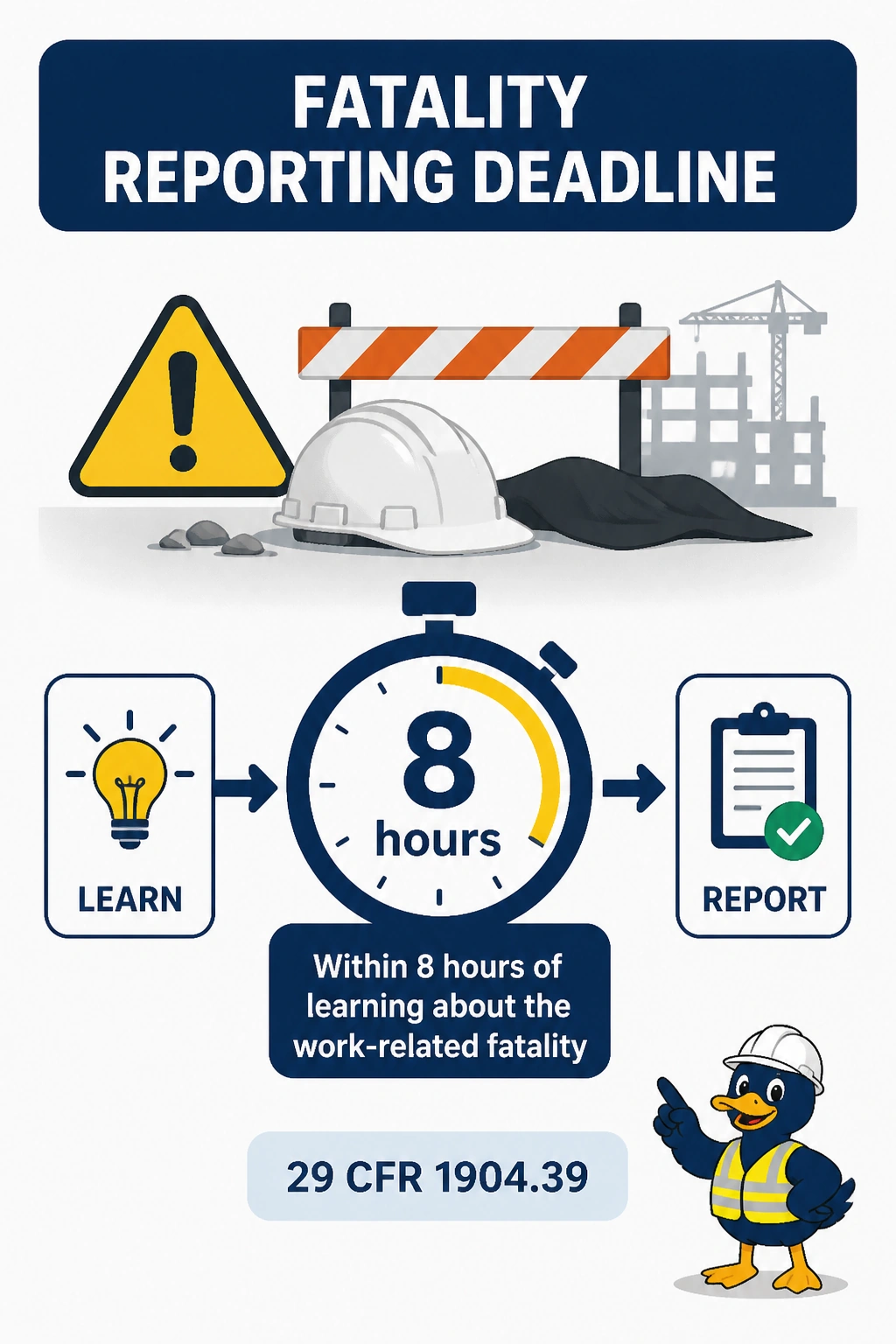
Under 29 CFR 1904.39, employers must report a work-related fatality Within 8 hours of learning about the work-related fatality by calling OSHA or submitting the online report. That rapid notification allows OSHA to initiate an investigation promptly while physical evidence and witness accounts are fresh. Waiting to report Within 24 hours of learning about the incident, matching the deadline for inpatient hospitalizations misses the stricter fatality deadline, because the 24-hour rule applies only to inpatient hospitalizations, amputations, and losses of an eye. Delaying notification Within 7 calendar days so the site team can finish its internal root-cause investigation first violates federal reporting timelines; internal investigations run alongside, not ahead of, OSHA notification. Waiting to disclose the event By February 1 of the following year on the posted OSHA Form 300A annual summary confuses annual summary posting with mandatory severe-incident reporting. As a caveat, a fatality occurring within 30 days of a work-related incident must still be reported within 8 hours of learning of the death. Verify that every site supervisor keeps OSHA's reporting phone number and online portal instructions posted in the job trailer.
Prefer to study offline? Printable PDF study book + test engine ($7.50, unofficial). These questions stay free here.