
A site supervisor reviews the past three weekly safety inspection logs on a commercial buildout and notices the same missing stairwell midrails and blocked electrical panels appear repeatedly with no follow-up notes. How should the supervisor fix the corrective action process?
Select an answer to reveal the explanation.
Short Explanation
An inspection list without owners and due dates is like a grocery list nobody takes to the store—you end up with the same empty fridge next week. The trap is thinking documentation alone fixes hazards without accountability and follow-up.
Full Explanation
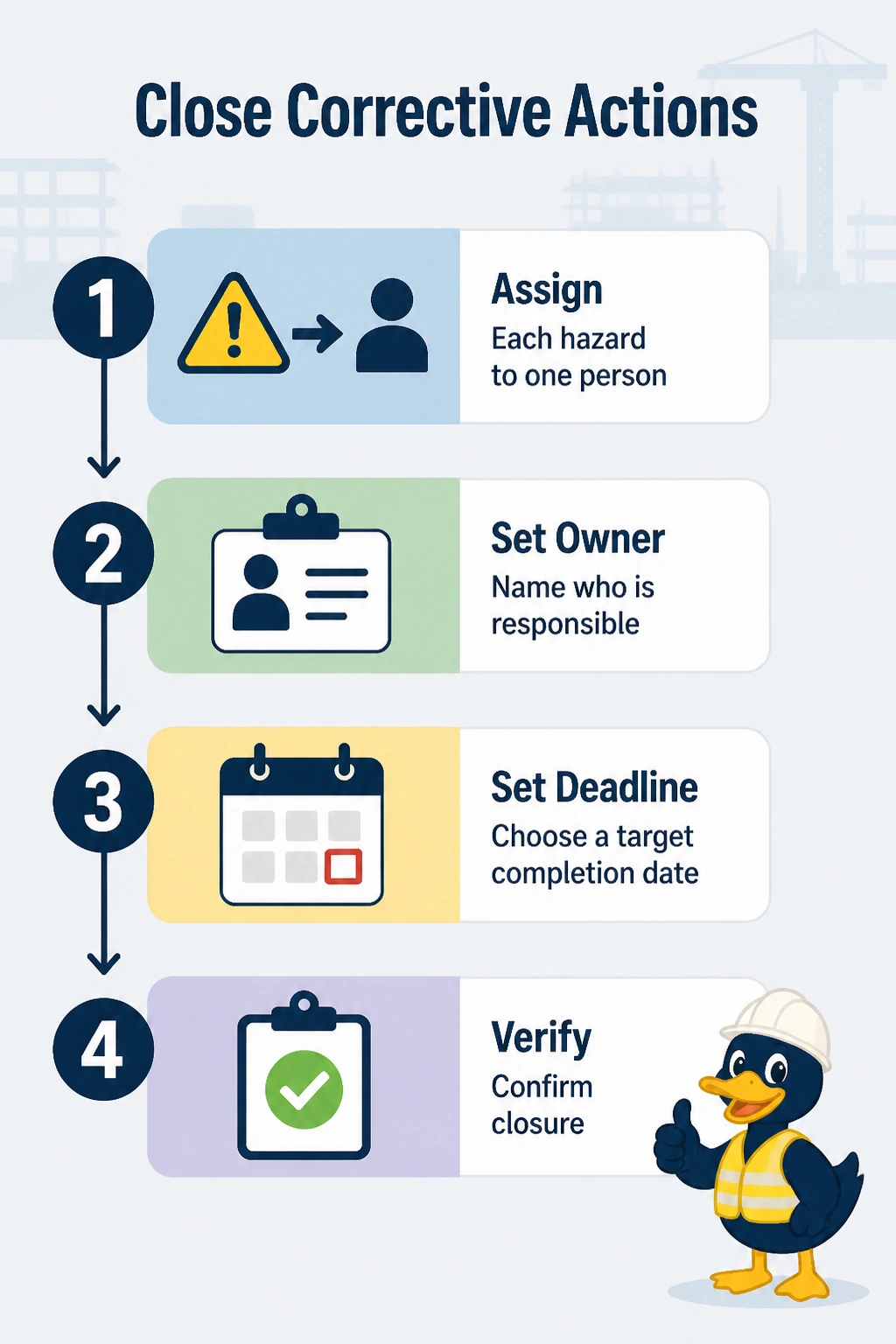
To make a site safety audit effective, the supervisor must Assign each hazard to a specific responsible person with a target completion date and verify closure. Naming an owner creates clear accountability, setting a deadline drives timely correction, and physical verification confirms the hazard is actually eliminated rather than merely checked off on paper. Choosing to Post the unedited hazard list in the break trailer for crews to read informs workers of problems but leaves no one responsible for fixing them. Deciding to File the inspection checklist in the project binder until next month turns an active safety program into passive paperwork while exposed crews remain at risk. Electing to Wait until the monthly corporate safety audit to see which items remain allows known hazards to persist for weeks instead of correcting them promptly. As a caveat, imminent-danger items require immediate work stoppage and interim controls before anyone returns to the area. At the next daily huddle, review each open action item with the assigned trade lead and walk the floor to confirm completion before closing it on the tracker.
Prefer to study offline? Printable PDF study book + test engine ($7.50, unofficial). These questions stay free here.