
A night-shift concrete crew uses chemical curing compounds, and the supervisor keeps the only Safety Data Sheet (SDS) binder locked inside the day-shift project manager's office trailer. What must the supervisor change?
Select an answer to reveal the explanation.
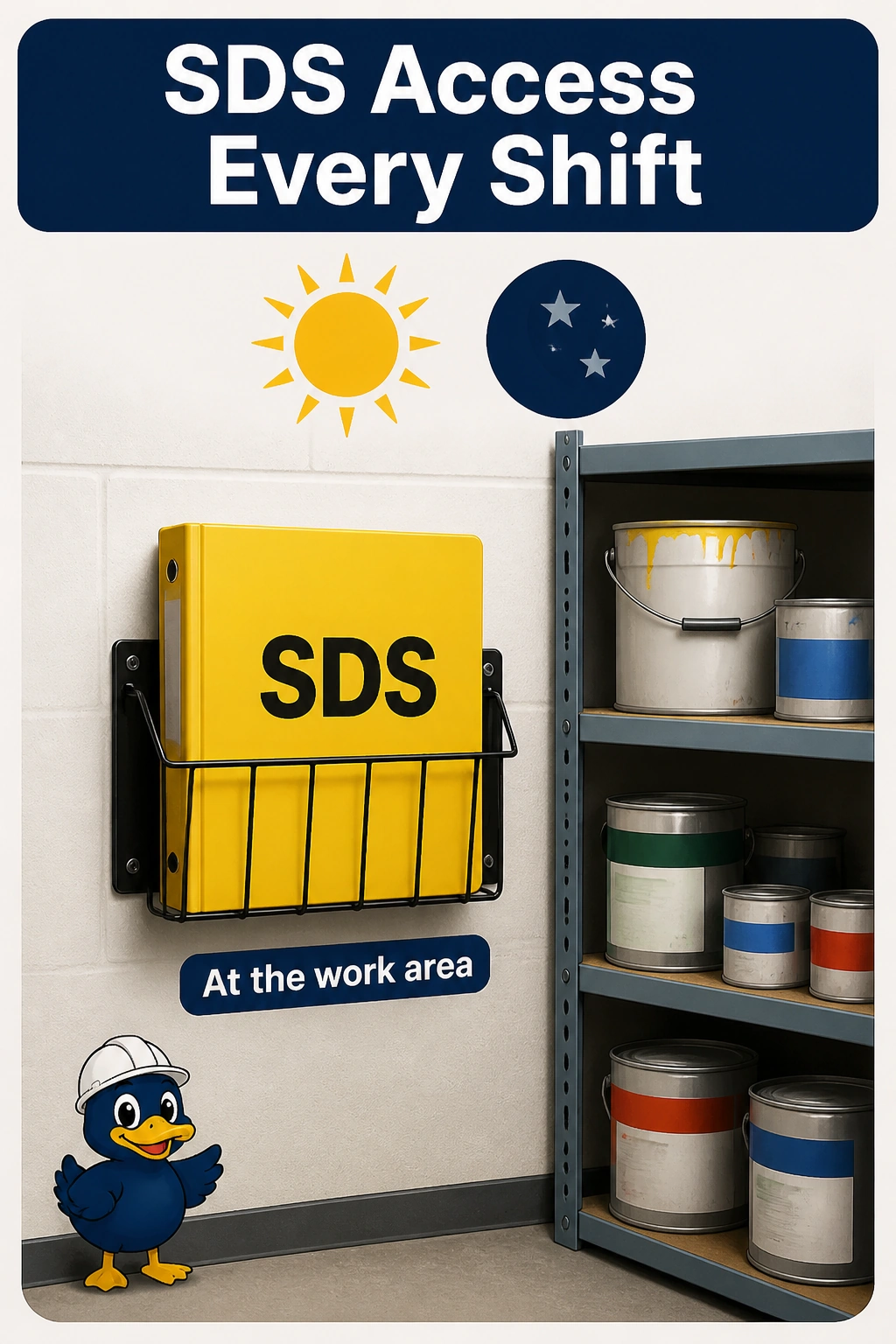
Short Explanation
An SDS locked in a dark trailer is as useless as a fire extinguisher locked in a trunk when an exposure happens at midnight. The trap is thinking phone calls or a chemical list count as access. Make sure your night crew can reach every SDS right away!
Full Explanation
Under the Hazard Communication Standard (29 CFR 1910.1200(g)(8)), employers must maintain copies of the required Safety Data Sheets in the workplace and ensure they are readily accessible during each work shift to employees when they are in their work areas. Providing unobstructed SDS access at the work area for every shift ensures workers and first responders can immediately check first-aid measures, PPE requirements, and spill procedures without delay. Telling night-shift workers to call the day supervisor if a spill occurs introduces dangerous delays if the call goes unanswered and fails the regulatory requirement for immediate workplace access. Posting a summary list of chemical brand names on the breakroom door satisfies inventory awareness, not the detailed hazard and emergency data contained in full SDSs. Keeping the binder locked while emailing PDFs only upon written request creates an unacceptable barrier during an urgent exposure or routine pre-task check. As a caveat, if electronic SDS access is used, a reliable backup must exist in case power or internet service fails on site. As an operational check, walk the night-shift work zone and verify every worker can retrieve the curing compound SDS within moments.
Prefer to study offline? Printable PDF study book + test engine ($7.50, unofficial). These questions stay free here.