
A concrete laborer twists a knee carrying formwork, and a clinic physician clears the worker to return the next day with a restriction against climbing ladders or lifting over 10 pounds, so the foreman assigns desk duty. How must the supervisor classify this case?
Select an answer to reveal the explanation.
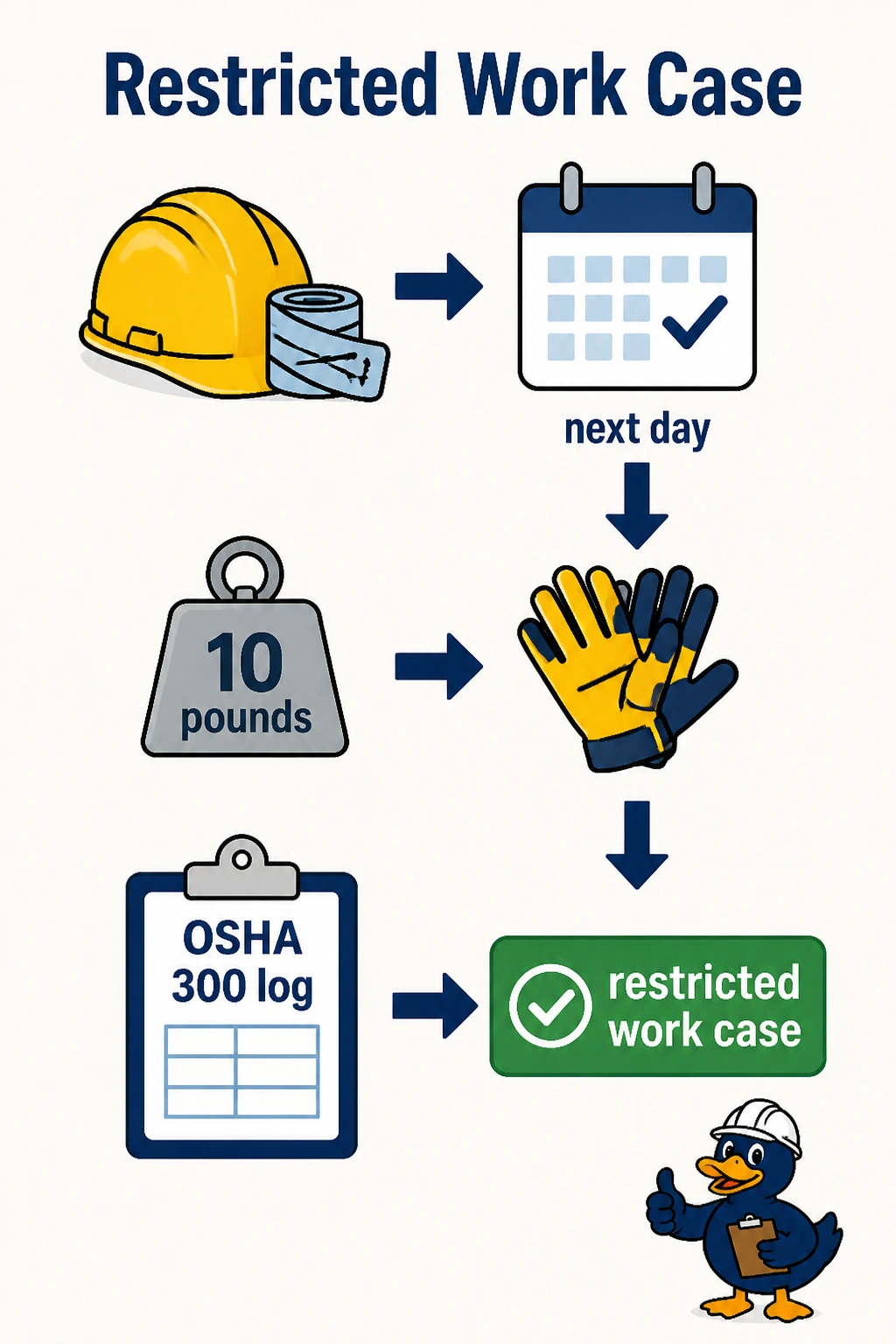
Short Explanation
Putting an injured worker on light duty keeps them on the clock, not off the OSHA log. The trap is thinking no missed days or no prescription means no recordable case. When a doctor limits routine job duties, you have a recordable restricted case!
Full Explanation
Under 29 CFR 1904.7, a work-related injury or illness is OSHA-recordable if a physician or licensed health care professional recommends—or the employer assigns—restricted work or job transfer that keeps the employee from performing one or more routine functions of their job. Record it on the OSHA 300 log as a restricted work case accurately reflects that the laborer cannot climb ladders or lift over 10 pounds as required by their normal concrete duties. Omit it from the OSHA log because the worker stayed on payroll is wrong because OSHA recordability depends on work restriction, days away, or medical treatment, not whether wages continue. Classify it as first aid because no prescription was written fails because restricted work activity is an independent recording criterion even when only conservative care is provided. Delay logging it unless the worker misses three full shifts invents a non-existent waiting threshold; employers must enter recordable cases within seven calendar days of receiving information. As a caveat, count calendar days of restriction starting the day after the injury occurred. As an operational check, review the clinic work-status slip against the laborer's routine job tasks and log the case promptly.
Prefer to study offline? Printable PDF study book + test engine ($7.50, unofficial). These questions stay free here.