
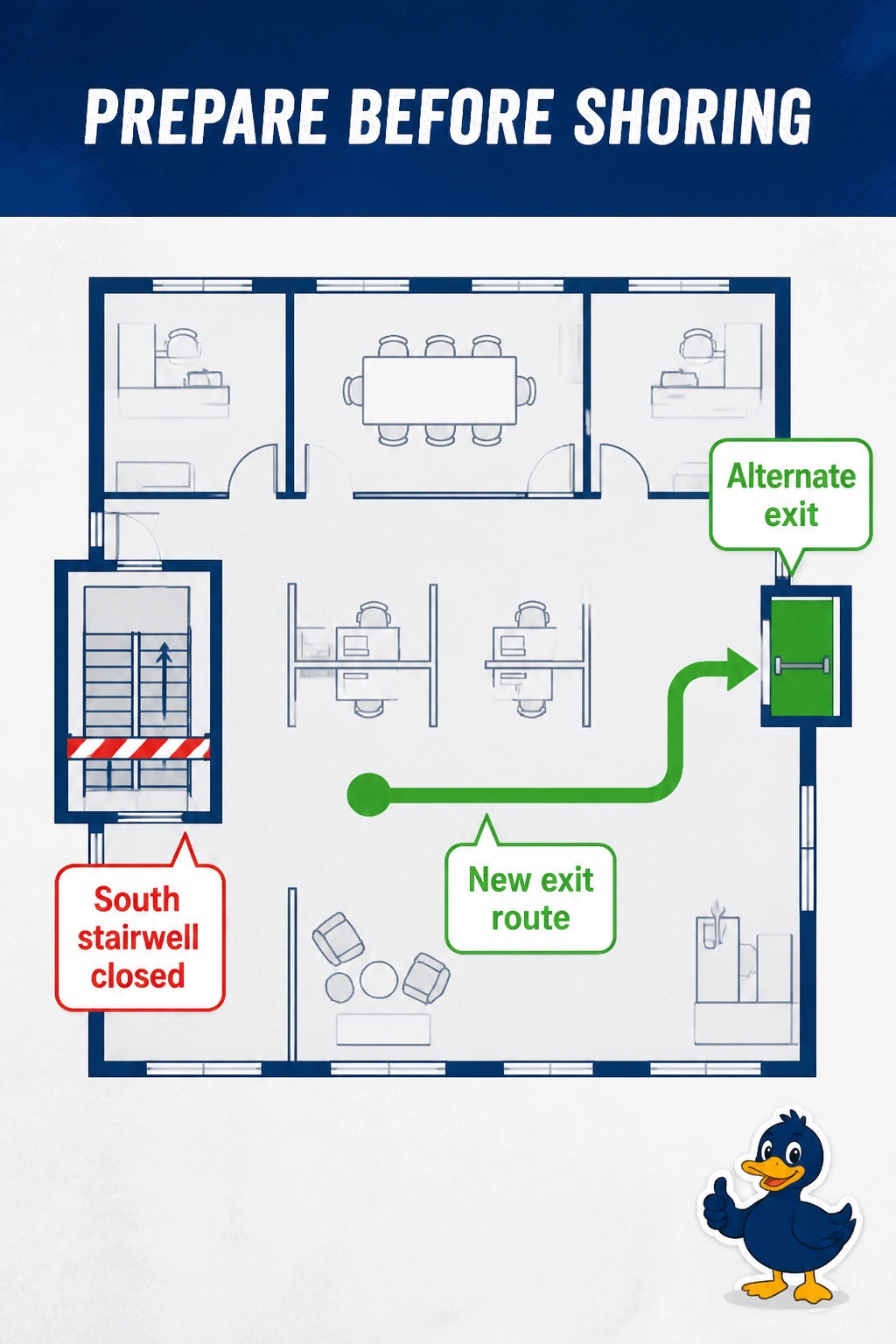
During a multi-story office renovation, concrete shoring installation temporarily closes the south exit stairwell that crews normally use during evacuations. What must the site supervisor do before shoring work blocks the stairs?
Select an answer to reveal the explanation.
Short Explanation
In a real evacuation, crews follow the exit path you drilled into them unless you update the route before blocking it. The trap is locking a stairwell first and planning to tell people later, or pointing them toward an elevator. Reroute the exit signs and brief every trade before the stairs close.
Full Explanation
Cite 1926.34 for keeping the exit route free, unobstructed, and marked. Cite 1926.35 only for briefing employees who are covered by an emergency action plan that another OSHA standard requires. When you Update the emergency exit route signage and brief all crews on the new path, workers know the active, unobstructed route to the assembly area before an alarm sounds. Choosing to Wait until the next monthly safety meeting to mention the closed stairwell leaves workers relying on an outdated evacuation plan during active construction. Choosing to Instruct crews to use the temporary freight elevator as their primary emergency exit is unsafe because elevators can lose power, trap occupants, or draw smoke into the shaft during a fire. Choosing to Lock the south stairwell door from the outside without posting detour signs can trap fleeing workers in a dead-end corridor during low visibility. As a caveat, make sure the remaining exit routes still provide adequate capacity and remain clear of stored materials. For an operational check, walk the revised evacuation route with trade foremen before shoring begins and verify illuminated or high-visibility exit directional signs are posted at every turn.
Prefer to study offline? Printable PDF study book + test engine ($7.50, unofficial). These questions stay free here.