
A flooring subcontractor plans to spray a flammable urethane sealer in a shared hospital wing where electricians and plumbers are working nearby. What must the flooring supervisor do before spraying begins?
Select an answer to reveal the explanation.
Short Explanation
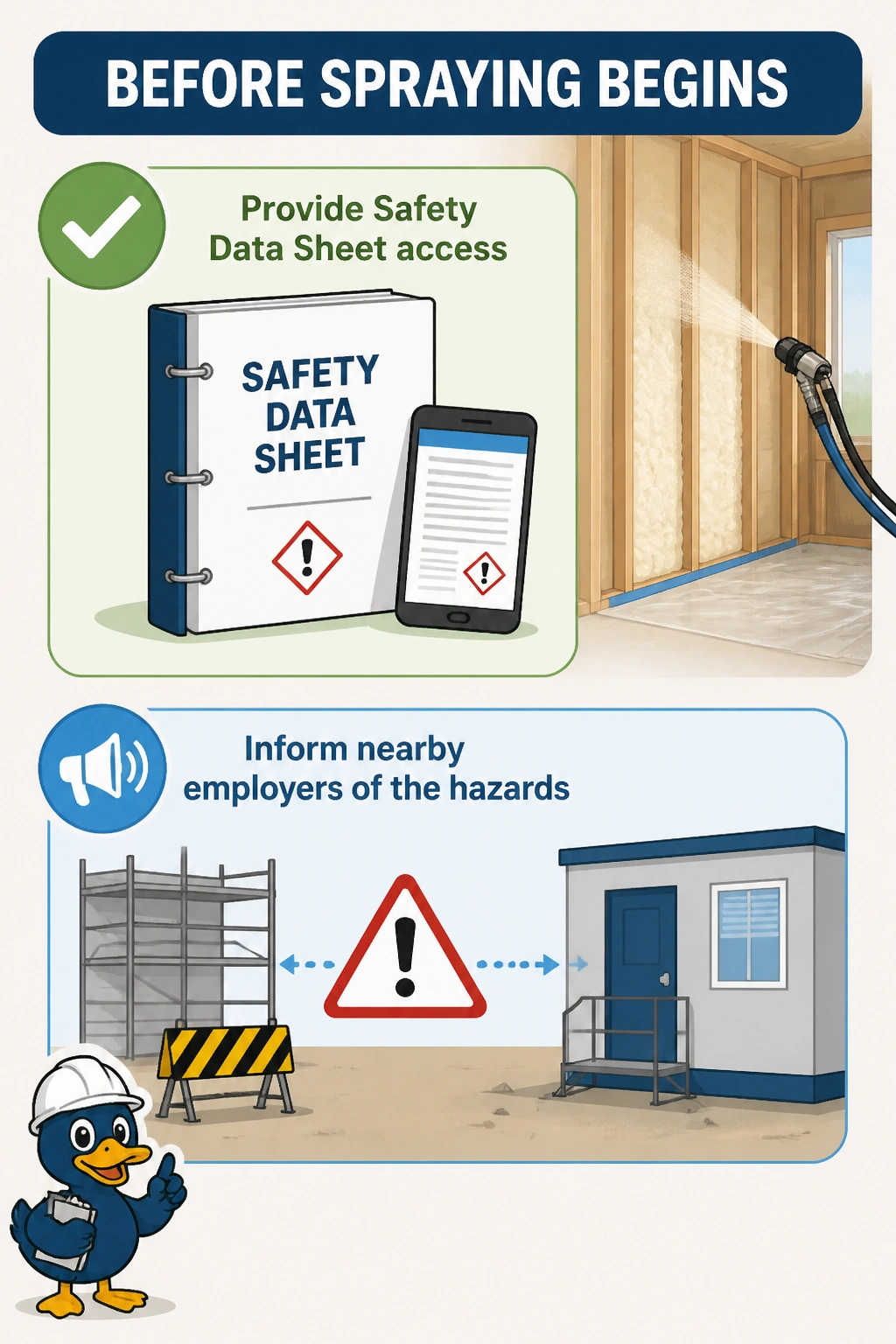
Chemical vapors do not respect subcontractor boundaries, so your neighboring crews need warning before fumes reach their work area. A liability waiver or generic caution sign does not replace hazard communication. Share the Safety Data Sheet and precautions upfront so every trade can protect its workers.
Full Explanation
Under OSHA's Hazard Communication standard for construction (29 CFR 1926.59, incorporating 29 CFR 1910.1200(e)(2)), employers on multi-employer workplaces must coordinate chemical hazard information whenever their work may expose other contractors' employees. Providing Safety Data Sheet access and informing nearby employers of the hazards lets those crews review exposure limits, ignition controls, and required personal protective equipment before spraying starts. Asking other trades to sign a liability waiver acknowledging the chemical odor does not satisfy hazard communication duties or inform workers about specific controls. Posting a generic caution sign at the wing entrance without sharing product details omits the chemical identity, flammability warnings, and protective measures needed on site. Waiting until after the shift ends to file the Safety Data Sheet at the main office withholds critical safety information during active exposure. As a caveat, even if the general contractor maintains a central binder, the exposing employer must still proactively notify affected trades. For an operational check, confirm at the morning coordination huddle that every adjacent crew has access to the product's Safety Data Sheet and knows any ignition or ventilation restrictions.
Prefer to study offline? Printable PDF study book + test engine ($7.50, unofficial). These questions stay free here.