
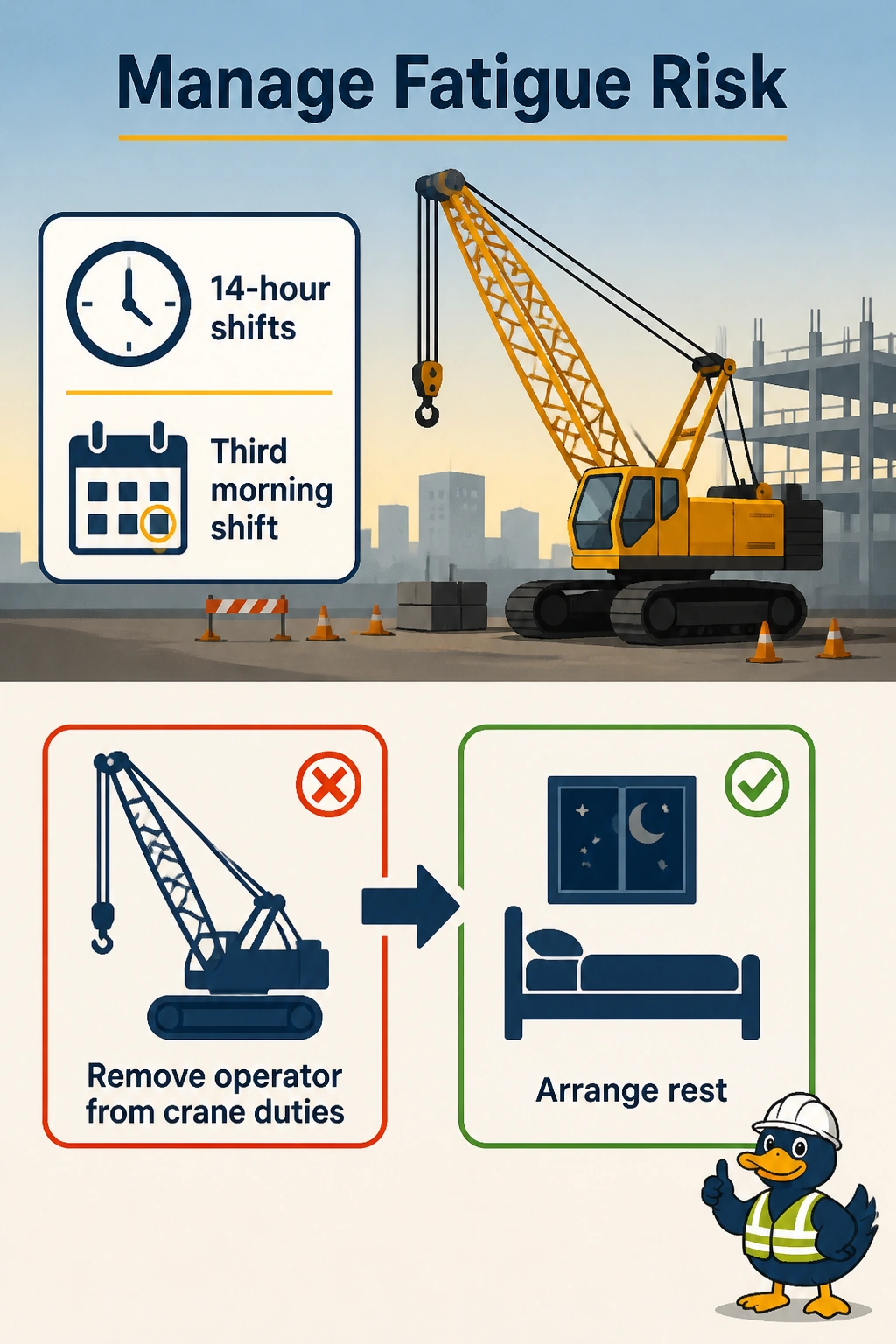
After working two consecutive 14-hour concrete pour shifts, a boom-truck operator arrives for a third morning shift rubbing their eyes, yawning, and misreading load chart lines. How should the supervisor manage this fitness-for-duty risk?
Select an answer to reveal the explanation.
Short Explanation
You’re right to take these signs seriously: severe fatigue slows your reaction time and can make accurate load-chart reading difficult, much like alcohol. Coffee or lighter lifts cannot reliably overcome exhaustion, so remove the operator from crane duties and arrange rest.
Full Explanation
A supervisor’s fitness-for-duty responsibility includes recognizing severe fatigue before an incident occurs, so remove the operator from crane duties and arrange rest. Operating hoisting equipment requires sharp judgment, accurate load-chart reading, and rapid reaction, all of which can degrade sharply after consecutive extended shifts. Providing strong coffee and assigning a ground spotter fails because caffeine may mask drowsiness temporarily while cognitive errors and microsleeps persist; a spotter cannot restore the operator’s fitness for duty. Allowing only light lifts under half capacity fails because even a light load can strike workers, hit power lines, or tip a crane if the operator misreads the chart or boom angle. Asking the crew to watch the operator closely all day fails because bystanders may not be able to stop a sudden control error once a pick is underway. Exam caveat: a reduced load does not make a severely fatigued operator safe to operate. As a practical check, during morning huddles after long shifts, check in individually with equipment operators and confirm a rested backup operator is available.
Prefer to study offline? Printable PDF study book + test engine ($7.50, unofficial). These questions stay free here.