
A painting subcontractor introduces a new two-component isocyanate-based coating on a commercial interior buildout, and the crew has only been trained on latex paints. What must the supervisor ensure before the crew applies the new coating?
Select an answer to reveal the explanation.
Short Explanation
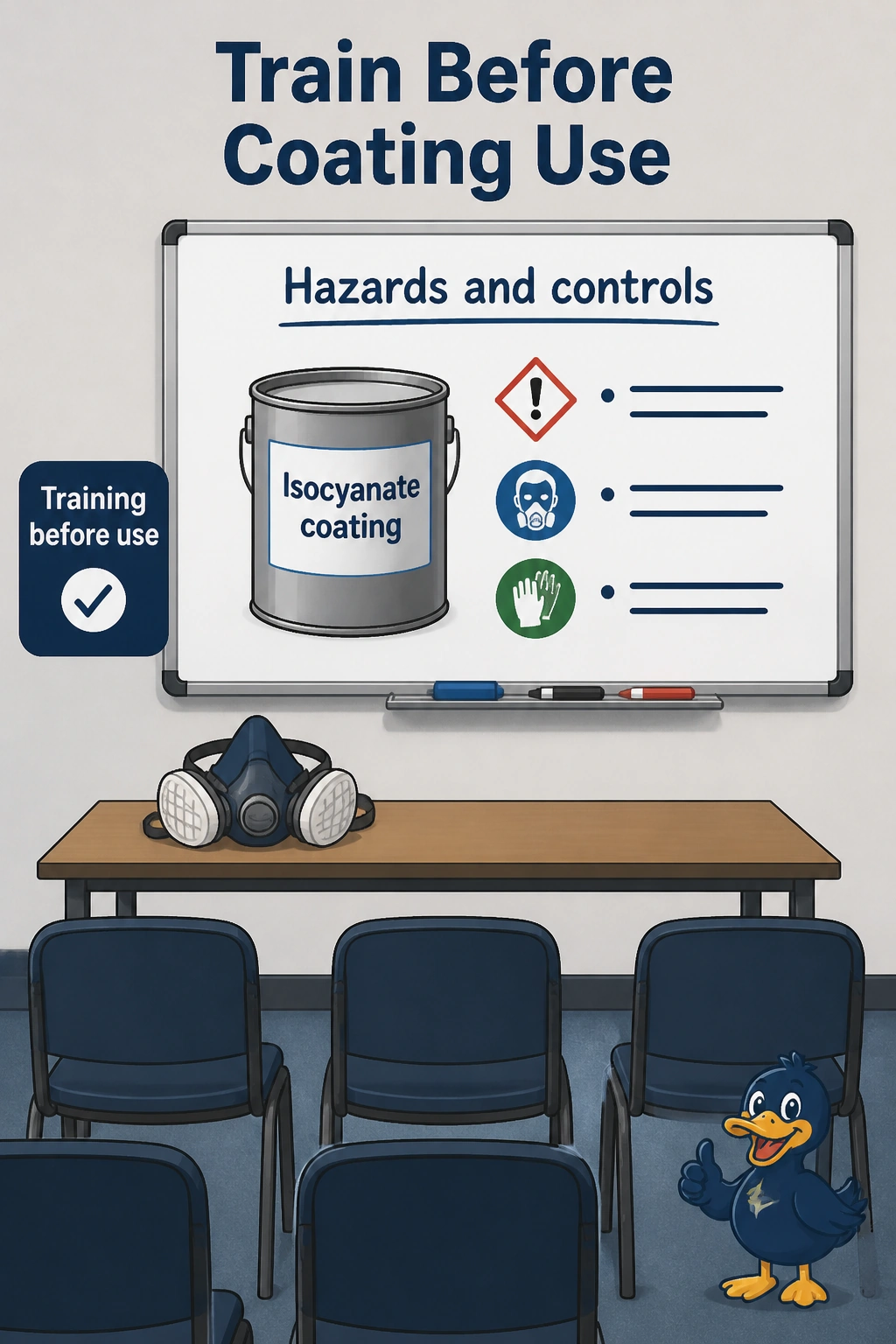
New chemicals bring new rules, and you cannot rely on yesterday's paint training when an isocyanate coating hits the jobsite. The trap is assuming a general orientation or a binder signature later covers a brand-new chemical hazard. Under OSHA Hazard Communication, you must train workers on the specific hazards and controls before they ever open the bucket.
Full Explanation
Under 29 CFR 1910.1200(h)(1), applicable to construction through 29 CFR 1926.59, employers must provide effective information and training on hazardous chemicals at initial assignment and whenever a new chemical hazard is introduced into the work area. Choosing to "Train exposed workers on the new coating's hazards and controls before use" ensures the crew understands the specific respiratory, dermal, and curing hazards, required PPE, and emergency steps before exposure occurs. Waiting to "Have the crew sign the Safety Data Sheet binder after finishing the first shift" fails because training must happen prior to exposure, not retroactively. Choosing to "Issue standard dust masks because the crew already completed general orientation" fails both because general training does not cover new chemical-specific hazards and because filtering facepiece dust masks do not protect against isocyanate vapors. Deciding to "Post the product's Safety Data Sheet in the main office trailer three blocks away" fails because Safety Data Sheets must be readily accessible in the work area during each shift. Exam caveat: even if a worker previously completed a general 10-hour or 30-hour safety course, a new chemical hazard on site still triggers task-specific hazard communication training. As an operational check, review the new product's Safety Data Sheet with the crew at the pre-task huddle and confirm the required PPE and ventilation are staged before mixing begins.
Prefer to study offline? Printable PDF study book + test engine ($7.50, unofficial). These questions stay free here.