
A steel erection foreman reviews a draft near-miss report after a bundle of roof decking shifted during crane unloading, and the draft lists 'rigger carelessness' as the only cause. How should the foreman revise the investigation?
Select an answer to reveal the explanation.
Short Explanation
Blaming a worker in a near-miss report is like patching a flat tire without pulling the nail out of the tread. You want your investigation to uncover why the load shifted in the first place, not just point a finger. The trap is stopping at 'human error' and missing the rigging or staging gap that sets up the next crew.
Full Explanation
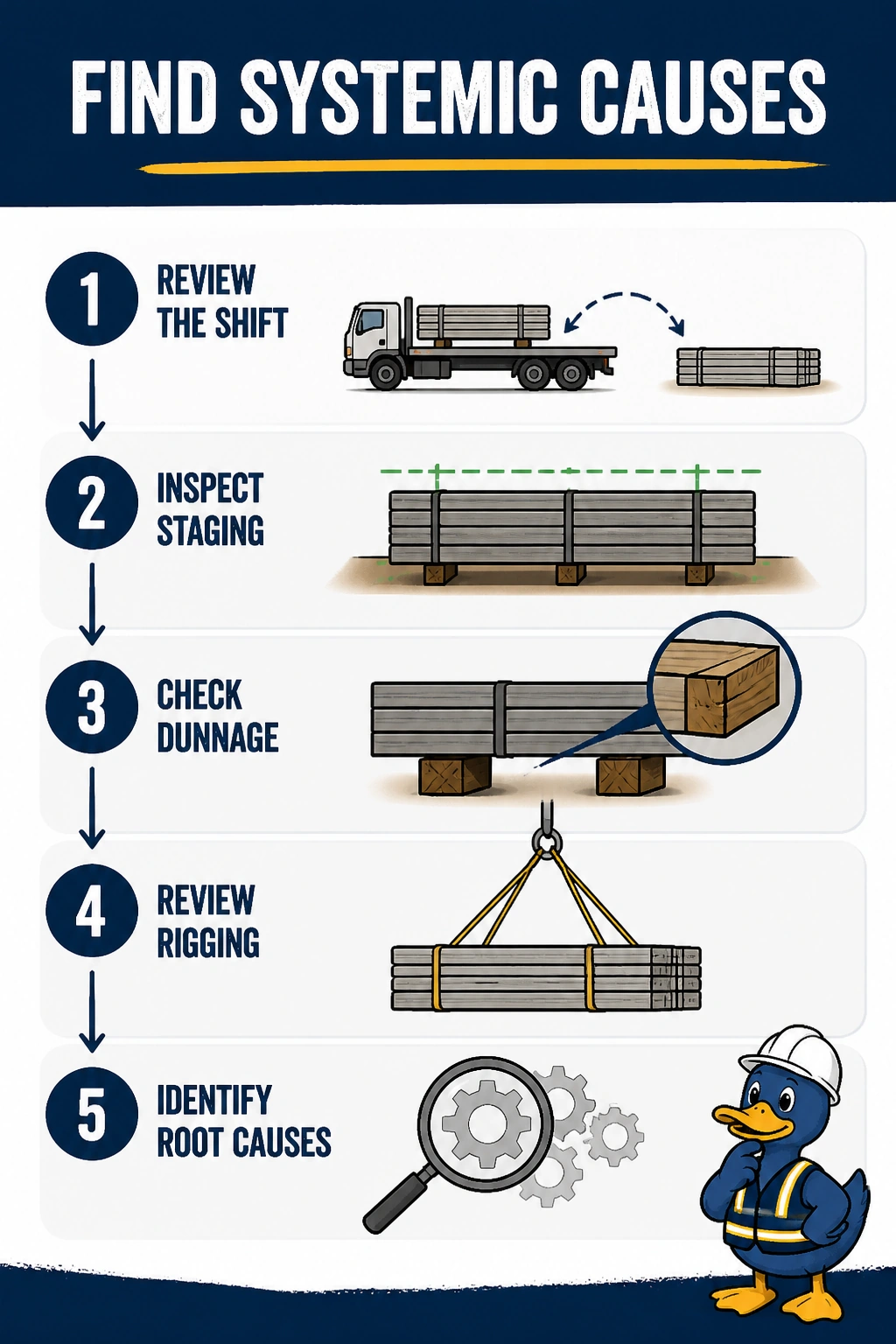
Effective incident investigations look past individual error to find process and control failures, so the foreman should Investigate staging, dunnage, and rigging procedures to identify systemic root causes. Near-misses reveal weak links in planning, equipment selection, or communication that can injure the next crew if left uncorrected. Choosing to Assign the rigger a written warning and close the report once the crew signs a reminder sheet mistakes discipline for root-cause analysis and discourages future hazard reporting. Opting to Replace the carelessness note with 'unavoidable wind gust' so the crew avoids extra paperwork falsifies the record and hides preventable rigging or load-securement gaps. Deciding to Wait until the end of the month to review the bundle shift during the routine safety meeting leaves the same unloading hazard active on site for weeks. Even when a worker makes a mistake, supervisors must still examine what conditions allowed that mistake to happen. As an operational check, review the JHA, verify proper dunnage and sling angles before the next pick, and share the corrective actions at the next morning huddle.
Prefer to study offline? Printable PDF study book + test engine ($7.50, unofficial). These questions stay free here.