
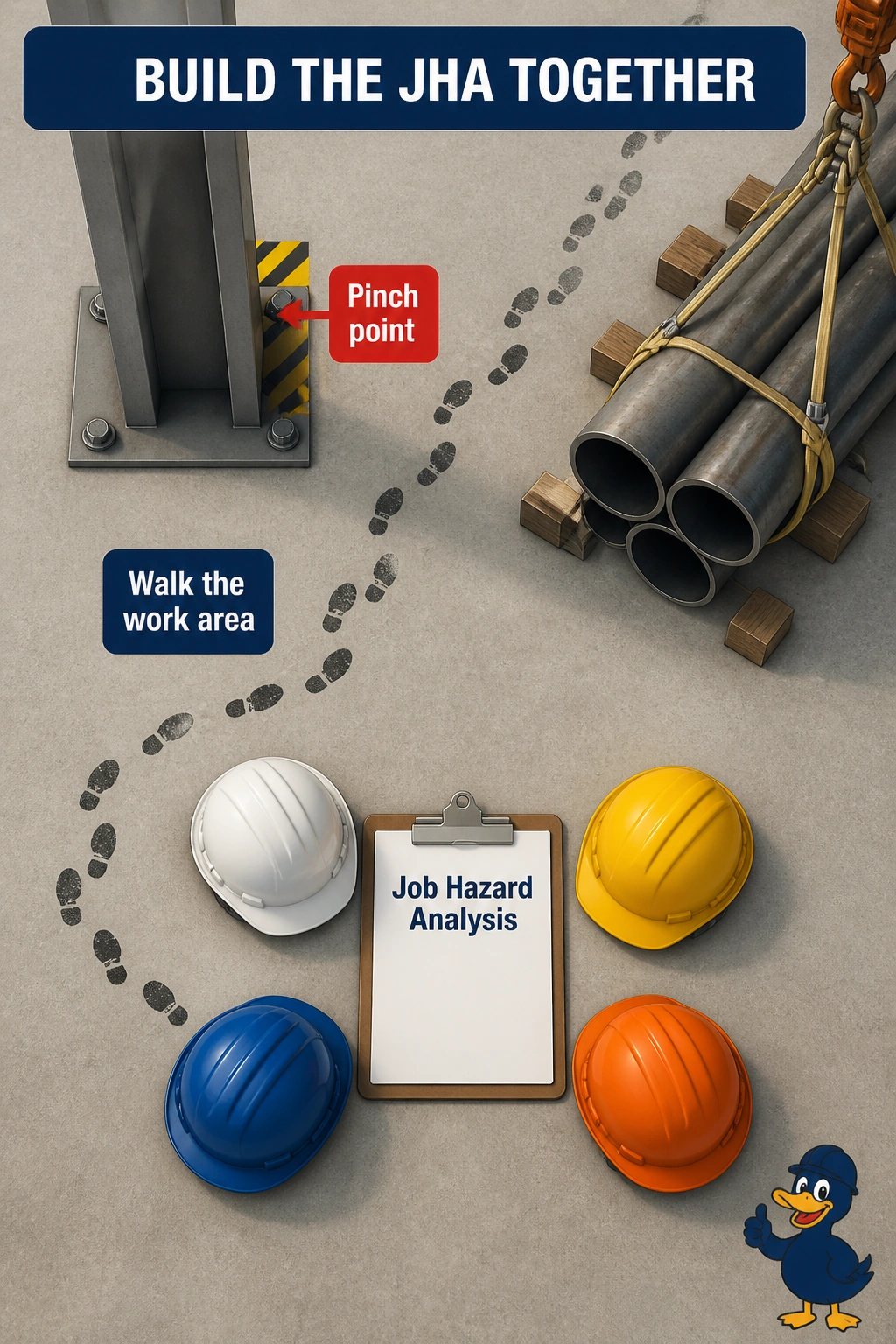
A mechanical foreman writes a Job Hazard Analysis alone in the site trailer for a chilled-water pipe rigging task, and the crew misses a pinch point against an existing column during setup. How should the foreman improve the JHA process?
Select an answer to reveal the explanation.
Short Explanation
Writing a JHA alone in a trailer is like drawing a map without looking out the window. You need the crew who will actually touch the rigging walking the path with you to spot tight clearances and pinch points. The trap is treating the JHA as a paperwork chore instead of a live field walkthrough.
Full Explanation
An effective Job Hazard Analysis relies on field observation and worker input, so the foreman should Walk the work area with the crew to build and review the JHA before starting. Crew members performing the rigging often spot physical obstructions, swing clearances, and tool limitations that a desk review misses. Choosing to Copy the generic corporate JHA template word-for-word so every trade uses identical steps ignores site-specific column clearances and actual rigging paths. Opting to Lock the JHA in the foreman's binder after printing so crews cannot alter the wording prevents updates when field conditions or crew feedback reveal new hazards. Deciding to Wait until after the first pipe section is hung before asking the crew for any feedback exposes workers to unmitigated pinch points during the very first pick. Even a thorough pre-task walkthrough cannot cover every change, so the JHA must stay open to mid-shift revisions. As an operational check, gather the rigging crew at the exact work location before the lift, trace the travel path together, and sign off once controls are in place.
Prefer to study offline? Printable PDF study book + test engine ($7.50, unofficial). These questions stay free here.