
During a weekly safety walk, a plumbing foreman discovers a broken latch on a temporary stair-tower gate, and the replacement latch will not arrive from the supplier for two days. What should the foreman do?
Select an answer to reveal the explanation.
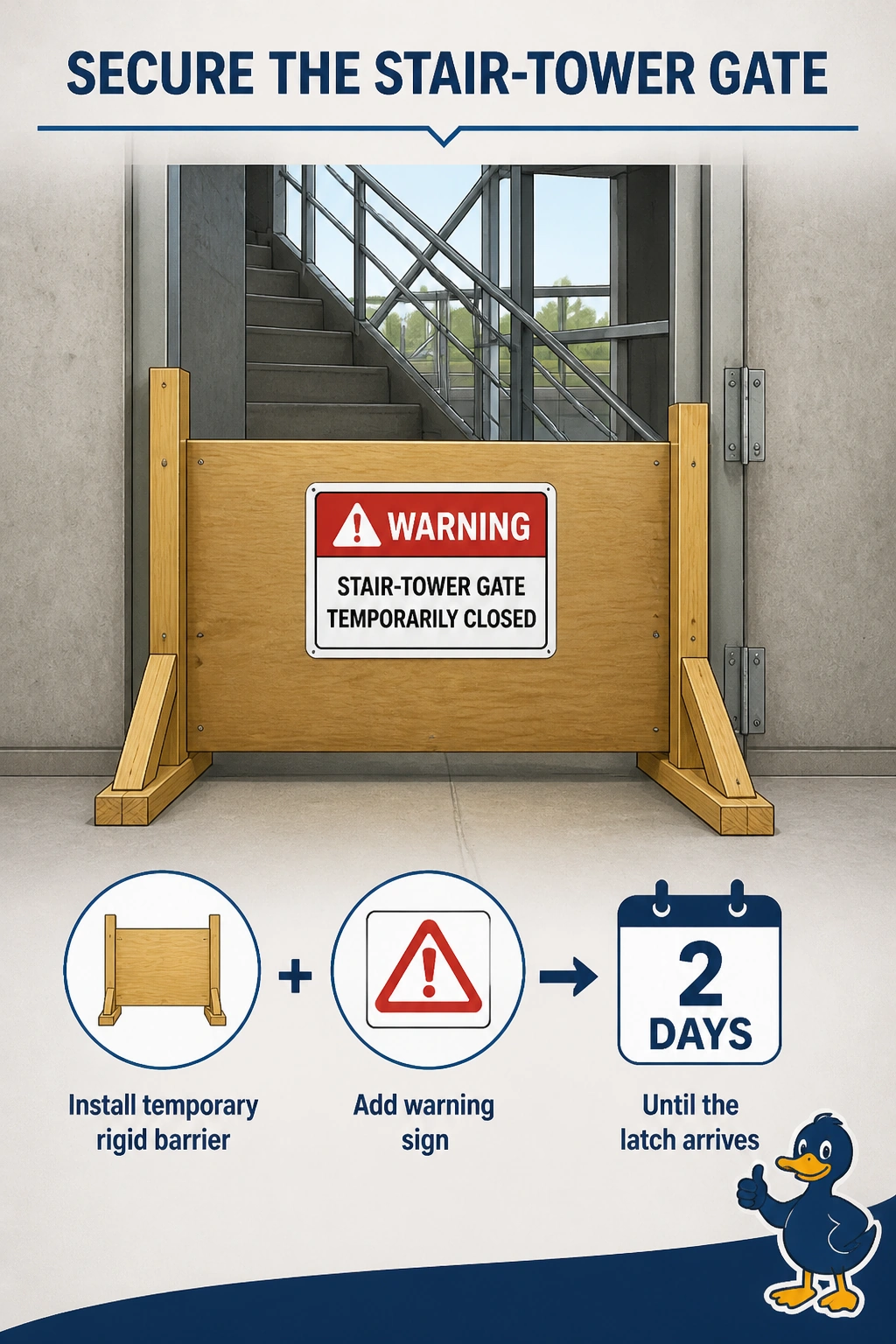
Short Explanation
When a permanent part is on backorder, you cannot leave a fall or access hazard wide open while waiting for a delivery truck. The trap is logging the defect on a list or relying on workers to hold a broken gate shut instead of putting an interim control in place right away.
Full Explanation
When an audit uncovers a physical safeguard failure that cannot be permanently repaired on the spot, supervisors must apply immediate interim protection so no worker is exposed in the meantime. Choosing to Install a temporary rigid barrier and warning sign until the latch arrives physically prevents unauthorized entry and controls the fall or access hazard until the permanent hardware is fitted. Deciding to Wait two days until the new latch arrives to fix it leaves an active hazard unguarded for multiple shifts. Choosing to Note the broken latch on next week's audit checklist treats an immediate physical defect as a paperwork item rather than taking field action. Opting to Tell crews to hold the gate shut when passing through relies on human memory and leaves the opening unprotected whenever a worker carries tools or forgets. As a caveat, verify that any temporary barrier meets guardrail strength and height expectations if it borders an elevated drop. For an operational check, tag the defect with a target repair date and inspect the interim barrier at each shift start until the new latch is installed.
Prefer to study offline? Printable PDF study book + test engine ($7.50, unofficial). These questions stay free here.