
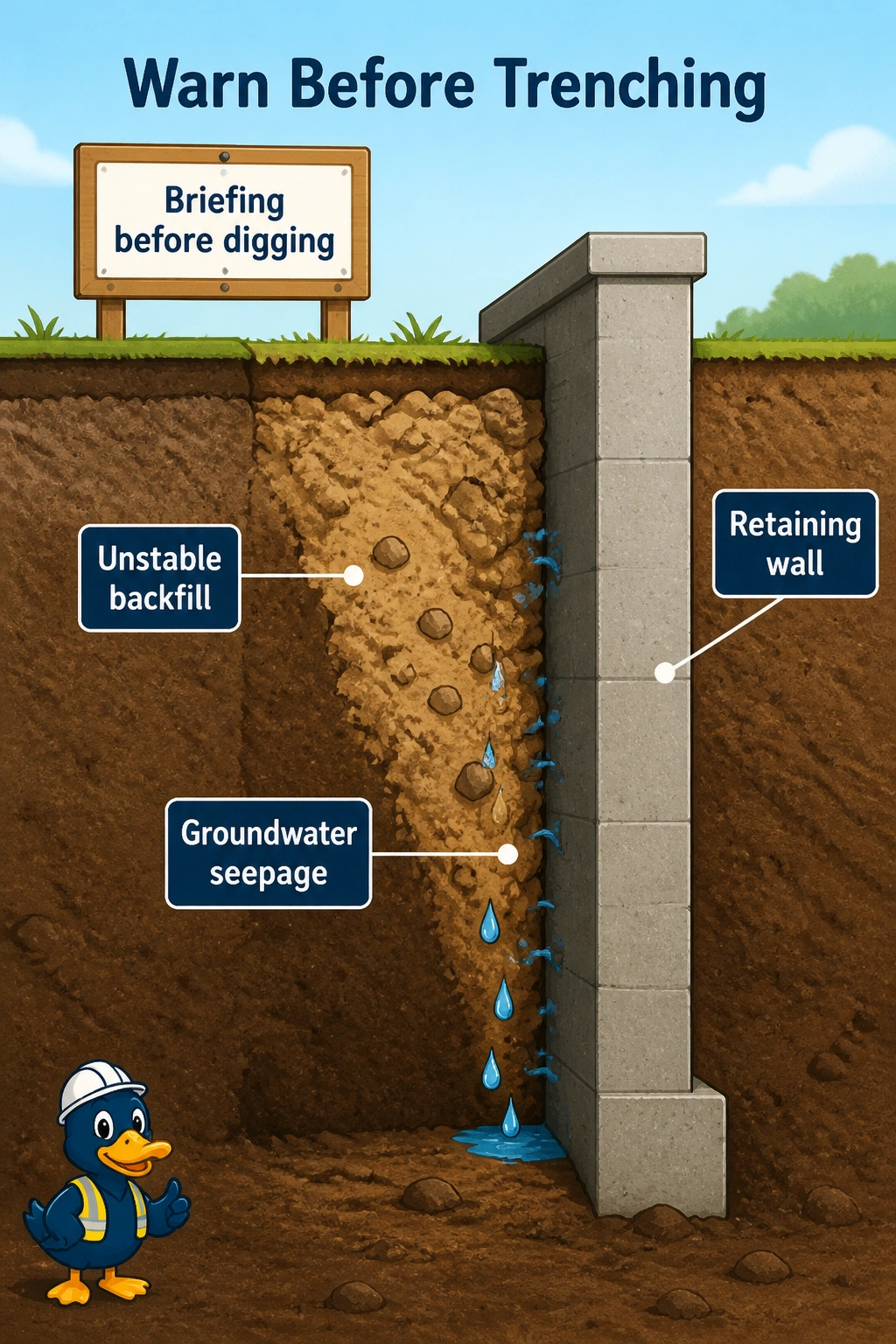
Before an electrical subcontractor starts trenching along the north retaining wall, a general contractor's site supervisor recalls that earlier grading crews uncovered unstable backfill and groundwater seepage in that exact strip. What is the supervisor's most ethical action?
Select an answer to reveal the explanation.
Short Explanation
Think of sharing known site hazards like passing a baton in a relay—if you drop it, the next crew gets hurt. The trap is assuming another contractor's pre-bid notes or sharp eyes will catch hidden backfill and seepage before a trench wall gives way.
Full Explanation
Under the BCSP Code of Ethics and multi-employer site coordination duties, a supervisor must hold paramount the safety and health of all workers on site and communicate known hazards honestly and promptly. Choosing to Inform the electrical crew of the unstable backfill and seepage before digging begins gives the subcontractor's competent person the facts needed to classify the soil accurately, plan dewatering, and select proper sloping or shoring under 29 CFR 1926 Subpart P before anyone enters an excavation. Choosing to Wait to see whether the subcontractor's crew notices the wet soil during excavation fails because groundwater seepage and previously disturbed backfill can cause sudden, fatal cave-ins before a crew recognizes the warning signs. Choosing to Let the subcontractor's project manager discover the soil conditions through their own pre-bid notes fails because pre-bid documents may not reflect recent grading discoveries, and withholding safety-critical information violates professional integrity. Choosing to Tell the crew to dig narrower trenches quickly so the walls stay up until pipe is laid fails because speed does not prevent soil collapse and encourages bypassing protective systems. As a caveat, sharing the hazard does not replace the subcontractor's own daily competent-person inspection. For an operational check, brief the subcontractor lead at the pre-task huddle, document the disclosure in the daily log, and verify the trench protective system before excavation starts.
Prefer to study offline? Printable PDF study book + test engine ($7.50, unofficial). These questions stay free here.