
During a downtown commercial facade renovation, debris netting over a public sidewalk tears during high winds, and the building owner asks the site supervisor to leave it until next week to avoid weekend overtime charges. What is the supervisor's most ethical action?
Select an answer to reveal the explanation.
Short Explanation
Your duty to protect people—including pedestrians walking past your jobsite—outranks any client's budget or schedule request. Under the BCSP Code of Ethics, you cannot trade away public safety to save overtime, so don't settle for a warning sign or a paper trail.
Full Explanation
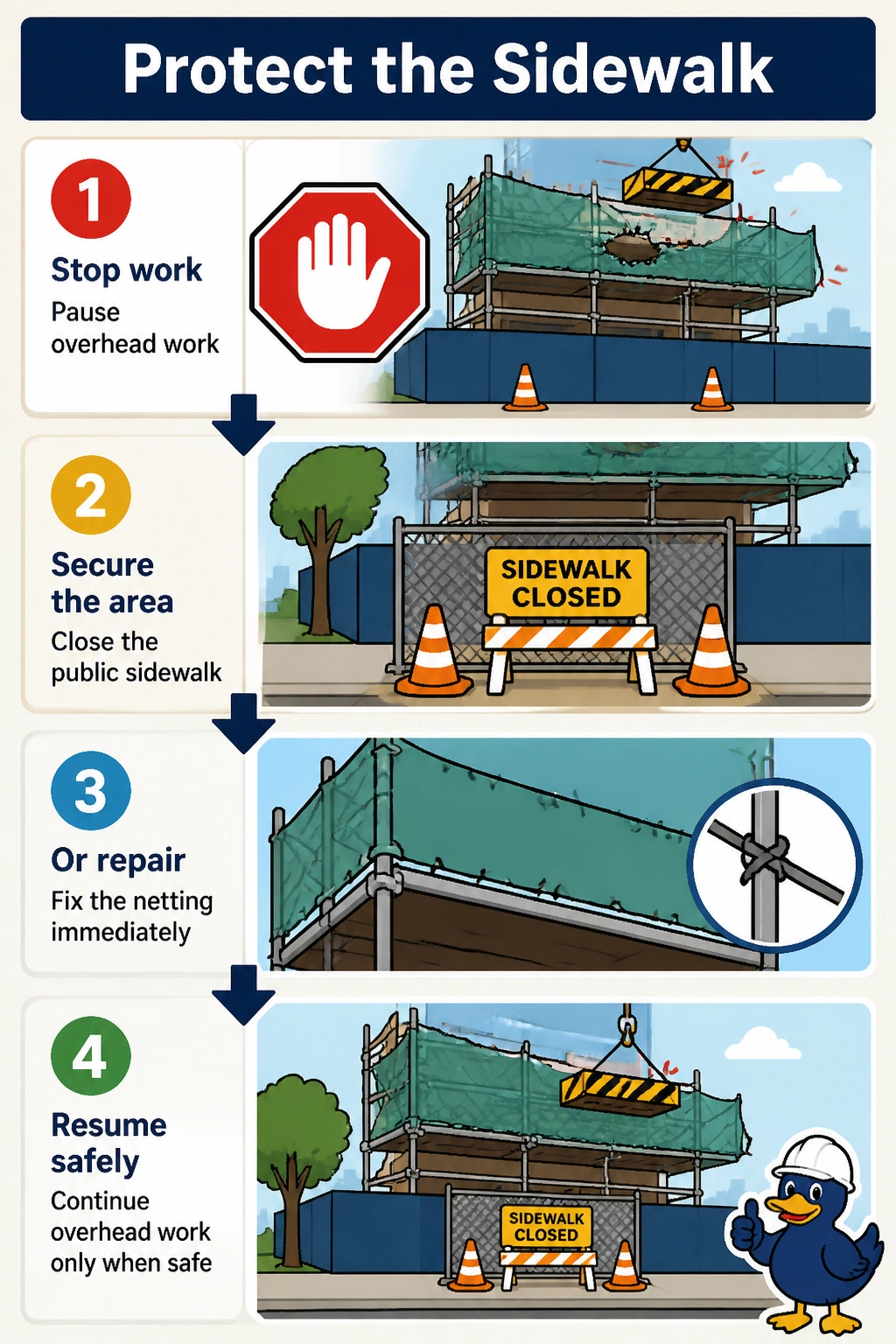
The BCSP Code of Ethics requires safety professionals and supervisors to hold paramount the safety and health of people, the environment, and property, and to inform appropriate parties when safety judgment is overruled. Choosing to Close the sidewalk or repair the netting immediately before overhead work continues directly protects pedestrians from falling tools or masonry debris. Deciding to Leave the torn netting as requested and log the owner's instruction in the daily report abdicates ethical responsibility because documenting a client's unsafe request does not shield the public from injury. Choosing to Allow sidewalk traffic to continue while instructing workers to sweep debris more often only addresses housekeeping on the ground while leaving pedestrians exposed to overhead struck-by hazards. Opting to Post a small warning sign at the corner and finish the facade shift as scheduled relies on a weak administrative notice instead of physically separating or guarding the public from the hazard. One caveat is that closing a public sidewalk may require immediate coordination with municipal authorities and traffic control. As an operational check, barricade the affected sidewalk zone, repair and inspect the overhead netting, and notify the owner in writing.
Prefer to study offline? Printable PDF study book + test engine ($7.50, unofficial). These questions stay free here.