
During a post-incident review, a supervisor realizes that their own rushed morning schedule forced a crew to stage materials in a congested, poorly lit corridor where a worker tripped. What is the supervisor's most ethical leadership action?
Select an answer to reveal the explanation.
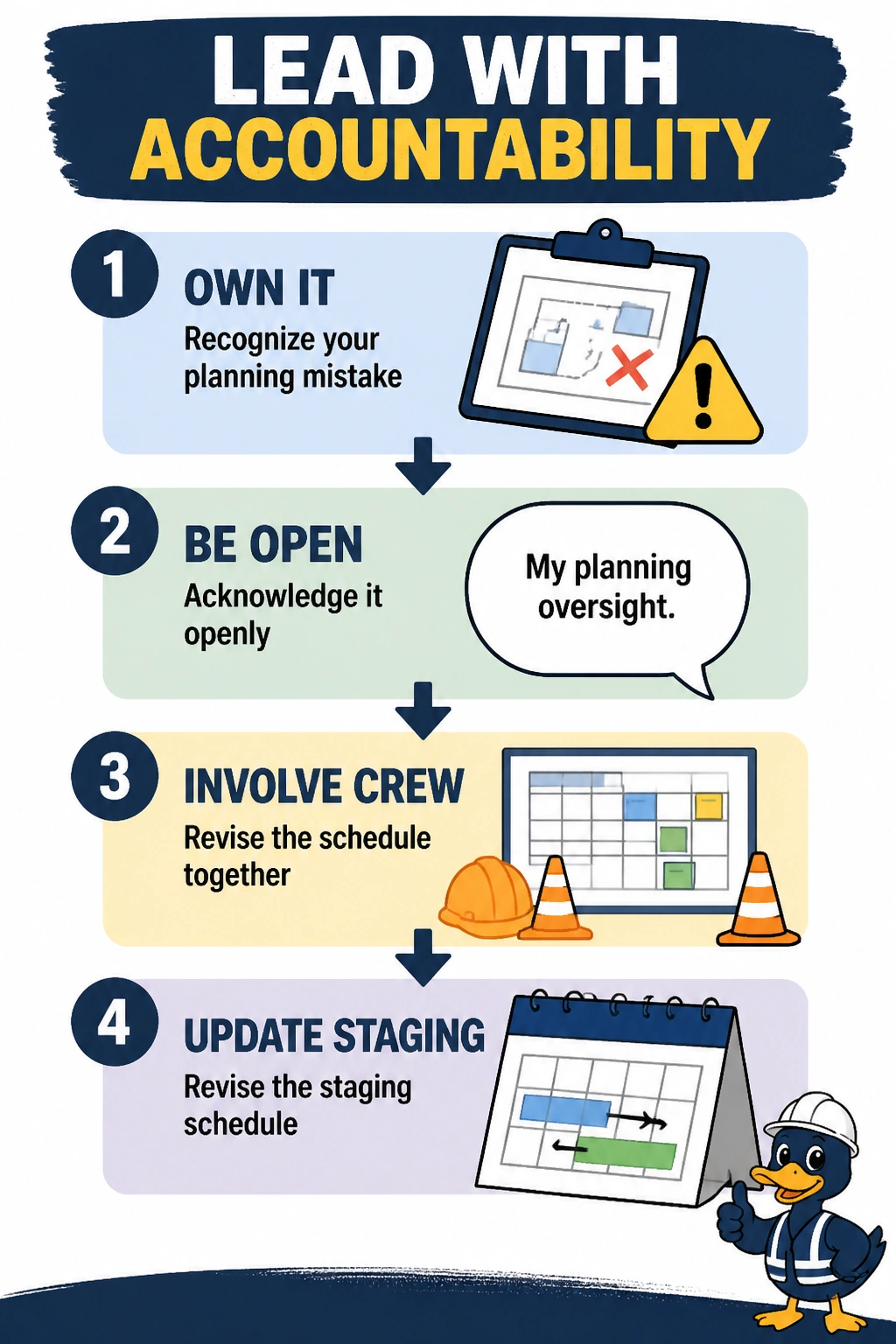
Short Explanation
Real safety leadership shows up brightest when your own plan contributed to a close call or injury. The trap is shifting blame onto the crew or burying schedule pressure in the report, which destroys trust and leaves the root problem unsolved.
Full Explanation
Ethical safety leadership requires honesty, accountability, and a willingness to fix management-driven conditions rather than scapegoating workers. Choosing to Acknowledge the planning oversight openly and revise the staging schedule with the crew models integrity, builds psychological safety so workers speak up about unrealistic schedules, and directly corrects the lighting and congestion root causes. Choosing to Blame the laborers for failing to walk more carefully through the dimly lit corridor fails because focusing on worker inattention leaves inadequate lighting and obstructed walkways in place for the next person. Choosing to Omit the staging schedule from the incident report so management does not question the plan fails because falsifying or selectively editing an investigation record undermines truthful reporting and blocks organizational learning. Choosing to Tell the crew privately to keep quiet about the morning rush during the owner's walk fails because coaching workers to conceal hazards violates professional ethics and erodes crew respect. As a caveat, revising the staging plan should also verify adequate temporary lighting and clear egress widths. For an operational check, walk the revised staging area with the crew before the next delivery to confirm clear aisles and working corridor lights.
Prefer to study offline? Printable PDF study book + test engine ($7.50, unofficial). These questions stay free here.