
On a commercial concrete project, a foreman issues a written safety warning to a new apprentice for working without safety glasses, yet ignores the same violation by a veteran finisher who is the foreman's longtime carpool partner. How should the site supervisor address this?
Select an answer to reveal the explanation.
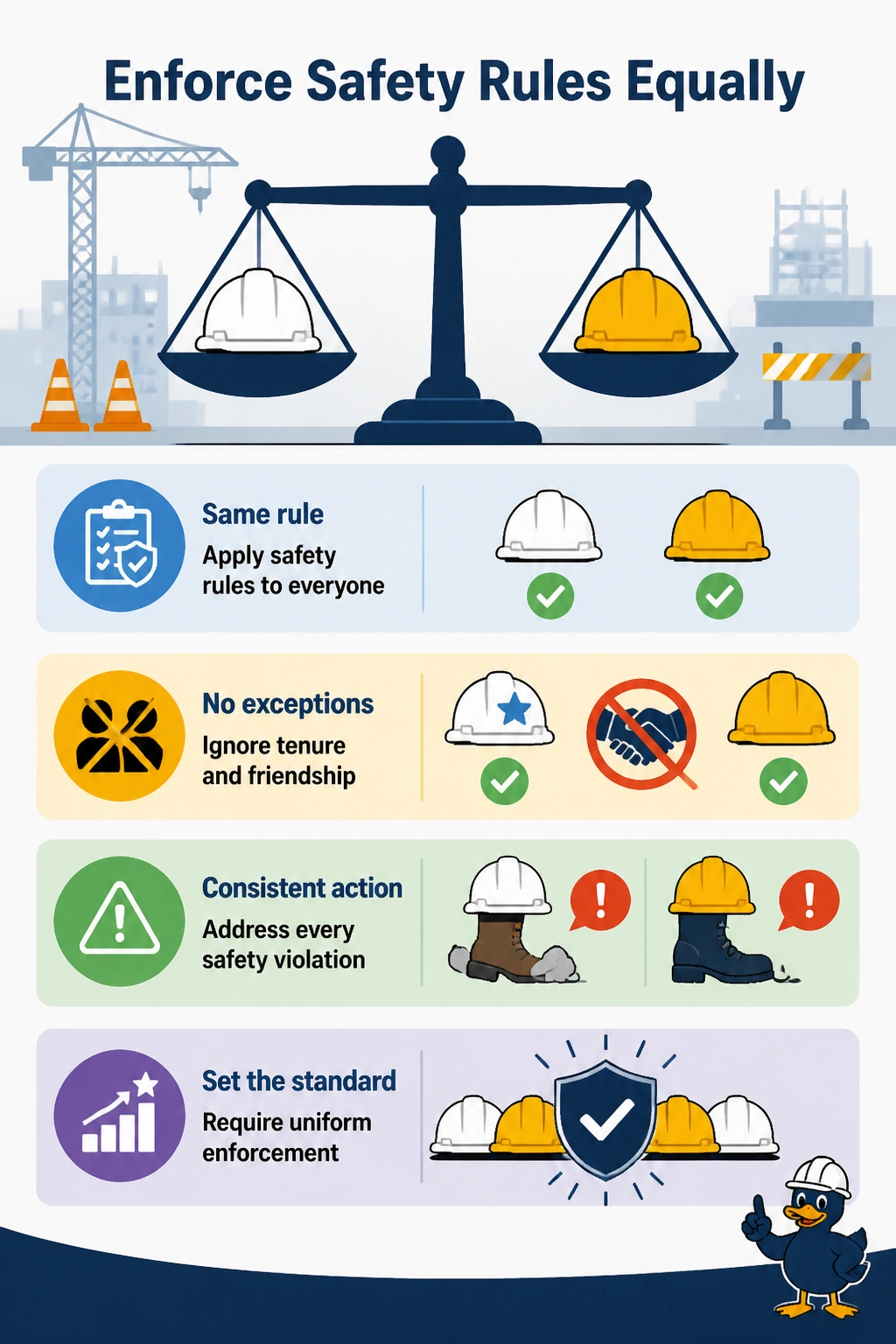
Short Explanation
Nothing erodes crew trust faster than watching one set of safety rules apply to rookies and another to friends. If you let veteran workers slide while writing up apprentices, your crew learns that safety is about favoritism rather than protection. Coach the foreman to enforce every rule fairly and consistently.
Full Explanation
Under the BCSP Code of Ethics and sound safety leadership principles, supervisors must act with objectivity, fairness, and integrity, treating all workers equitably without favoritism or bias. Choosing to Require uniform enforcement of safety rules regardless of tenure or friendship protects every worker's eyesight equally and maintains credibility across the jobsite. Choosing to Let the foreman decide privately how to handle veteran crew members based on tenure institutionalizes a double standard that signals experienced workers are exempt from basic PPE requirements. Choosing to Cancel the apprentice's written warning so both workers receive no documentation weakens accountability and leaves both eye-hazard behaviors uncorrected. Choosing to Assign the apprentice to a different crew while keeping the veteran finisher in place avoids addressing the foreman's biased enforcement and allows the veteran's unsafe habit to continue. As a caveat, consistent enforcement works best when paired with positive coaching and ensuring properly fitting eyewear is readily available. As an operational check, review disciplinary and coaching logs periodically across crews to verify that similar violations receive comparable corrective follow-up.
Prefer to study offline? Printable PDF study book + test engine ($7.50, unofficial). These questions stay free here.