
After a concrete finisher returns from a clinic with a temporary lifting restriction, another trade's foreman asks the concrete supervisor at lunch what medical condition caused the restriction. What is the supervisor's most ethical response?
Select an answer to reveal the explanation.
Short Explanation
Curiosity on a jobsite travels fast, and sharing a coworker's diagnosis erodes trust and violates privacy. Your job as a supervisor is to manage safe work assignments, not broadcast personal medical details.
Full Explanation
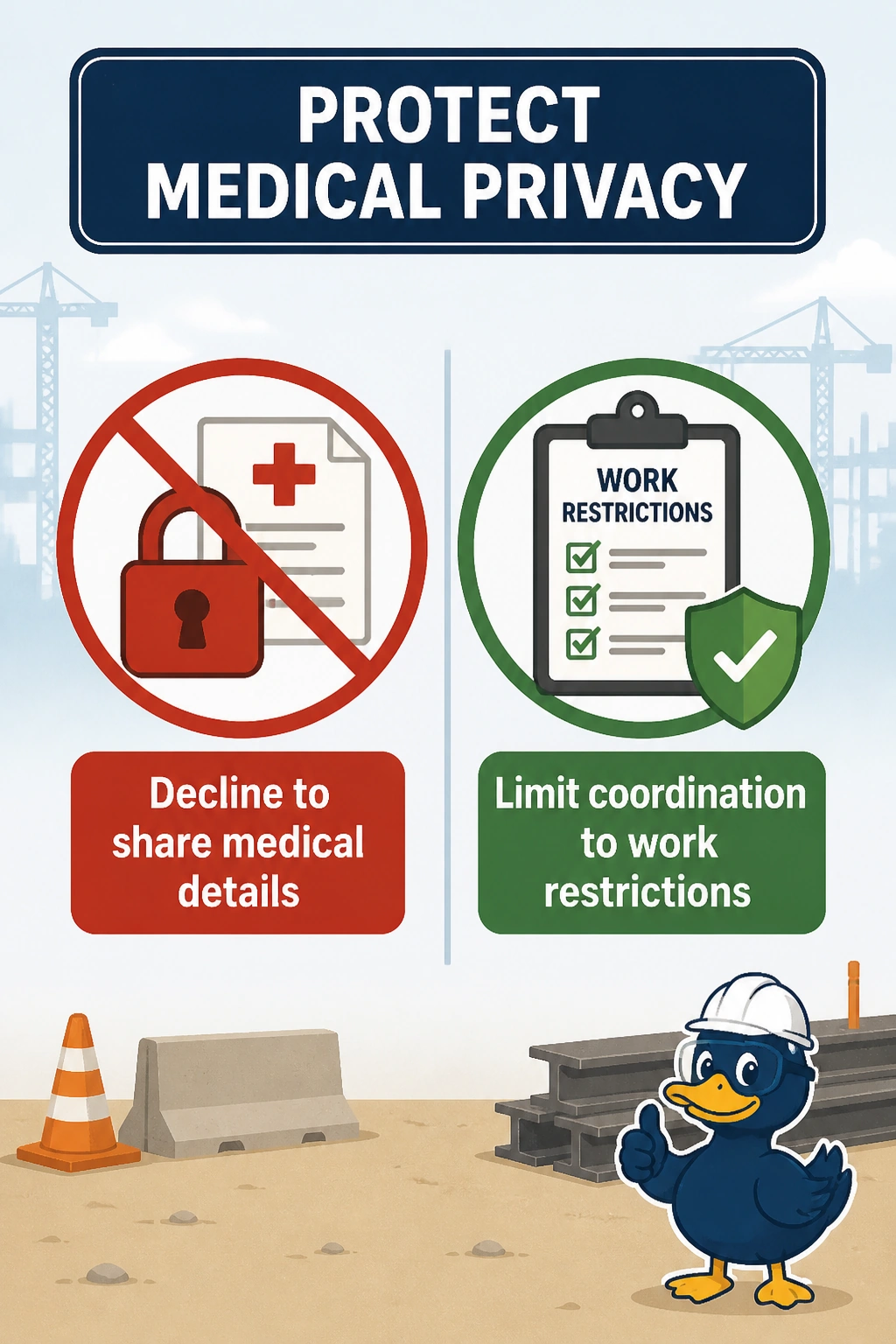
Ethical leadership and privacy standards require supervisors to protect personal health information, so the supervisor should "Decline to share medical details and limit any coordination to work restrictions". Other supervisors only need to know functional limits—such as no lifting over a set weight—to assign tasks safely without learning private diagnoses. Choosing to "Share the diagnosis privately so the other foreman knows what symptoms to watch for" still discloses confidential medical information to someone without a legitimate clinical need to know. Choosing to "Post the worker's clinic discharge note on the jobsite trailer board for transparency" exposes private health records to the entire site and discourages workers from reporting injuries or seeking care. Choosing to "Ask the worker to explain the medical diagnosis to both crews at the next huddle" pressures the employee into surrendering medical privacy in front of peers. As a caveat, if a worker's restriction creates an emergency-response need—such as a severe allergy—coordinate only the specific emergency action plan with authorized responders and HR. As an operational check, store medical restriction forms in a locked or restricted file separate from daily crew sign-in sheets.
Prefer to study offline? Printable PDF study book + test engine ($7.50, unofficial). These questions stay free here.