
A site safety supervisor is assigned to investigate a rigging near-miss in which a close personal friend on the ironworker crew bypassed a tag line. What is the supervisor's most ethical action?
Select an answer to reveal the explanation.
Short Explanation
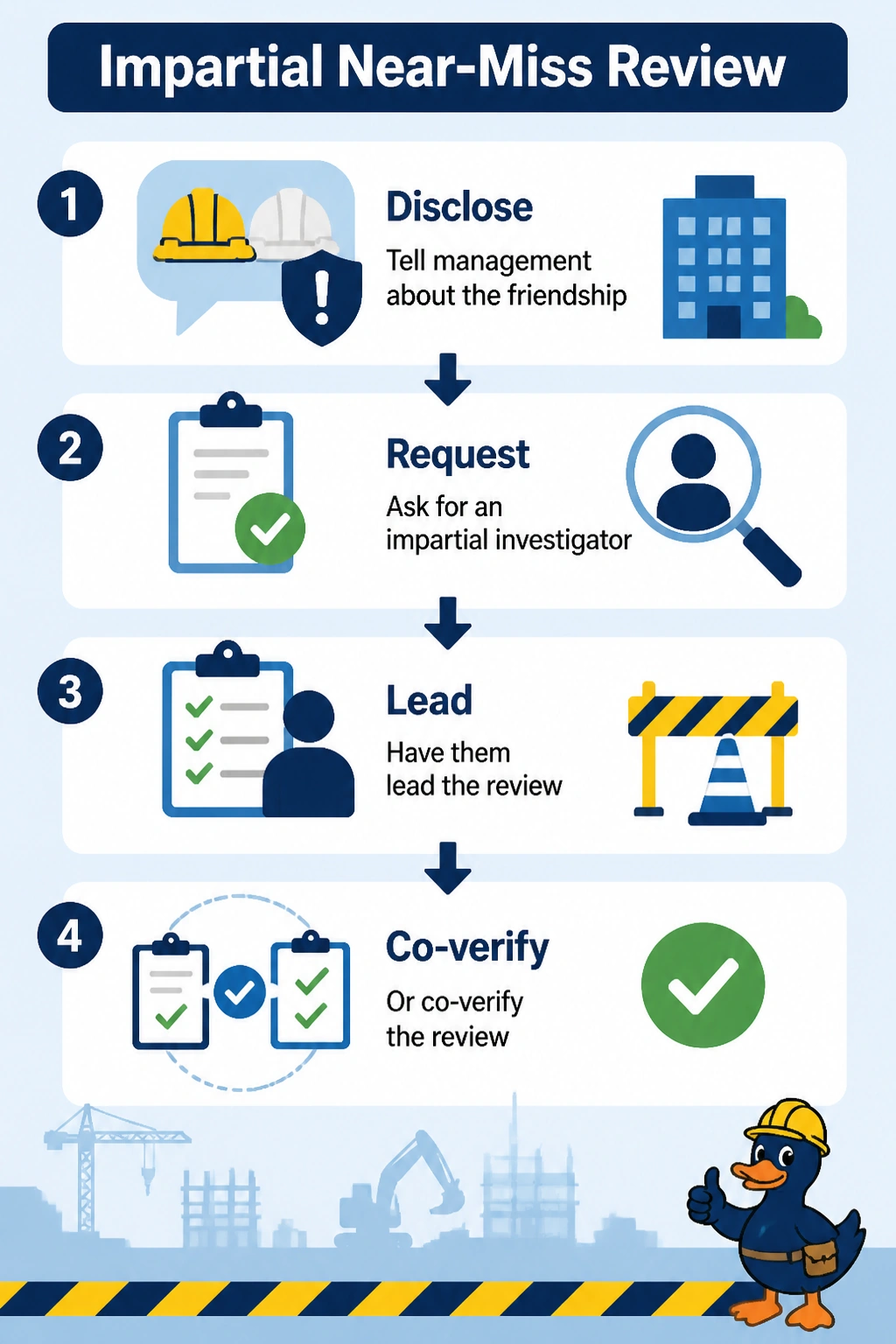
Investigating a close friend puts your objectivity on a tightrope, and even fair findings look suspect when personal ties stay hidden. The trap is thinking you can just stay neutral in silence, when ethical leadership requires disclosing the conflict up front so the facts stand above suspicion.
Full Explanation
Under the BCSP Code of Ethics, safety professionals must act with integrity, avoid conflicts of interest, and keep professional judgments objective and free from personal bias. The right step is to Disclose the personal relationship to management and request an impartial investigator to lead or co-verify the review so the root causes are documented fairly and crew trust in the safety program stays intact. Choosing to Lead the investigation alone and omit the friend's name from the final incident report compromises transparency and can conceal training or supervision gaps that need correction. Letting the involved worker shape the record when you Ask the friend privately to write the near-miss summary and sign off on it without interviews undermines independent fact-finding and introduces clear self-interest bias. Deciding to Delay filing the near-miss report until the friend transfers to another jobsite next month leaves an unaddressed rigging hazard active for the rest of the crew. As an ethical caveat, disclosing a conflict does not mean ignoring immediate hazards; still secure the rigging area and preserve evidence right away. For an operational check, review your incident-investigation assignment procedure with site leadership to ensure a backup supervisor or safety manager is designated whenever a personal conflict exists.
Prefer to study offline? Printable PDF study book + test engine ($7.50, unofficial). These questions stay free here.