
During structural steel erection, an apprentice signals a stop-work pause because a gusting crosswind is swinging a wide-flange beam unpredictably near a live lane, and the crane operator complains the pause is wasting hook time. How should the foreman respond?
Select an answer to reveal the explanation.
Short Explanation
When an apprentice speaks up about a swinging beam, how you react in the next ten seconds sets the safety culture for the whole project. The trap is bowing to hook-time pressure and brushing off a junior voice, when ethical leadership backs every good-faith stop-work call.
Full Explanation
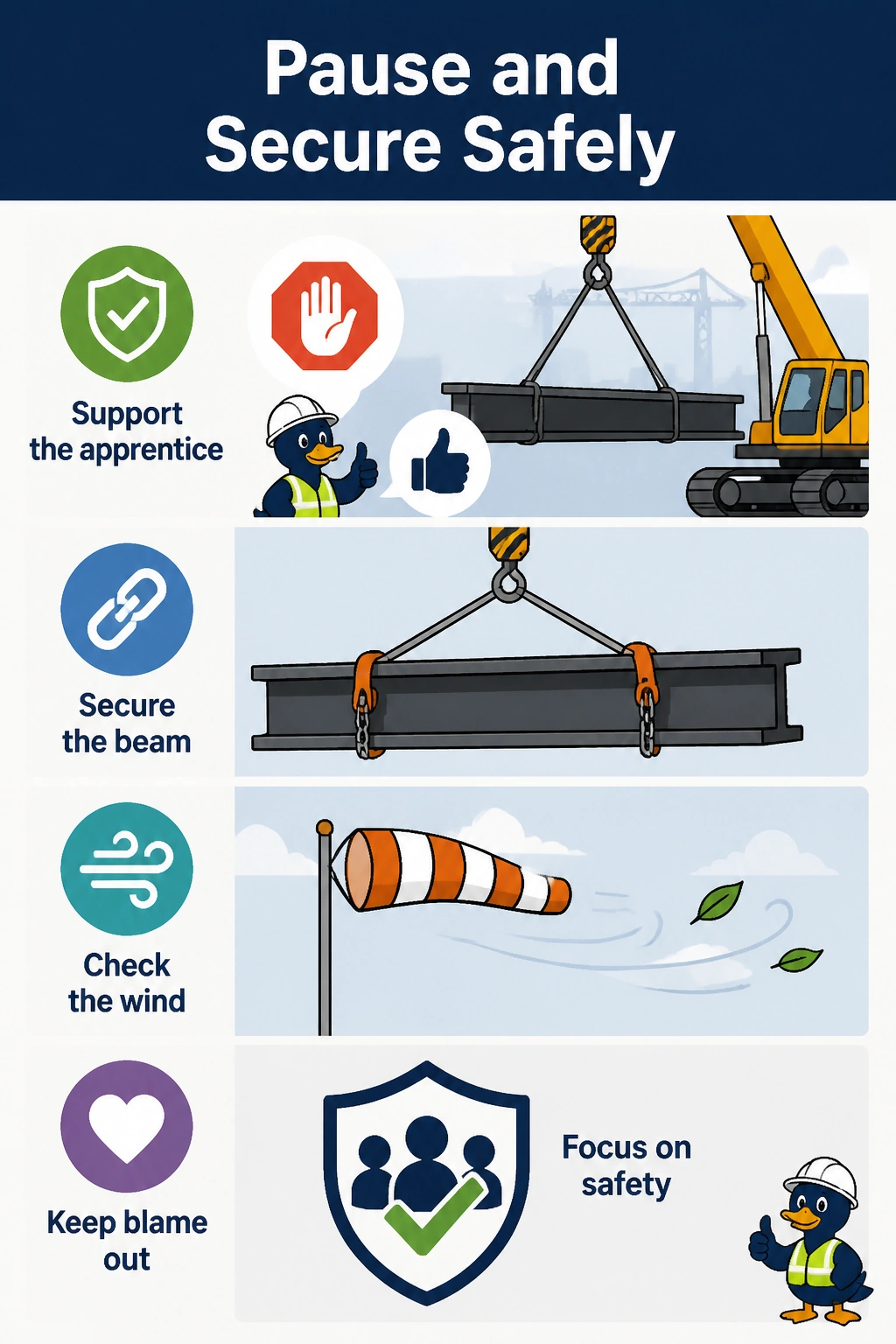
Effective safety leadership and the BCSP Code of Ethics require protecting workers and the public above production pressure and empowering every crew member—regardless of rank—to halt unsafe operations. The foreman must Support the stop-work call, secure the load safely, and evaluate wind conditions without blame so the team can verify wind limits and rigging control before resuming. Choosing to Reprimand the apprentice for delaying the pick without asking a senior connector first punishes hazard reporting and teaches the crew to stay silent next time a dangerous condition develops. Deciding to Order the crane operator to finish landing the beam quickly before the wind worsens gambles with an uncontrolled suspended load above workers and a live lane. Trying to Tell the apprentice to step away while a more experienced worker guides the beam in ignores the underlying wind hazard and sends a clear message that speaking up leads to sidelining. As a leadership caveat, never leave a suspended load hanging indefinitely; safely land or lower it to a controlled staging area while reassessing conditions. For an operational check, visibly thank workers who raise good-faith safety concerns during tailboard meetings and review wind-shutdown thresholds with the crane crew.
Prefer to study offline? Printable PDF study book + test engine ($7.50, unofficial). These questions stay free here.