
A bridge-deck crew is tying reinforcing steel in 25-degree weather with steady 20-mile-per-hour winds across an exposed river crossing. Which combination of controls best prevents cold stress during the shift?
Select an answer to reveal the explanation.
Short Explanation
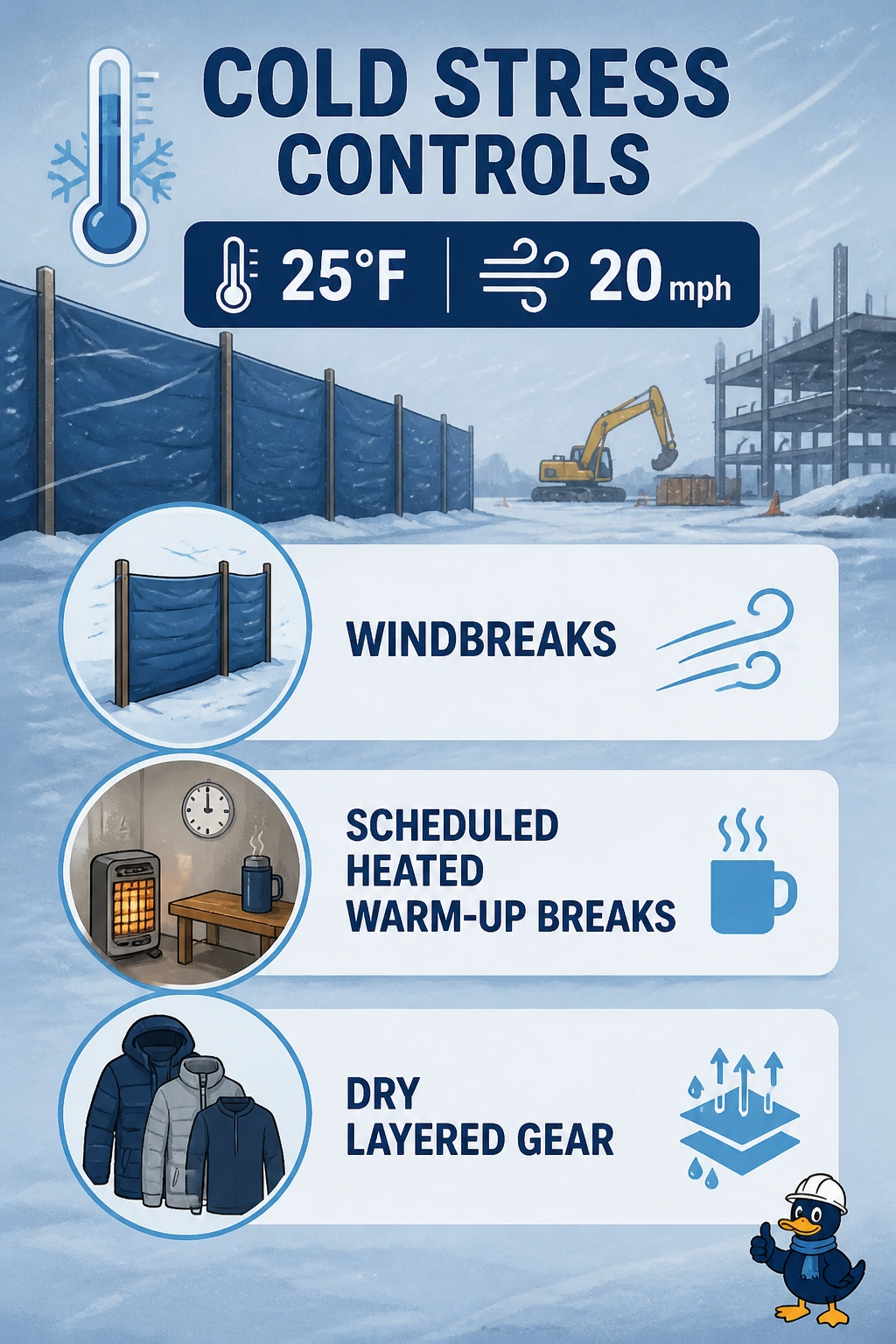
With river wind pulling heat from you, you need protection from both wind and damp clothing. Windbreaks, dry layers, and heated warm-up breaks give you the strongest cold-stress protection; cotton hoodies without breaks and nonstop work without shelter can leave you colder.
Full Explanation
Wind chill accelerates heat loss from exposed skin and damp clothing, so windbreaks, scheduled heated warm-up breaks, and dry layered gear provide the strongest protection during this exposed shift. Windbreaks reduce wind at the workface; dry moisture-wicking inner layers and insulating outer layers trap warm air; and heated breaks let your core temperature recover. Tight-fitting cotton hoodies combined with skipped breaks are a poor choice because cotton loses insulating value when wet and holds sweat against the skin, increasing hypothermia risk. Hot caffeinated coffee and rubber boots do not provide the needed wind protection or warm, dry layers; excess caffeine can increase fluid loss, and uninsulated rubber boots without dry wool socks can worsen cold foot injury. Keeping workers moving nonstop without shelter can cause exhaustion and heavy sweating, which chills the body during pauses, while making early frostbite or hypothermia symptoms easier to miss. Caveat: monitor for uncontrollable shivering, slurred speech, or numbness in fingers and toes. Practical check: review wind-chill conditions before the shift, verify that the heated break shelter is operating, and conduct regular buddy checks; keep spare dry gloves available.
Prefer to study offline? Printable PDF study book + test engine ($7.50, unofficial). These questions stay free here.