
During a winter commercial buildout, a drywall crew sets up two unvented kerosene salamander heaters inside a poly-sealed second-floor wing to speed up joint-compound drying, and workers begin reporting throbbing headaches and nausea. What health control should the supervisor implement immediately?
Select an answer to reveal the explanation.
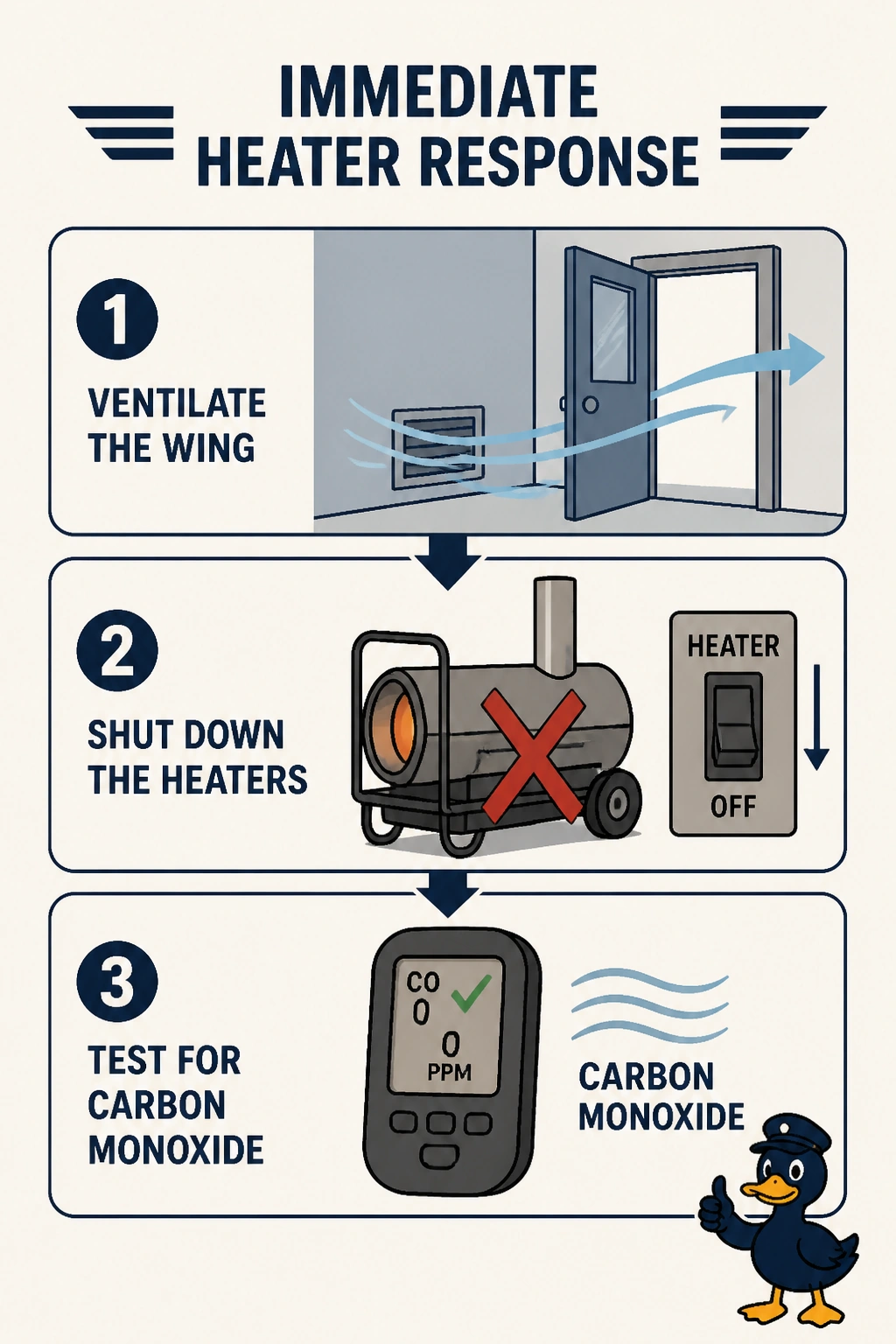
Short Explanation
You’re right to treat headaches and nausea near unvented heaters as an urgent warning, not ordinary winter discomfort. Shut down the heaters, ventilate the wing, and test for carbon monoxide; dust masks cannot filter this gas.
Full Explanation
Under OSHA 29 CFR 1926.154, temporary fuel-fired heaters require adequate fresh-air ventilation to prevent dangerous gas buildup. The supervisor should ventilate the wing, shut down the heaters, and test for carbon monoxide, while moving symptomatic workers to fresh air for medical evaluation. Disposable N95 filtering facepieces do not capture carbon monoxide gas and can even worsen breathing distress. Moving the heaters to the center of the room may address fire clearance from combustibles, but it leaves the sealed enclosure starved of oxygen and accumulating toxic combustion gases. Giving workers cold water and instructing them to take short outdoor breaks treats the symptoms like mild fatigue or dehydration while leaving the hazardous atmosphere active for returning crews. One important exam caveat is that carbon monoxide is colorless and odorless, so waiting for a fuel smell can miss dangerous concentrations. As a practical check, use a calibrated multi-gas monitor with a carbon monoxide sensor to verify the atmosphere after the heaters are shut down and ventilation is provided.
Prefer to study offline? Printable PDF study book + test engine ($7.50, unofficial). These questions stay free here.