
On a multi-story commercial buildout, masonry tenders must carry 90-pound bags of mortar mix 120 feet from the street curb to an interior elevator. Which ergonomic control should the supervisor implement?
Select an answer to reveal the explanation.
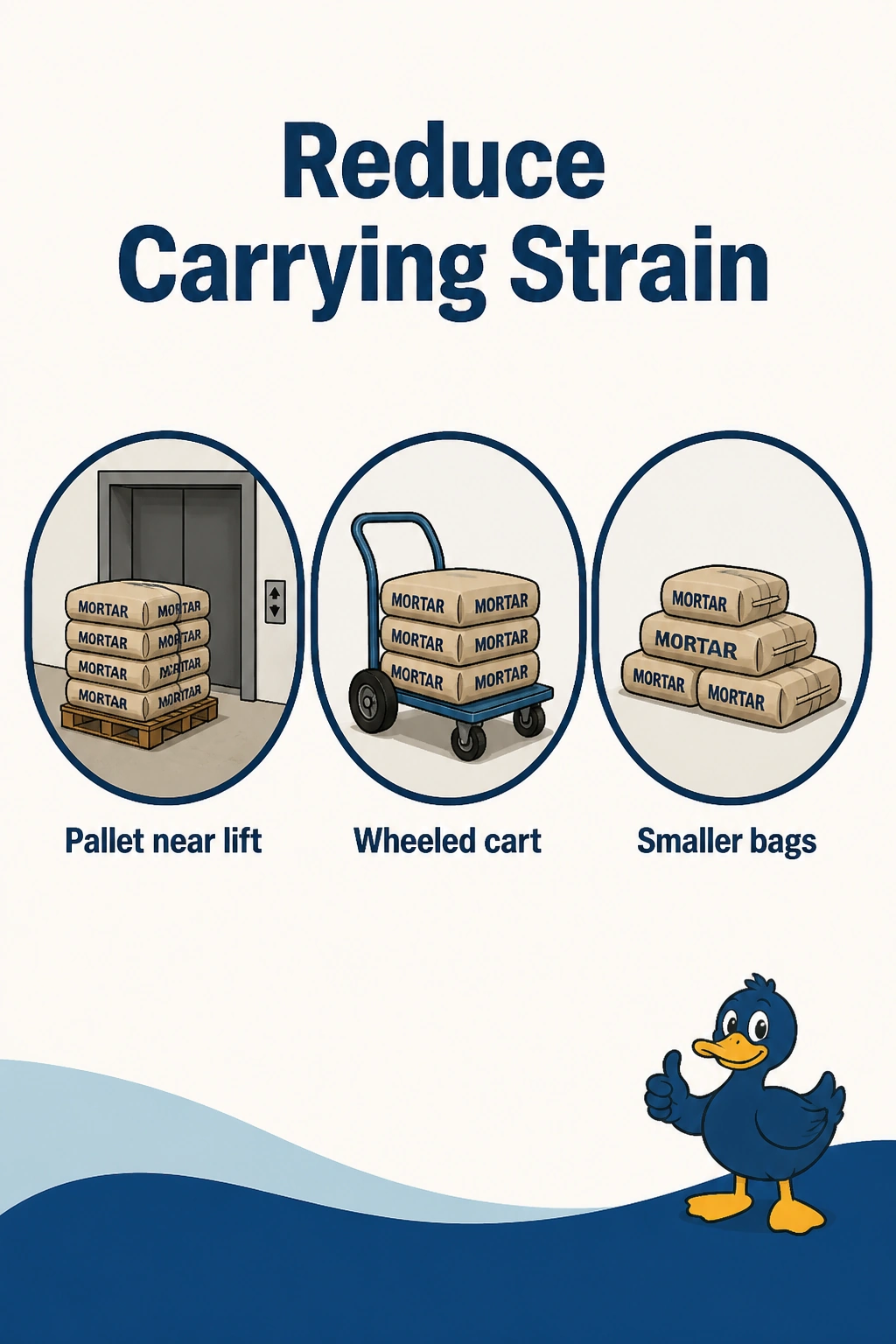
Short Explanation
Hauling 90-pound bags across a site is a fast track to blown backs, and telling crews to hustle only makes it worse. When you cut the carry distance and put the weight on wheels or in smaller bags, you fix the hazard at the source. Watch out for the trap of relying on back belts as ergonomic PPE.
Full Explanation
Applying the hierarchy of ergonomic controls, the supervisor should "Stage pallets closer to the lift and use wheeled carts or smaller bags" because eliminating long manual carries and reducing unit load weight directly lowers spinal compression and muscle fatigue. Choosing to "Tell workers to walk faster so each carry lasts less time" increases slip-and-trip risk and adds dynamic jarring forces to the lower back without reducing total weight handled. Choosing to "Require back belts for all tenders during bulk deliveries" relies on a measure that NIOSH has not found effective at preventing back injuries in uninjured workers and can create a false sense of security. Choosing to "Rotate tenders only after someone reports sharp back pain" reacts after tissue strain or injury has already occurred rather than preventing the overload proactively. As an operational caveat, check floor-loading limits and corridor widths before staging heavy pallets near interior lifts. For a practical field check, walk the delivery path with the material supplier before unloading to confirm cart clearance and minimal hand-carry distance.
Prefer to study offline? Printable PDF study book + test engine ($7.50, unofficial). These questions stay free here.