
During a commercial warehouse buildout, two floor-layer apprentices spend six hours kneeling directly on bare concrete slabs while installing vinyl base and report throbbing knee pain. Which control should the supervisor implement first?
Select an answer to reveal the explanation.
Short Explanation
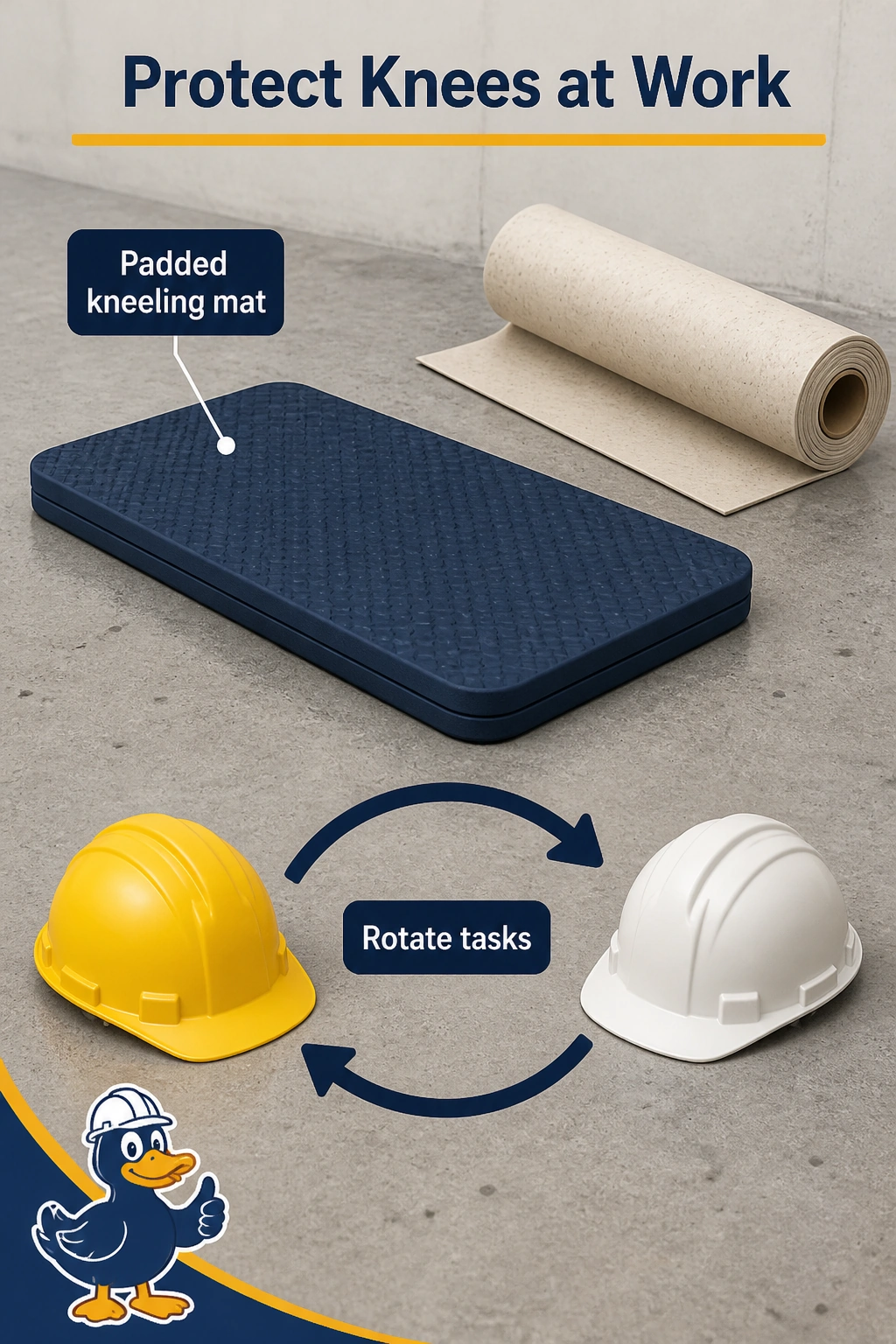
You’re right to focus on the hard surface: six hours of kneeling can create painful contact stress that thin clothing won’t cushion. Padded kneeling mats and regular task rotation address both pressure and time spent kneeling, unlike cardboard scraps or end-of-shift stretching alone.
Full Explanation
Prolonged kneeling on hard, unyielding concrete creates localized contact stress that compresses tendons, bursae, and blood vessels in the knee. Providing padded kneeling mats and rotating tasks regularly is the effective control because mats distribute body weight over a wider surface area, while rotation limits cumulative time in the kneeling posture. Thicker cotton work pants fail because woven fabric compresses flat under body weight and offers negligible shock absorption or pressure distribution. Folded cardboard scraps fail because cardboard crushes rapidly, can shift on smooth slabs, and introduces a slip hazard without reliable cushioning. Stretching exercises only at the end of the shift fail because post-shift stretching does not reduce the mechanical pressure workers experience during six hours of kneeling. Exam caveat: even with mats, kneeling still strains the lower extremities, so cushioning does not eliminate the need to reduce time in that posture. Before the next shift, inspect the mats for compressed foam and verify the schedule includes standing tasks every hour.
Prefer to study offline? Printable PDF study book + test engine ($7.50, unofficial). These questions stay free here.