
During a winter warehouse retrofit, a crew plans to run a gasoline-powered walk-behind concrete saw inside an unventilated basement, and two workers already report mild headaches. What should the supervisor do?
Select an answer to reveal the explanation.
Short Explanation
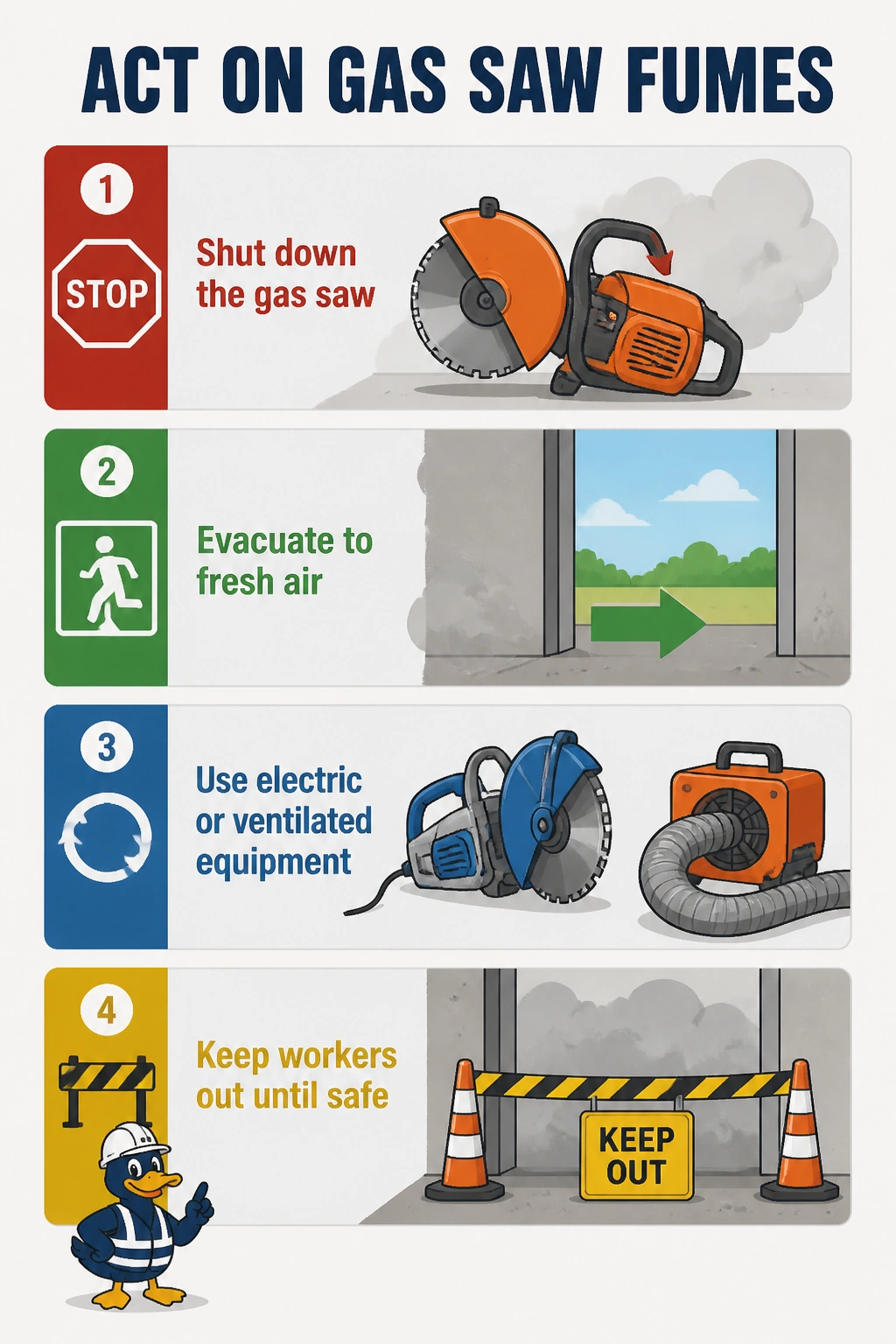
Carbon monoxide is an invisible thief that binds to hemoglobin before anyone smells a thing. When workers inside an enclosed basement already have headaches, your only safe move is to kill the engine, clear the room, and change the power source. The trap is handing out dust masks or shuffling operators while gas keeps building up.
Full Explanation
Gasoline engines emit carbon monoxide, an odorless, colorless toxic gas that displaces oxygen in the blood, so the supervisor must "Shut down the gas saw, evacuate to fresh air, and switch to electric or ventilated equipment". Removing the combustion source eliminates generation of the gas, and moving symptomatic workers to fresh air prevents progression from mild headache to confusion or collapse. Choosing to "Issue N95 filtering facepiece respirators to the crew and open the basement stairwell door slightly" fails dangerously because N95 particulate filters trap dust, not gases like carbon monoxide. Choosing to "Rotate operators every thirty minutes so no single worker breathes the exhaust for a full shift" still exposes every worker to rising indoor concentrations in an unventilated space. Opting to "Place a portable box fan behind the saw operator to blow visible exhaust haze toward the far wall" merely recirculates carbon monoxide around the basement rather than exhausting it outdoors. As a caveat, even electric saws require wet cutting or dust collection to control concrete silica, and any worker with persistent symptoms needs medical evaluation. Before restarting work, verify with a calibrated gas monitor that basement air has returned to safe levels.
Prefer to study offline? Printable PDF study book + test engine ($7.50, unofficial). These questions stay free here.