
While rigging a 3,500-pound steel beam for a crane pick, a rigger discovers the screw pin on a bow shackle is missing and offers to thread a Grade 8 hex bolt through the ears instead. What must the rigging foreman require?
Select an answer to reveal the explanation.
Short Explanation
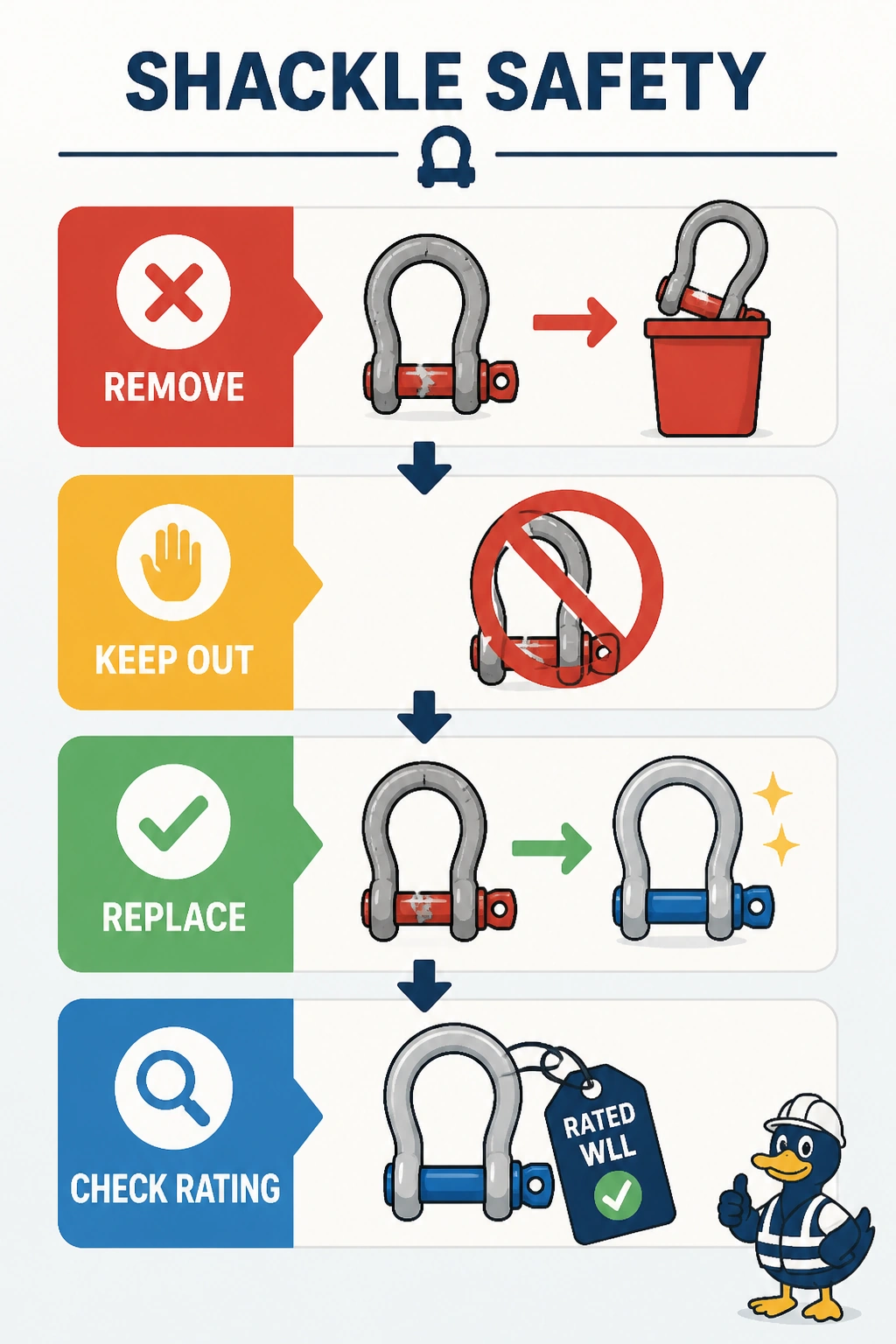
A shackle is only as strong as the factory pin engineered to match its body, so swapping in a hardware bolt turns your lift into a gamble. The trap is thinking a high-strength bolt or a lower load makes the rigging safe when uneven bearing and thread shear can fail without warning. Pull that incomplete shackle out of service and grab a complete, rated unit.
Full Explanation
Under 29 CFR 1926.251, rigging hardware must be used in accordance with manufacturer specifications and rated capacities, which depend on the matched alloy pin's diameter, shear strength, and shoulder seating. The foreman must Remove the shackle from service and replace it with a complete rated unit because only the manufacturer's pin is engineered to distribute load across the shackle ears without bending or shearing. Choosing to Allow the Grade 8 bolt if a locking nut is tightened flush against the ear fails because standard bolts lack the proper shank fit, shoulder stop, and tested rigging certification. Deciding to Use the shackle anyway as long as the beam weight stays below half capacity is unsafe because unrated hardware has no verified working load limit under dynamic crane forces. Attempting to Tape the bolt threads so the bolt cannot back out while the beam is suspended ignores structural shear failure and relies on tape rather than positive mechanical engagement. Caveat: mixing pins between different shackle brands or capacities is equally prohibited even if the threads appear to fit. Operational check: inspect every shackle before each lift to confirm the forged capacity markings are legible and the original factory pin seats fully.
Prefer to study offline? Printable PDF study book + test engine ($7.50, unofficial). These questions stay free here.