
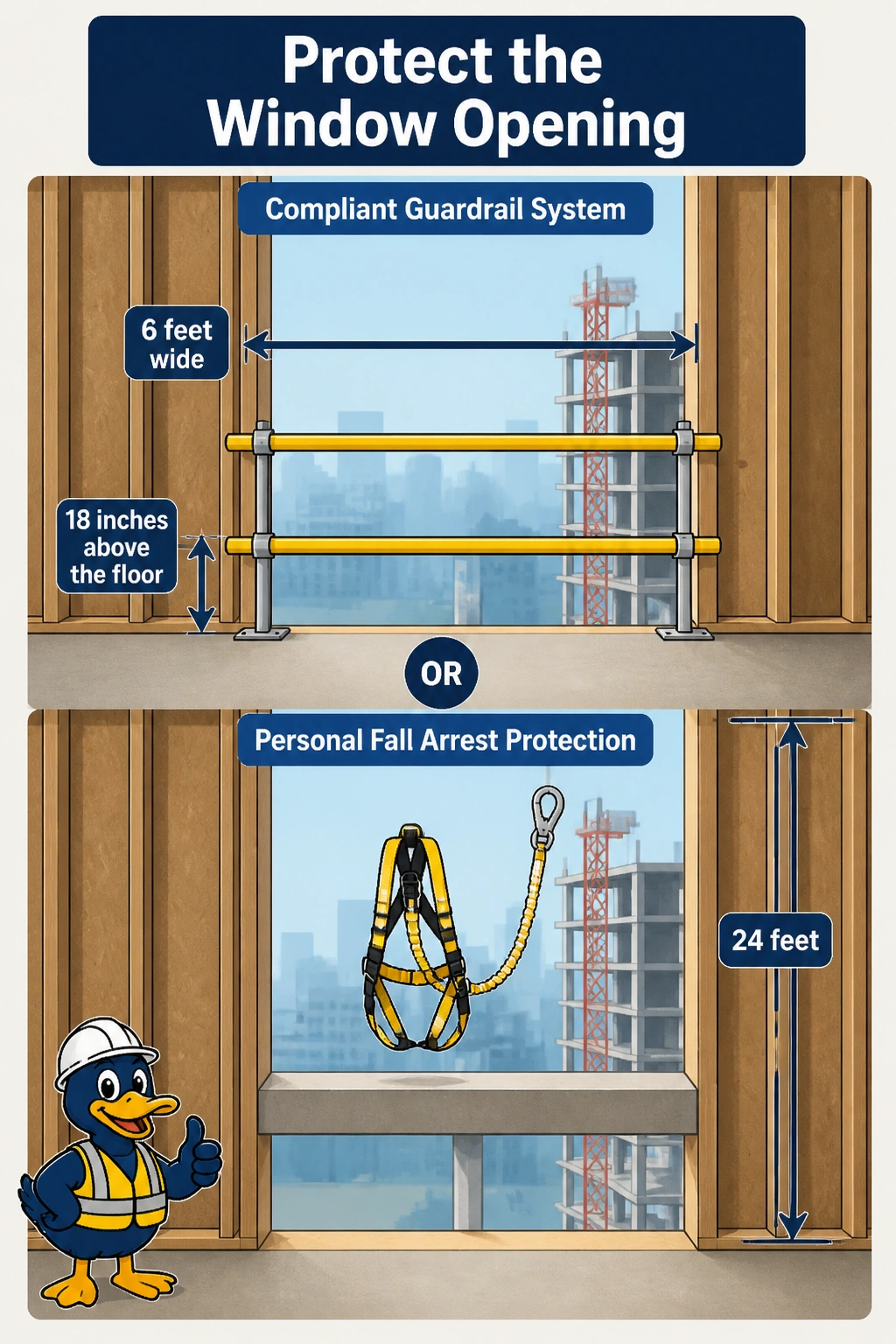
On the third floor of an apartment framing project, carpenters cut out a 6-foot-wide window opening whose bottom sill sits 18 inches above the floor, leaving an exterior drop of 24 feet. What must the foreman install before work continues near the opening?
Select an answer to reveal the explanation.
Short Explanation
A low window sill three floors up is an open invitation for a serious fall the moment a worker trips or backs up with a sheet of plywood. If the drop is 6 feet or more and the bottom edge is low, you need real physical protection. Do not fall into the trap of treating caution tape or a toeboard as a guardrail.
Full Explanation
Under OSHA 29 CFR 1926.501, when a wall opening has a drop of 6 feet or more to a lower level and the inside bottom edge is less than 39 inches above the walking surface, the foreman must install "A compliant guardrail system or personal fall arrest protection" to stop workers from falling out of the opening. Choosing "A single strand of red caution tape across the sill" provides only a visual reminder and cannot withstand any body weight if a carpenter stumbles against the opening. Choosing "A painted warning line two feet back from the wall" is not an authorized fall-protection substitute for a wall opening on an apartment framing floor. Choosing to install "A wooden toeboard nailed flush along the bottom sill" helps prevent tools or small materials from sliding off the sill, but it offers no upper-body barrier to prevent a person from falling over the 18-inch ledge. As a construction caveat, temporary guardrails at window openings must meet top-rail height and midrail requirements without blocking safe material-handling practices unless workers are tied off. For an operational check, inspect newly cut window and door openings at each floor level before releasing framing crews into the bay.
Prefer to study offline? Printable PDF study book + test engine ($7.50, unofficial). These questions stay free here.