
While inspecting a masonry staging area on a commercial build, a supervisor sees pallets of 80-pound mortar bags stacked 8 feet high in straight vertical columns that are starting to lean. What corrective action should the supervisor direct?
Select an answer to reveal the explanation.
Short Explanation
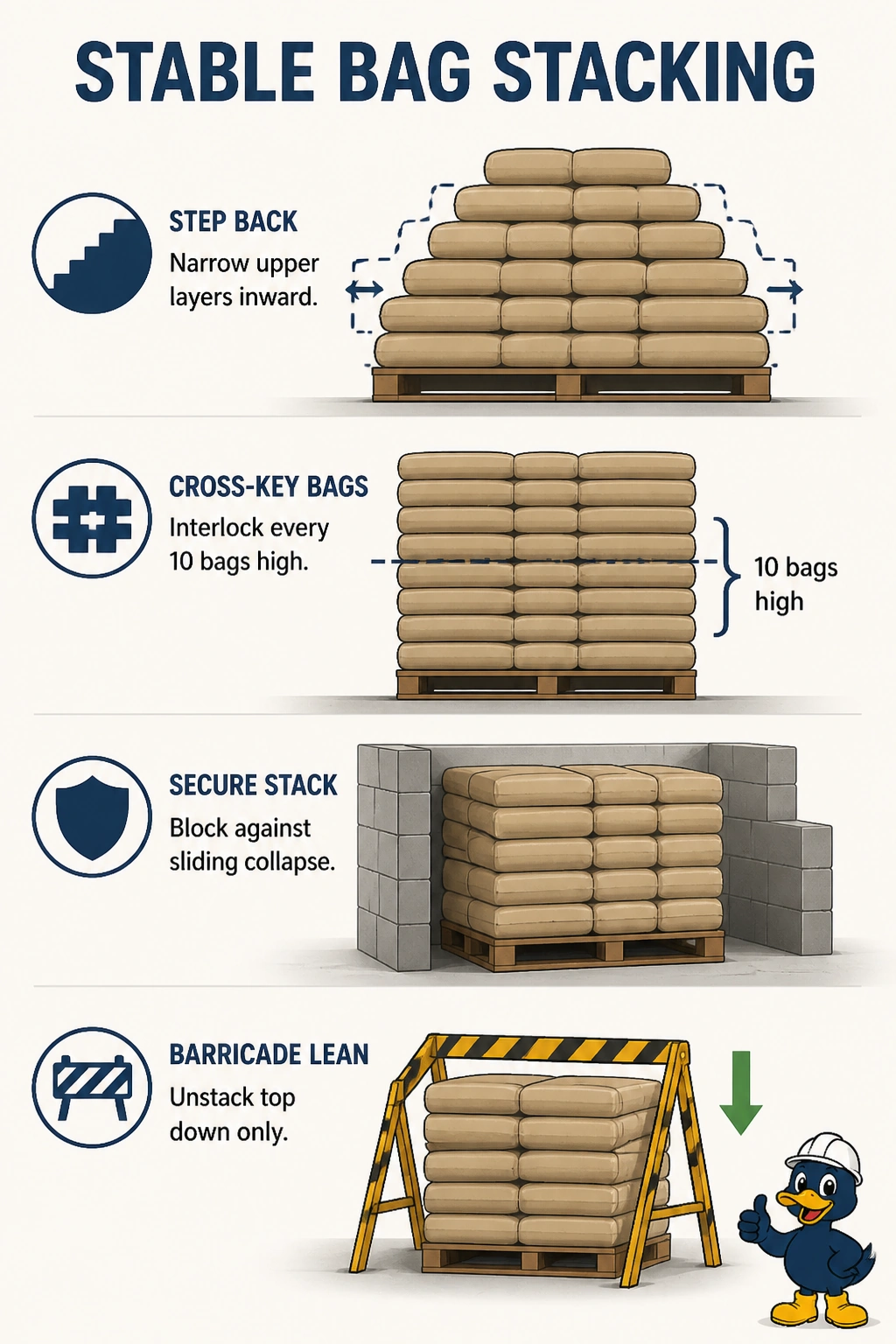
You’re right to treat a leaning stack of heavy mortar bags as a toppling hazard. Have your crew restack the bags with stepped-back layers and cross-keying at least every 10 bags high; plastic wrap, wooden props, or moving the pallets to the fence won’t make the stack safe.
Full Explanation
Under 29 CFR 1926.250(a)(1), stored materials must be stacked, blocked, interlocked, or otherwise secured against sliding, falling, or collapse. Section 1926.250(b)(4) specifically requires bagged materials to be stacked by stepping back the layers and cross-keying the bags at least every 10 bags high. Stepping back the layers narrows the center of gravity as height increases, while cross-keying interlocks adjacent bags so individual columns cannot peel outward and crush nearby workers. Wrapping the leaning vertical columns tightly with plastic stretch film only fails to correct the unstable geometry, and the entire pallet load can still topple. Propping wooden two-by-fours against the outside face creates a makeshift brace that can kick out suddenly when bags shift or a forklift passes. Moving the leaning pallets closer to the perimeter chain-link fence merely transfers the collapse hazard to the fence line, where pedestrians or passing crews could be struck. The exam caveat is that securing materials generally is required, but bagged materials have this specific stacking method. As a practical check, inspect the rebuilt, cross-keyed stack for plumb stability and ensure stored materials remain clear of walkways and fire exits.
Prefer to study offline? Printable PDF study book + test engine ($7.50, unofficial). These questions stay free here.