
Before hoisting a bundle of steel rebar with a tower crane, a rigging foreman inspects a wire rope sling and discovers a section with severe kinking and birdcaged strands. What must the foreman do with the sling?
Select an answer to reveal the explanation.
Short Explanation
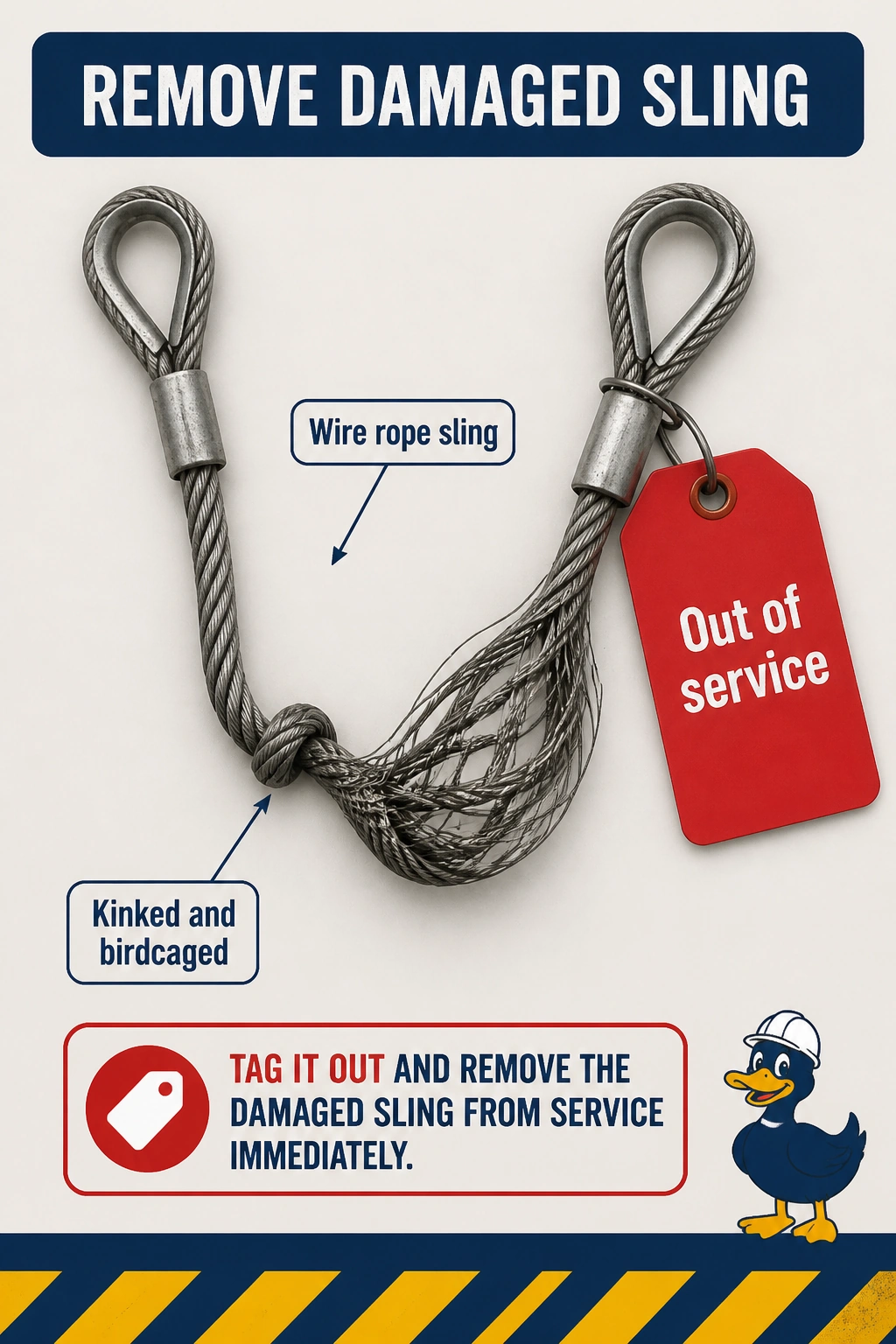
A kinked or birdcaged wire rope sling is like a cracked ladder rail—the damage is already inside the structure, even if it looks like it might hold one more pick. You have to pull it from service right away. The trap is thinking you can derate it for a light load or hammer the strands back into shape.
Full Explanation
Under OSHA 29 CFR 1926.251, severe kinking, crushing, or birdcaging permanently distorts the wire rope geometry and load-sharing among strands, so the foreman must "Tag it out and remove the damaged sling from service immediately" to prevent a catastrophic rigging failure. Choosing to "Use it only for light loads below half its rated capacity" relies on an unapproved field guess because deformed strands can snap unpredictably well below nominal working load limits. Choosing to "Hammer the kinked strands flat and re-inspect the sling" inflicts additional mechanical crushing and metal fatigue while masking internal wire damage. Choosing to "Wrap the damaged section with friction tape before lifting" hides a critical defect from the rest of the rigging crew and adds zero structural strength to the steel rope. As a rigging caveat, damaged slings should be physically rendered unusable or locked away, not merely set aside in a gang box where another crew might grab them. As a concrete operational check, perform a visual and tactile pre-use inspection of every sling before each shift and log removals.
Prefer to study offline? Printable PDF study book + test engine ($7.50, unofficial). These questions stay free here.