
During a busy commercial interior buildout, an electrical foreman notices a framing crew has stacked bundled steel studs and a job gang box directly in front of an energized 277/480-volt main distribution panel. What must the foreman require?
Select an answer to reveal the explanation.
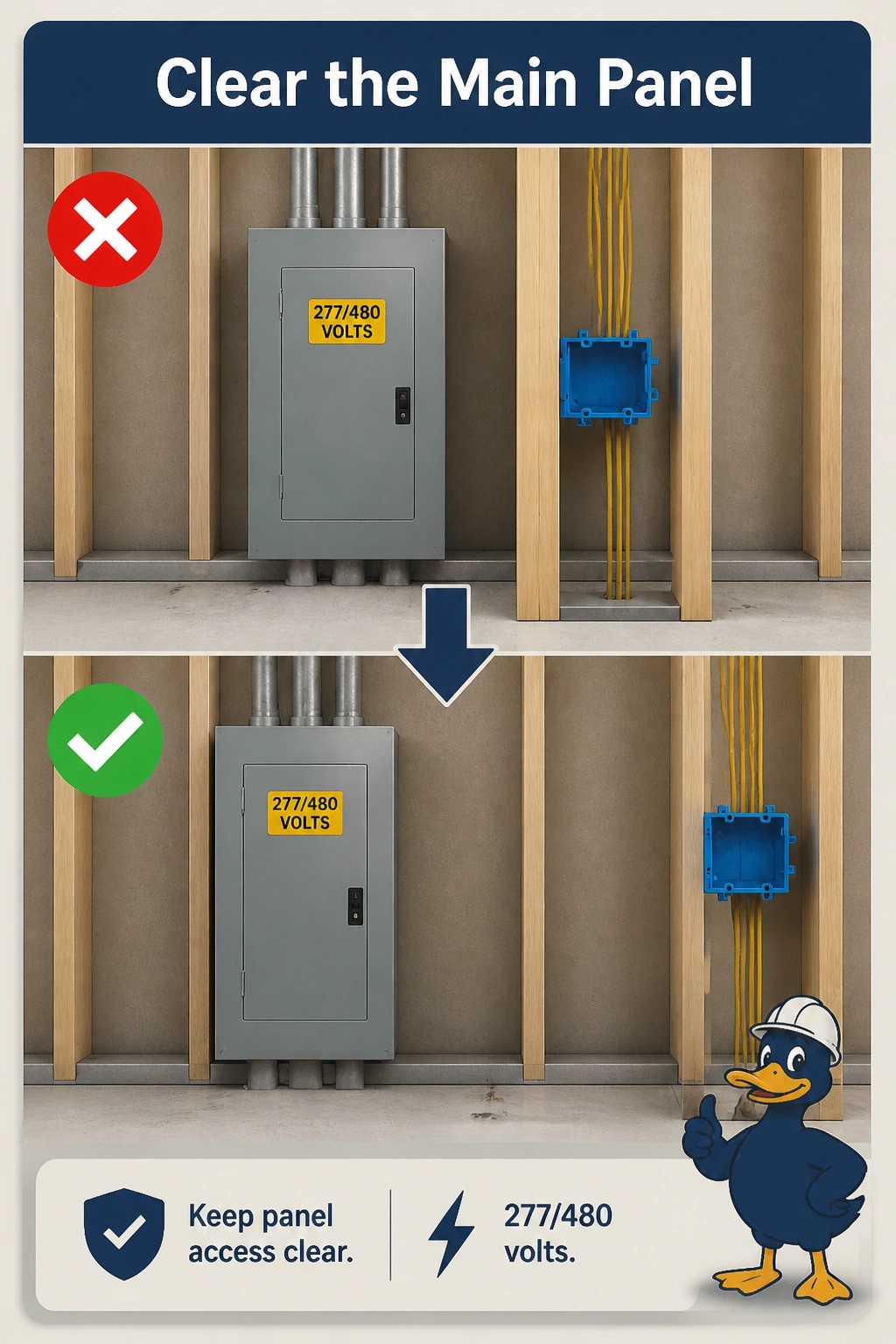
Short Explanation
Stacking studs in front of a live electrical panel is like parking a delivery truck in front of a fire hydrant. In an emergency, you need instant, unobstructed room to shut off power safely, so those materials must move right away. The trap is thinking a locked panel door or a sign makes blocking the workspace acceptable.
Full Explanation
Under 29 CFR 1926.403, sufficient access and working space must be provided and maintained around all electrical equipment to permit ready and safe operation and maintenance, and that working space must never be used for storage. The foreman must Relocate the studs and gang box immediately to keep panel access clear so workers can open the panel doors fully and reach disconnects without climbing over materials during an emergency. Choosing to Leave the studs in place as long as the panel door latch remains closed and locked still blocks emergency shutoff access and creates a trip hazard if an arc or fault occurs. Choosing to Allow the gang box to stay if a worker can still reach over it to trip the main breaker forces a worker to lean over conductive metal boxes near live equipment and violates clear working-space requirements. Choosing to Tape a warning sign on the gang box noting that an energized panel is behind it does not restore physical access or eliminate the obstruction. Caveat: temporary panels and branch-circuit subpanels require the same clear working space as main switchgear throughout construction. As an operational check, mark a painted or taped keep-clear zone on the floor in front of all active electrical panels during daily housekeeping walks.
Prefer to study offline? Printable PDF study book + test engine ($7.50, unofficial). These questions stay free here.