
A mobile crane arrives at a residential subdivision to set roof trusses, and the operator prepares to extend the outriggers directly onto rain-softened topsoil near a backfilled foundation wall. What must the foreman require before the crane lifts?
Select an answer to reveal the explanation.
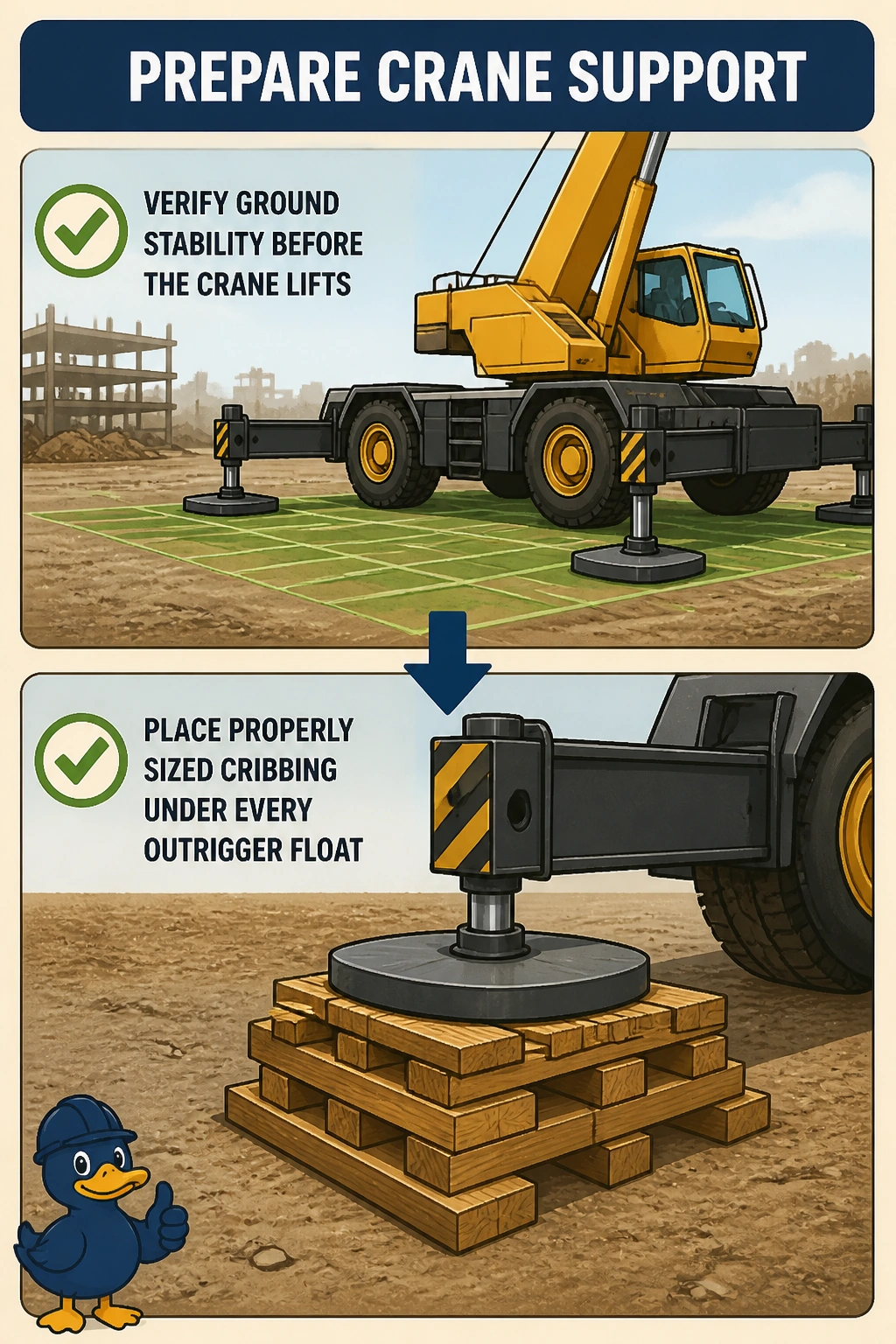
Short Explanation
A crane is only as steady as the dirt underneath it, and you never want to discover a soft trench backfill mid-pick. The trap is thinking a light load or a quick visual check on wet topsoil can replace solid cribbing and verified ground support.
Full Explanation
Under 29 CFR 1926.1402, the controlling entity must ensure ground conditions are firm, drained, and graded so supporting materials can handle the crane's load, especially near recent backfill. Choosing to Verify ground stability and place properly sized cribbing under every outrigger float distributes concentrated outrigger forces over a wider area and prevents sudden tip-over from soil punch-through. Deciding to Set the outriggers directly on the dirt and watch for sinking invites catastrophic collapse because wet topsoil and uncompacted backfill can fail instantaneously under load. Choosing to Keep the crane on rubber tires instead of extending outriggers drastically reduces rated capacity and still concentrates heavy wheel loads onto unstable ground. Opting to Lift half-bundles of trusses without checking the soil ignores the weight of the crane itself and boom leverage over soft earth. As a caveat, keep outriggers clear of foundation walls and underground utility trenches that could cave in under pressure. For an operational check, confirm the crane sits level on solid blocking and test-lift the first bundle a few inches to verify zero float settlement.
Prefer to study offline? Printable PDF study book + test engine ($7.50, unofficial). These questions stay free here.