
Before hoisting steel pipe racks on a commercial site, a rigging foreman inspects an alloy steel chain sling and finds its permanently affixed capacity identification tag is missing. What must the foreman do?
Select an answer to reveal the explanation.
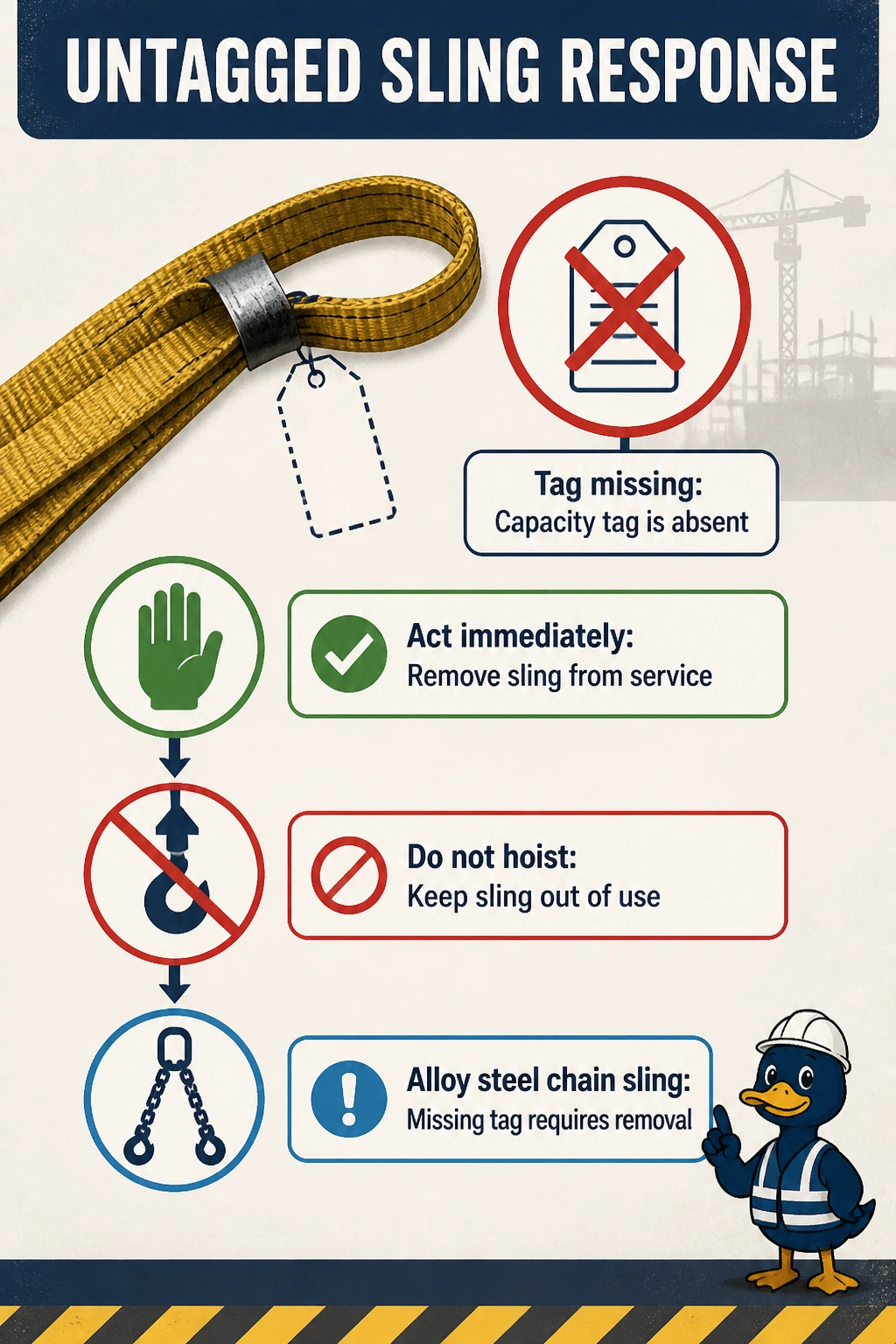
Short Explanation
A rigging sling without a capacity tag is like a bridge without a weight limit sign—you are only guessing what it can hold. The trap is estimating capacity by eye or reserving it for light loads instead of pulling it out of service right away.
Full Explanation
Under 29 CFR 1926.251, alloy steel chain slings must have permanently affixed, durable identification stating size, grade, rated capacity, and manufacturer, so the foreman must Remove the untagged sling from service immediately. Without verified identification, the crew cannot confirm the sling's working load limit or whether it has been repaired with non-rated components. Choosing to Measure the chain link diameter to estimate the capacity fails because steel grade and heat treatment determine strength just as much as link thickness, making field estimates unreliable. Deciding to Use the sling only for lightweight loads under 500 pounds fails because an untagged or damaged sling is prohibited from any hoisting regardless of load weight. Attempting to Paint a temporary capacity number onto the master link fails because field markings are not durable manufacturer certifications and can introduce errors across shifts. Keep in mind that rigging tags must also remain legible, not merely present. During pre-lift checks, physically read the stamped capacity tag on every sling and lock any untagged rigging inside a designated out-of-service bin.
Prefer to study offline? Printable PDF study book + test engine ($7.50, unofficial). These questions stay free here.