
A crane is hoisting a 2,000-pound precast concrete lintel into place on a second-story wall, and a laborer steps onto the open deck edge to grab the lintel's steel lifting eye by hand to stop it from spinning. What should the rigging foreman require instead?
Select an answer to reveal the explanation.
Short Explanation
Grabbing a swinging one-ton concrete beam by hand puts your fingers between a rock and a hard place—literally. The trap is stepping to the edge to steady a load when you should keep workers clear and guide rotation with a tag line.
Full Explanation
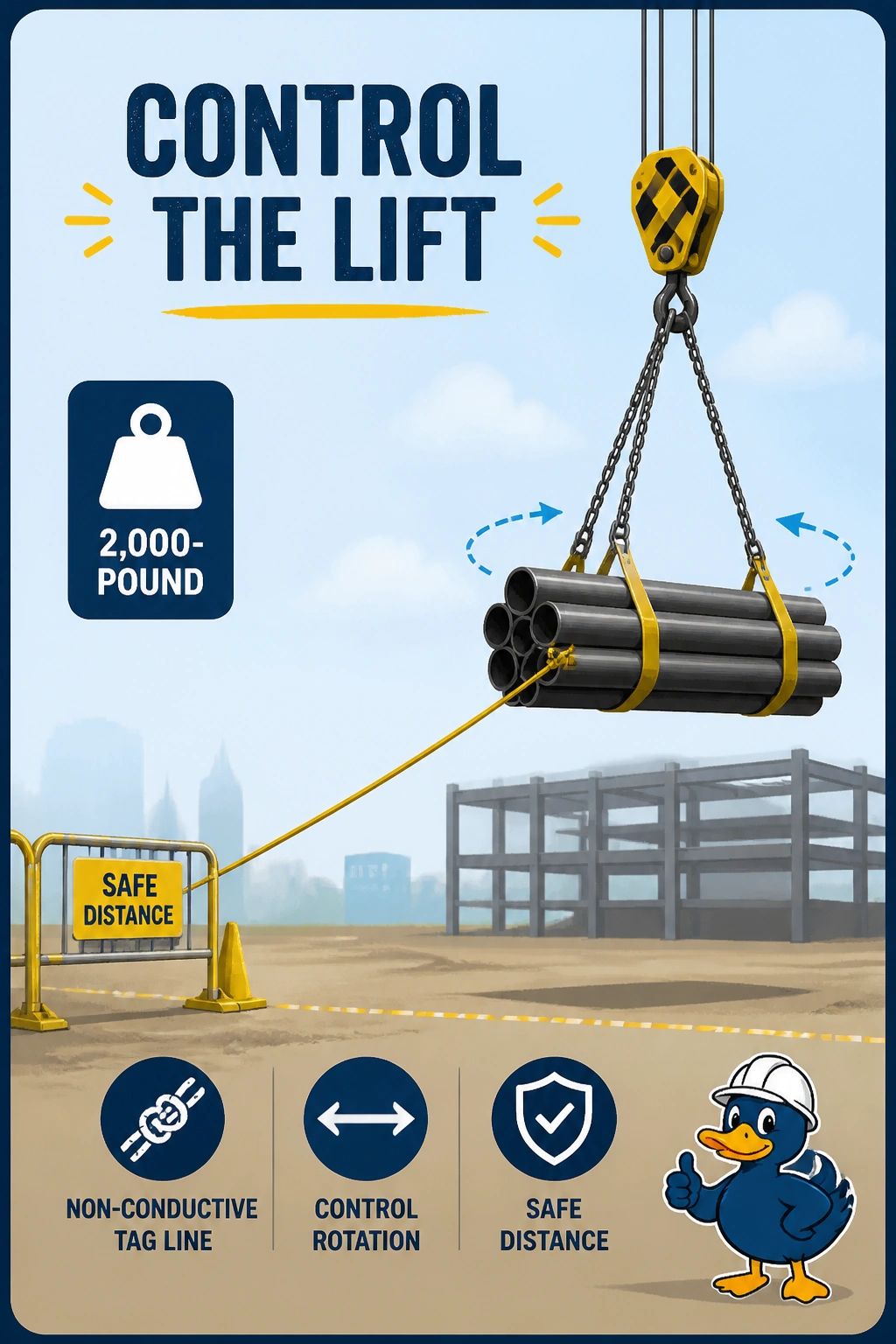
To prevent crush, pinch-point, and fall hazards during crane hoisting, the rigging foreman must "Attach a non-conductive tag line so a worker can control rotation from a safe distance" rather than touching the suspended precast lintel. A tag line keeps the worker out of the fall zone and away from the open edge while providing steady rotational control, and non-conductive rope reduces shock risk if the boom nears energized lines. Choosing to "Have two laborers hold opposite ends of the lintel by hand as it lands" places multiple workers directly in the crush and pinch zone. Choosing to "Tell the crane operator to swing the boom faster to dampen the spin" increases side-loading and momentum, making the load harder to control. Choosing to "Wrap a spare chain sling around the lintel and pull it with a pickup" introduces uncontrolled lateral force that can overload the crane boom or snap rigging. One caveat is that workers must never wrap a tag line around their wrists, hands, or waist in case the load shifts suddenly. Inspect the tag line for fraying and verify clear, unobstructed footing at the landing zone before the pick.
Prefer to study offline? Printable PDF study book + test engine ($7.50, unofficial). These questions stay free here.