
After an overnight heavy rainstorm, a utility crew returns to a 7-foot-deep trench that now holds standing water at the bottom and shows small soil sloughs along one wall. What must the foreman ensure before anyone enters?
Select an answer to reveal the explanation.
Short Explanation
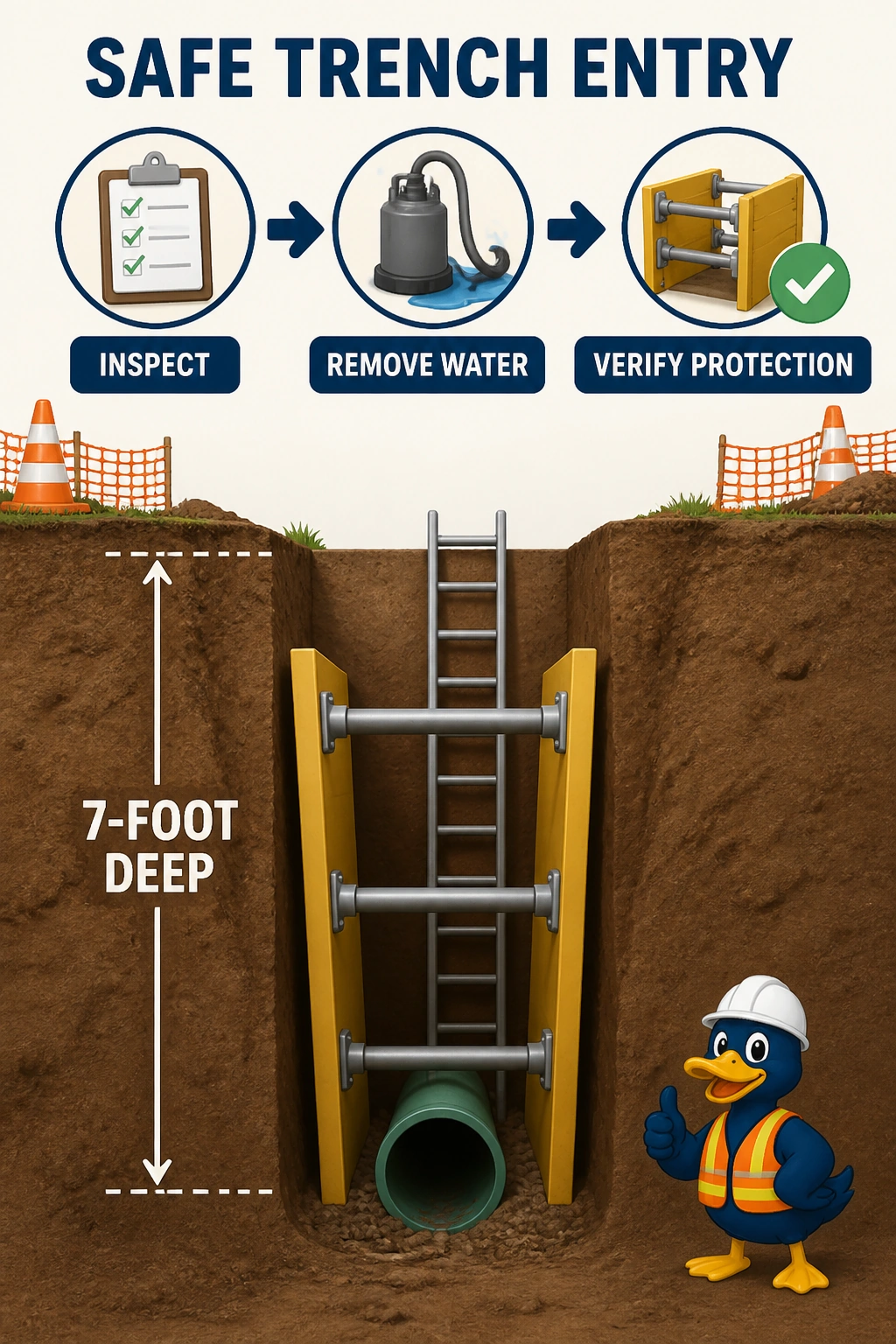
After heavy rain, you’re right to pause before anyone enters: the soil may have weakened, and sloughing is a warning sign. Make sure a competent person inspects the trench, the water is removed, and protection is verified first.
Full Explanation
Under OSHA excavation standards (29 CFR 1926.651(h) and 1926.651(k)), a competent person must inspect an excavation daily and after every rainstorm or other hazard-increasing occurrence. Workers cannot enter where water has accumulated unless specific precautions are in place. The foreman must have a competent person inspect the trench, remove the water, and verify protection before entry. Saturated soil weighs more and loses cohesion, so the small sloughs signal potential instability that must be evaluated before anyone climbs down. Laying wooden pallets across the bottom may keep workers above the water, but it does not address the standing water or unstable soil. Sending one worker down the ladder with a sump pump first exposes that worker to a cave-in before inspection and dewatering. Relying on yesterday’s afternoon sign-off because the trench shield was not moved overlooks the need for a new inspection after the rainstorm. Caveat: water-removal equipment must be monitored by a competent person to ensure safe operation. Practical check: lower pumps from the surface when possible and log the post-rain competent-person inspection before allowing entry.
Prefer to study offline? Printable PDF study book + test engine ($7.50, unofficial). These questions stay free here.