
A general contractor installs an automated external defibrillator (AED) in the main jobsite trailer for a two-year hospital expansion. What must the site supervisor verify during routine emergency-equipment inspections?
Select an answer to reveal the explanation.
Short Explanation
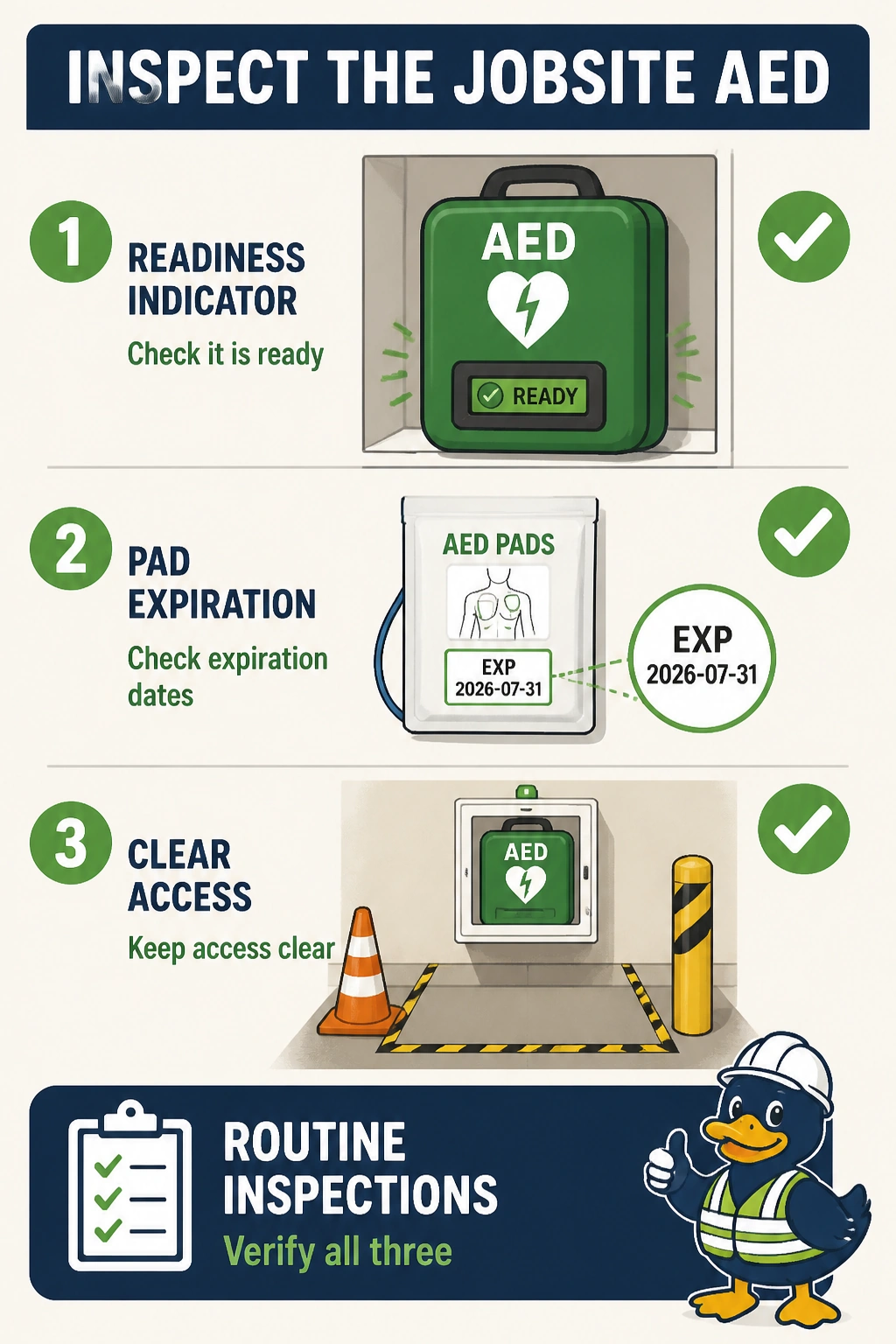
An AED does nobody any good if the pads are dried out or the cabinet is locked behind a missing key. Your routine emergency checks should verify readiness indicators, pad dates, and open access, avoiding the trap of locking life-saving gear away or testing it improperly.
Full Explanation
Sudden cardiac arrest requires immediate defibrillation within minutes, so routine emergency-equipment inspections must Check the readiness indicator, pad expiration dates, and clear access. A flashing or green status indicator confirms the self-test battery and circuitry are functional, intact unexpired electrode pads ensure proper skin adhesion and conductivity, and unobstructed signage lets any responder grab the unit without delay. Choosing to Confirm the AED cabinet stays padlocked at all times to prevent theft can fatally delay resuscitation while responders search for keys or bolt cutters. Deciding to Ensure only the project manager knows the code to open the AED enclosure creates a single-point bottleneck when that person is off site or across the project. Attempting to Test the AED by discharging a shock into a metal plate once a month damages the equipment, wastes single-use pads, and creates an electrical hazard instead of relying on the unit's built-in self-test. Caveat: verify that spare pads and a razor/towel kit are stocked inside the case, especially in dusty or humid construction trailers. Operational check: log the visual status light, battery status, and pad expiration date on the monthly emergency-equipment inspection tag and confirm the path to the cabinet is clear.
Prefer to study offline? Printable PDF study book + test engine ($7.50, unofficial). These questions stay free here.