
During an occupied hospital wing renovation, a site supervisor notices painters have wrapped plastic sheeting and masking tape tightly over active ceiling fire sprinkler heads and left them covered overnight. What must the supervisor require?
Select an answer to reveal the explanation.
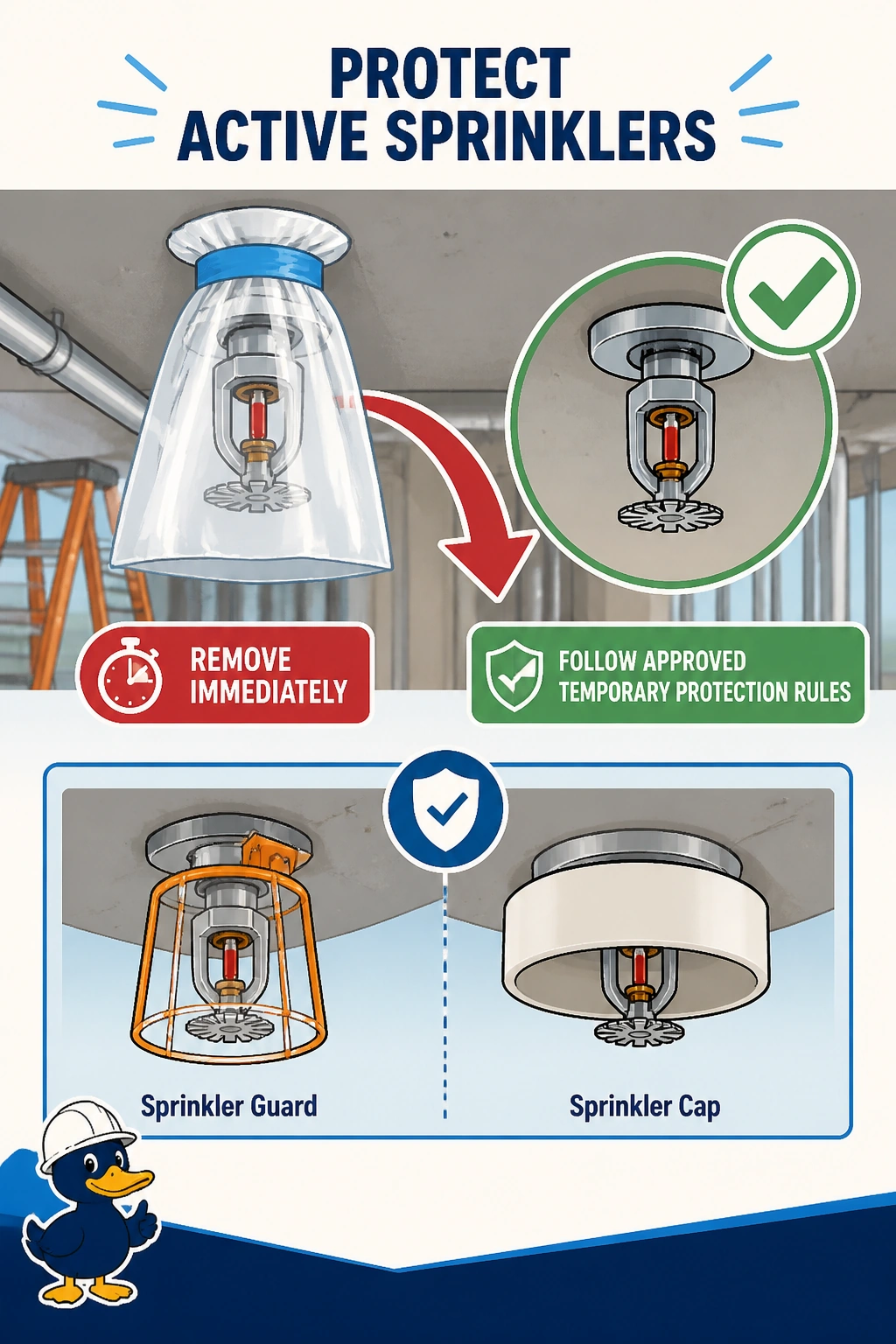
Short Explanation
You’re right to act quickly: plastic or paint can stop an active sprinkler from working while people are still in the building. Remove the coverings now, then follow approved temporary protection rules and make sure the heads are uncovered promptly after spraying.
Full Explanation
Automatic fire sprinklers depend on exposed, heat-sensitive elements to activate at their rated temperature and distribute water in a calibrated pattern. The supervisor must require immediate removal of the coverings and compliance with approved temporary protection rules. Approved temporary covers are used only during active spraying and removed promptly afterward, not left in place overnight. Leaving plastic on until punch-list touch-up painting is finished next week would leave life-safety protection impaired in an occupied building. Spraying ceiling paint over the heads can insulate the thermal element or glue moving parts shut; a head coated with dried paint must be replaced by a qualified sprinkler contractor rather than scraped clean. Poking a pinhole in each wrap does not solve the problem: plastic can still delay thermal activation and disrupt the deflector’s calibrated spray pattern. An exam caveat is that a sprinkler head already coated with dried paint requires replacement, not cleaning. As a practical check, inspect sprinkler heads in active finish zones at the end of every shift to verify they are clean and unobstructed.
Prefer to study offline? Printable PDF study book + test engine ($7.50, unofficial). These questions stay free here.