
A commercial contractor opens a new utility-corridor jobsite in a rural industrial park where 911 systems are not enhanced with automatic street-number display, and crews rely on mobile phones. What must the site supervisor post conspicuously at the site?
Select an answer to reveal the explanation.
Short Explanation
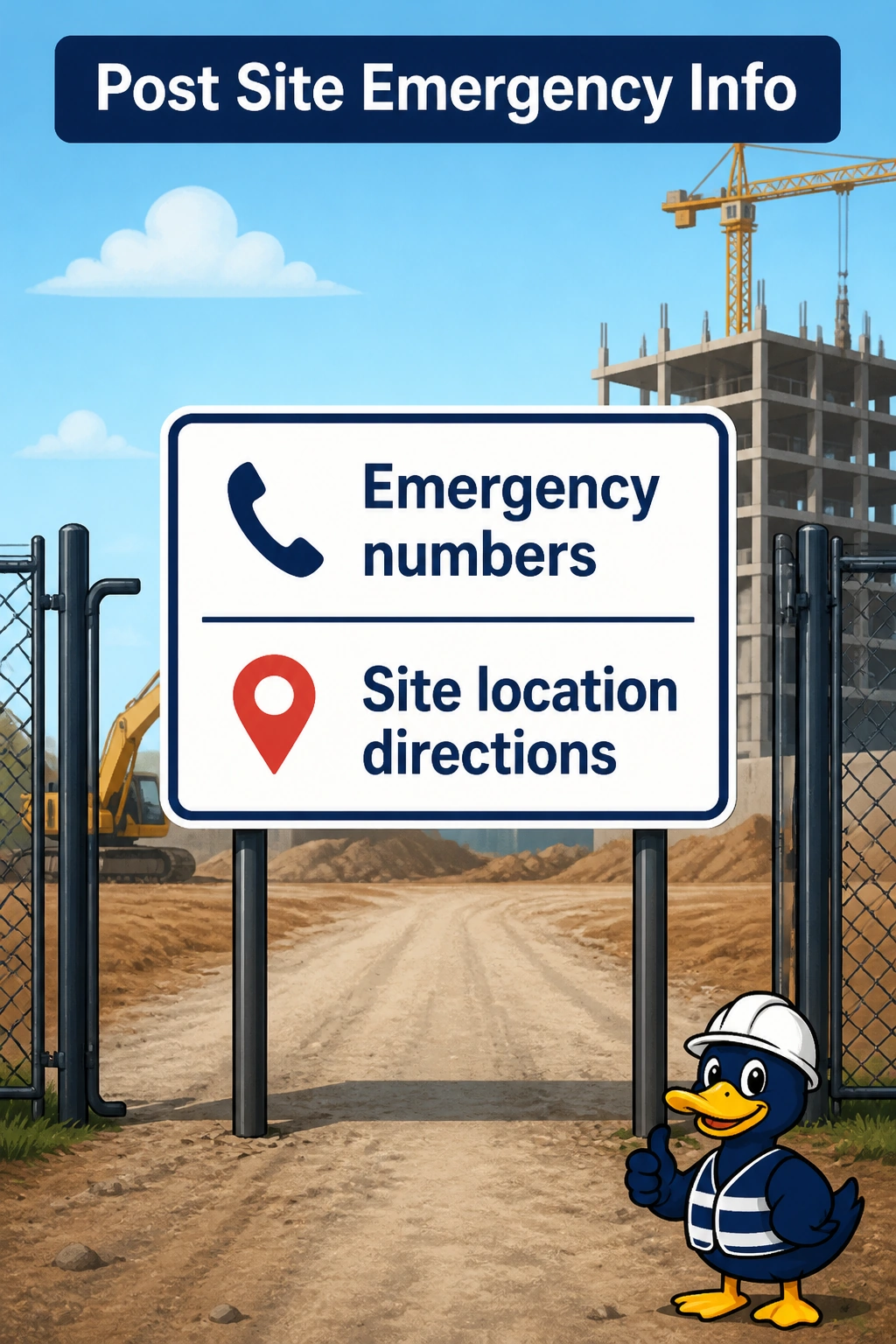
When an emergency hits, the worst time to figure out your jobsite's cross streets is while someone is bleeding. Posting emergency numbers and clear location directions where everyone can see them shaves precious minutes off response times. Avoid the trap of assuming a cell phone automatically tells dispatchers where you are.
Full Explanation
Where 911 is not available, 29 CFR 1926.50(f) requires conspicuous posting of physician, hospital, or ambulance numbers. Posting the site entrance and directions is the practical way for a caller to direct responders when the phone does not display the address. That is why posting "Emergency numbers and exact site location directions" is still the only useful choice for this rural utility corridor on mobile phones. Choosing "Only the project manager's personal cell phone number" creates a dangerous bottleneck if that person is off site, in a dead zone, or unavailable during a life-threatening emergency. Choosing "Only the digits 911, since mobile phones always display the jobsite address." fails because a cell call does not automatically give dispatchers the entrance, milepost, or GPS coordinates they need. Choosing "The general contractor's corporate billing address only" could send ambulances to a downtown headquarters miles away from the rural work area. As an emergency-planning caveat, update posted directions whenever trenching or road closures change the active ambulance access gate. For an operational check, walk the site trailer and gang boxes weekly to confirm the emergency contact and location placard is legible and current.
Prefer to study offline? Printable PDF study book + test engine ($7.50, unofficial). These questions stay free here.