
While cutting structural steel angles with a hydraulic shear, a worker suffers a complete finger amputation. After calling 911 and controlling bleeding, how should the trained supervisor care for the severed finger?
Select an answer to reveal the explanation.
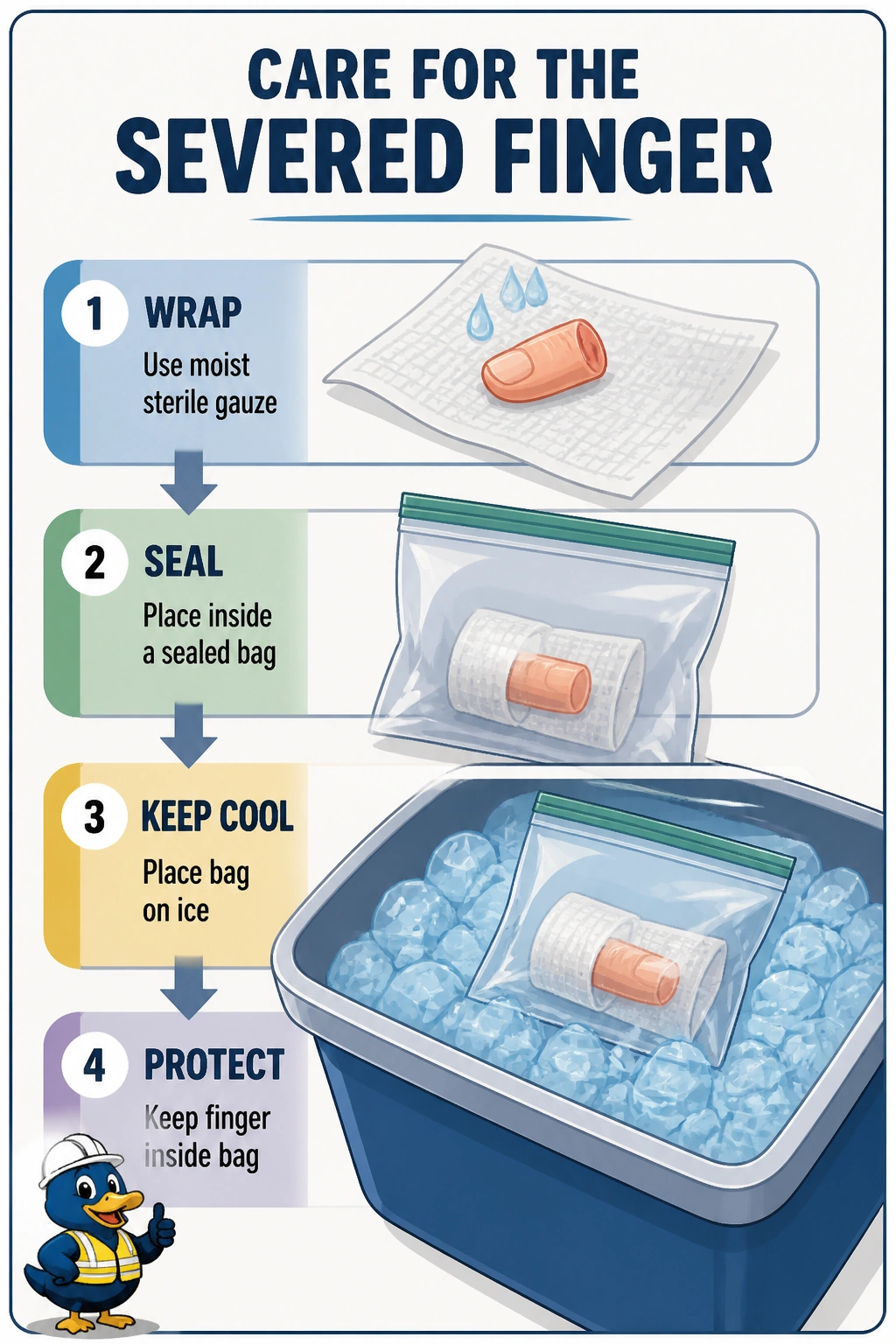
Short Explanation
In the shock of a jobsite amputation, keeping your head clear can save both the worker's life and the chance of reattachment. The trap is putting the severed tissue directly onto ice, which freezes and destroys delicate cells. Instead, you should keep the tissue cool and moist inside a sealed barrier separated from the ice.
Full Explanation
After activating 911 and applying direct pressure to control life-threatening bleeding, preserving amputated tissue properly gives surgical teams the best chance of successful reattachment. The correct procedure is to Wrap it in moist sterile gauze inside a sealed bag placed on ice, keeping the tissue cool to slow cellular breakdown while preventing waterlogging or frostbite. Choosing to Pack it directly against loose ice cubes inside a clean cooler freezes the tissue and damages blood vessels, often making reattachment impossible. Deciding to Submerge it in a cup of lukewarm tap water with mild dish soap accelerates tissue swelling and chemical irritation while failing to slow metabolic decay. Opting to Leave it untouched on the shop floor until emergency responders arrive exposes the tissue to heat, drying, and heavy contamination, and wastes valuable minutes. One important caveat is that life safety always comes first: never delay bleeding control or shock care to search for severed tissue. As an operational check, verify that jobsite first-aid kits are stocked with sterile gauze, saline or clean water, and heavy-duty sealable plastic bags, and confirm that every crew lead knows where the nearest ice source is located.
Prefer to study offline? Printable PDF study book + test engine ($7.50, unofficial). These questions stay free here.