
While clearing brush along a highway culvert project, a surveyor is stung by wasps, quickly develops hives and facial swelling, and begins wheezing while struggling to breathe. What should the trained site supervisor do immediately?
Select an answer to reveal the explanation.
Short Explanation
When hives and wheezing show up minutes after a sting, the airway is closing fast and every second counts. You must treat it as life-threatening anaphylaxis right away, because the trap is waiting to see if symptoms settle down or treating it like a minor skin itch.
Full Explanation
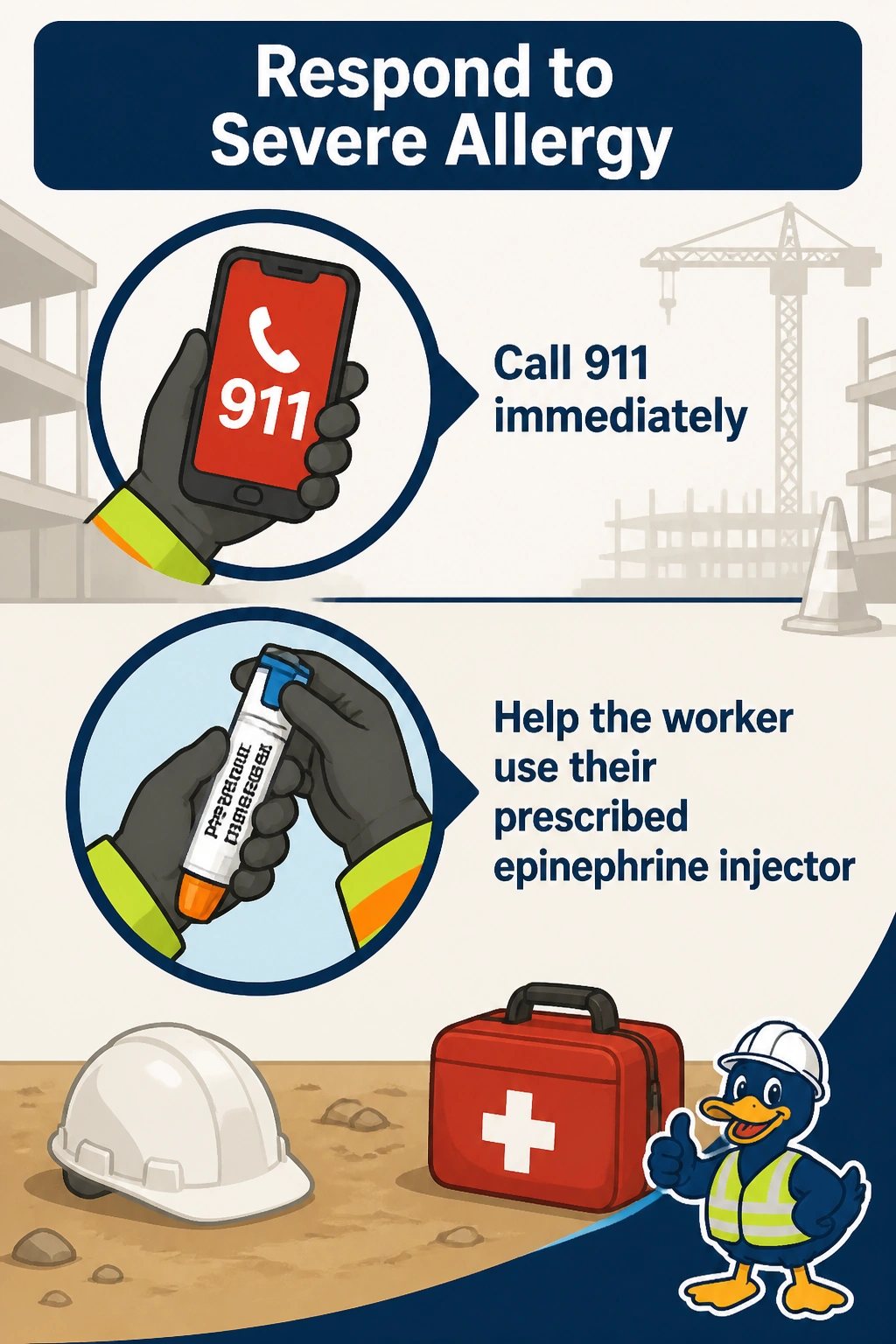
Rapid facial swelling, hives, and wheezing after an insect sting are classic signs of anaphylaxis, a life-threatening allergic reaction that can close the airway within minutes; therefore, you must call 911 immediately and help the worker use their prescribed epinephrine injector. Epinephrine rapidly reverses airway constriction and blood-pressure drop, buying critical time until paramedics arrive. Choosing to have the worker lie down in the truck cab and wait 30 minutes to see if swelling fades wastes the narrow window for life-saving intervention and risks respiratory arrest. Choosing to apply a cold compress to the sting site and drive the worker to a pharmacy for lotion treats a systemic airway emergency as a local skin irritation and delays EMS care. Choosing to give the worker a cup of coffee and tell them to take slow, deep breaths in the shade offers no medical benefit for anaphylaxis and risks choking if the throat swells. As a caveat, even if epinephrine improves breathing right away, emergency medical evaluation is still required because symptoms can rebound. For an operational check, send a crew member to meet EMS at the highway access point, monitor the worker's breathing continuously, and note the exact time of the sting and epinephrine dose for paramedics.
Prefer to study offline? Printable PDF study book + test engine ($7.50, unofficial). These questions stay free here.