
During a commercial flat-roof tear-off, overheated asphalt inside a mobile tar kettle ignites and flames shoot from the open lid while a laborer grabs a water hose. What must the roofing foreman order immediately?
Select an answer to reveal the explanation.
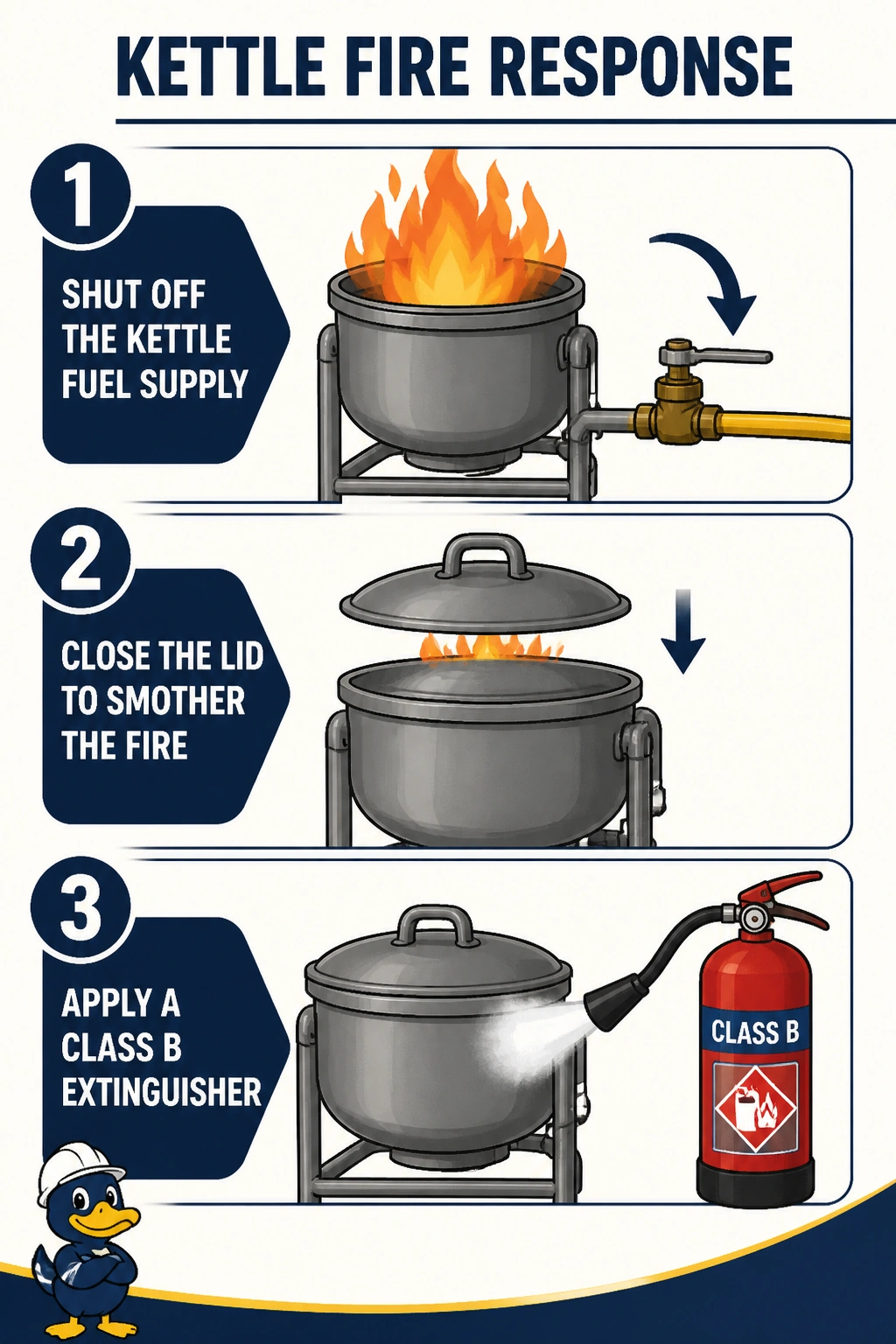
Short Explanation
Hot tar in a kettle behaves just like grease in a kitchen skillet, and water turns it into a violent fireball. You want to starve the flame of oxygen and fuel right away. The trap is reaching for a hose or water extinguisher, which flashes to steam and splatters burning asphalt across your crew.
Full Explanation
Burning roofing asphalt is a Class B flammable liquid fire at extreme temperature, so the correct action is to Shut off the kettle fuel supply, close the lid to smother the fire, and apply a Class B extinguisher. Cutting the propane or burner feed removes the heat source, closing the hinged steel lid deprives the fire of oxygen, and a dry chemical Class B agent interrupts the chemical chain reaction without disturbing the molten liquid. Choosing to Apply a steady stream of water from a nearby hose to cool the kettle shell and extinguish the asphalt causes water to sink below the hot tar, flash into steam, and erupt in a burning boil-over. Similarly, choosing to Use a pressurized water extinguisher from the roof deck to knock down the flames before closing the lid introduces water into superheated bitumen and spreads the fire onto workers and roofing materials. Trying to Leave the kettle lid propped open while tossing damp sand onto the burning surface from the ladder keeps fresh oxygen feeding the flames and exposes the worker to steam splatter from moisture in the sand. Caveat: if the fire grows beyond the incipient stage or threatens propane cylinders, evacuate upwind and call 911 immediately. As an operational check before lighting any kettle, verify the lid latch moves freely, a rated Class B extinguisher sits upwind within easy reach, and the propane shutoff valve is clearly accessible.
Prefer to study offline? Printable PDF study book + test engine ($7.50, unofficial). These questions stay free here.