
During a commercial warehouse interior buildout, a spark from a grinder ignites a small pile of cardboard packaging near a loading bay wall. A trained carpenter grabs a nearby ABC dry-chemical extinguisher to put out the incipient fire. What positioning rule must the carpenter follow while discharging the extinguisher?
Select an answer to reveal the explanation.
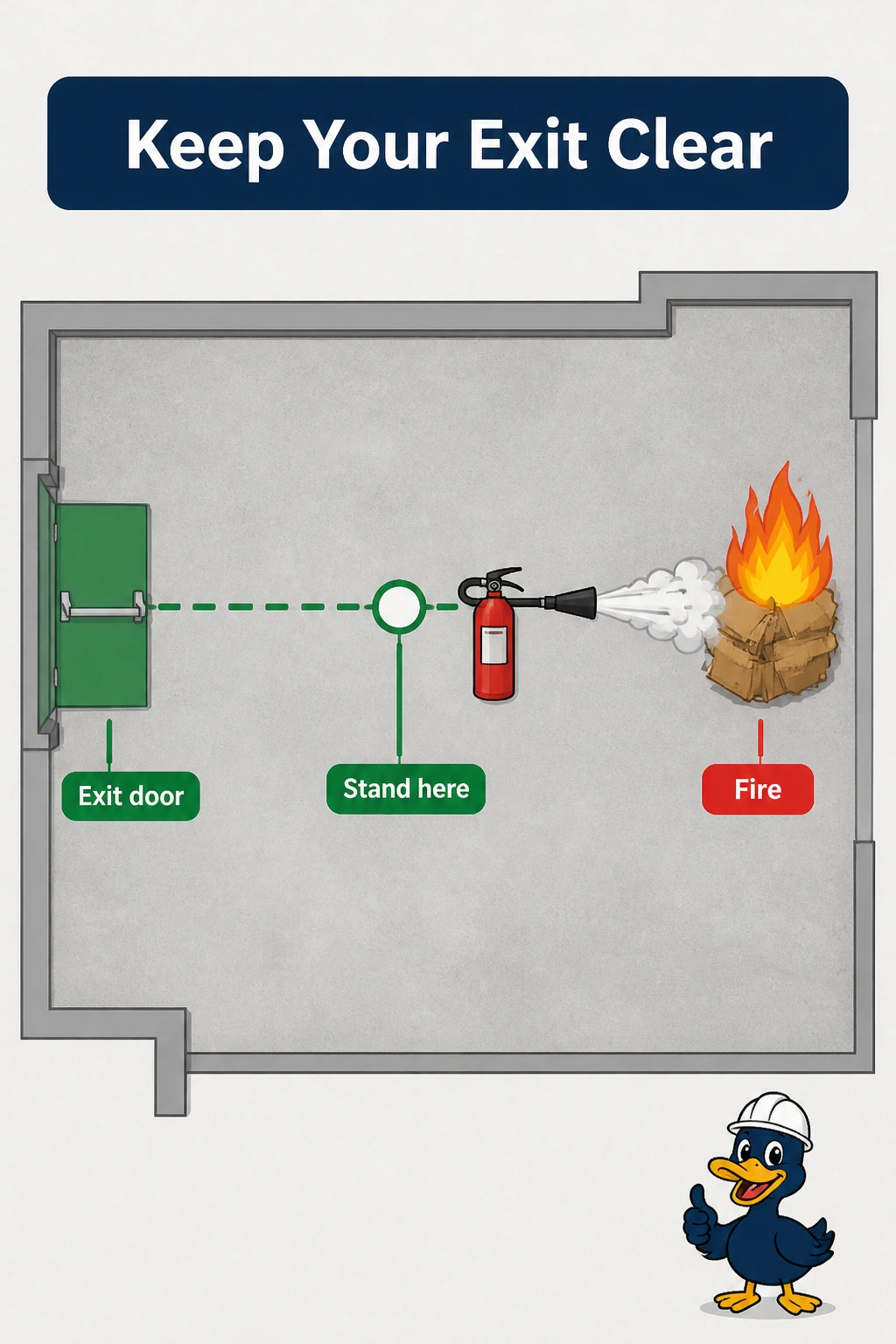
Short Explanation
Fighting an incipient fire is a bit like stepping into a ring—you never want the fire to cut off your way out. Before you discharge the extinguisher, keep an unobstructed exit path directly behind you so you can retreat if conditions worsen. Don’t let your focus on the flames keep you advancing into smoke or a spreading fire.
Full Explanation
Before discharging a portable extinguisher on an incipient Class A fire, keep an unobstructed exit path directly behind you. If the fire grows, flares up, or produces heavy smoke, you can retreat immediately instead of becoming trapped against a wall or stored materials. Standing downwind so rising smoke clears the work area puts you in the path of toxic smoke, heat, and embers; staying upwind helps preserve clearer visibility and breathing air. Aiming directly at the top tips of the flames first wastes extinguishing agent above the burning fuel; proper PASS technique directs the stream at the base, where the fuel is burning. Continuing to advance even if thick smoke fills the bay ignores basic emergency response limits: portable extinguishers are intended for small, incipient fires when visibility and safe egress remain. As an operational caveat, never attempt to fight a fire unless you are trained, the alarm has been sounded, and the correct extinguisher class is available. For a quick field check, confirm during weekly inspections that exit paths near extinguisher stations are clear of stacked pallets and debris.
Prefer to study offline? Printable PDF study book + test engine ($7.50, unofficial). These questions stay free here.