
A carpenter on a residential framing site falls onto a protruding steel tie-rod, leaving a six-inch metal rod impaled deep in their thigh. What should the trained site supervisor do immediately while awaiting emergency responders?
Select an answer to reveal the explanation.
Short Explanation
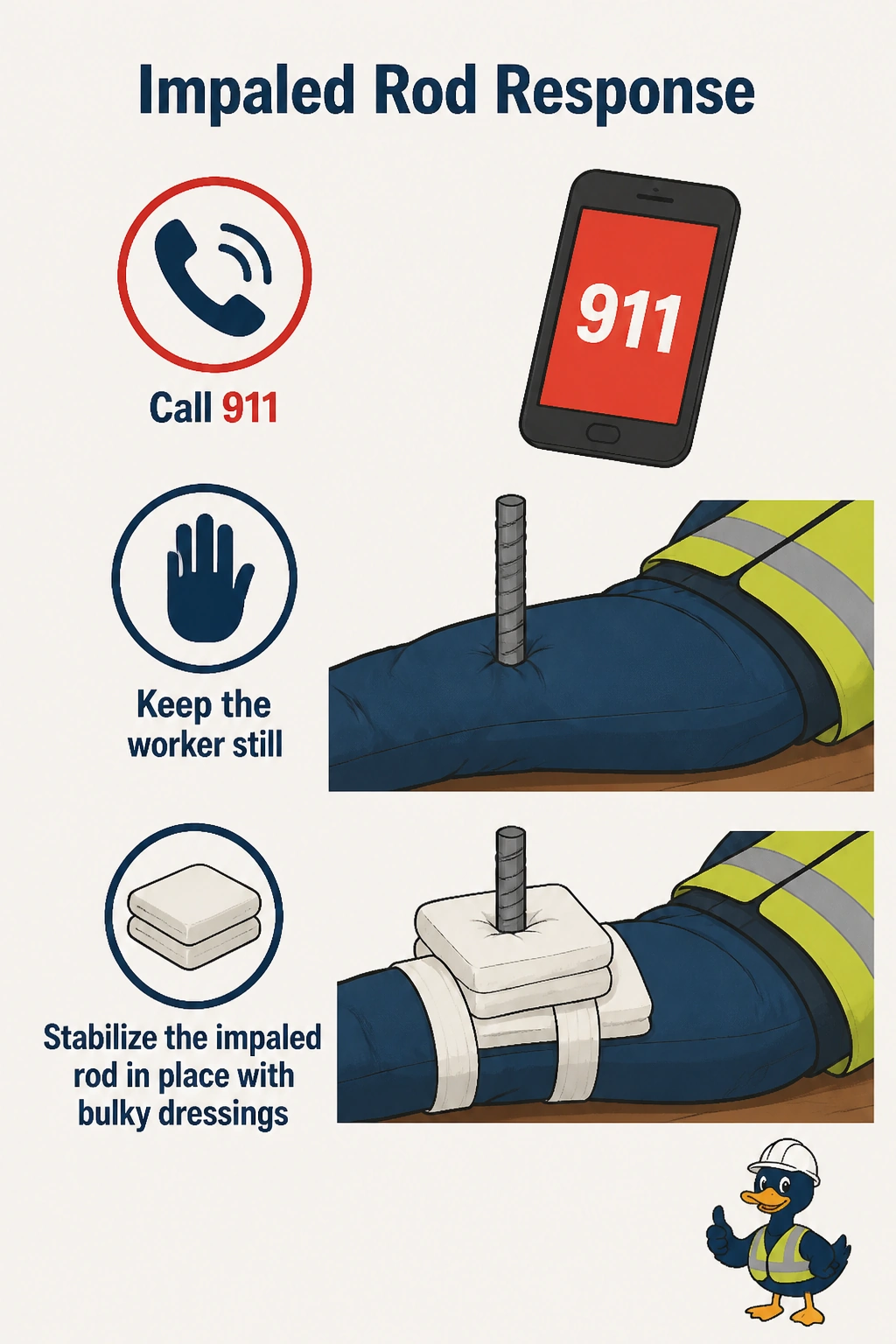
An impaled object acts like a cork in a bottle—pulling it out can unleash catastrophic internal bleeding. Your job is to call 911 and stabilize the rod right where it sits with bulky dressings, resisting the urge to yank it free or move the worker.
Full Explanation
When a worker suffers an impalement injury, the embedded object often compresses severed blood vessels and temporarily limits hemorrhage. Choosing to Call 911, keep the worker still, and stabilize the impaled rod in place with bulky dressings prevents further tissue tearing and preserves that internal tamponade until trauma surgeons can remove the object safely. Choosing to Pull the metal rod straight out quickly so a clean pressure dressing can be applied risks fatal arterial bleeding and deeper muscle or nerve damage. Attempting to Cut the rod off flush with the skin using bolt cutters to make transport easier creates violent vibration and torque inside the wound, worsening internal bleeding unless emergency responders specifically need to shorten an immovable structure. Deciding to Walk the injured carpenter to a pickup truck for a faster drive to the clinic can dislodge the rod, worsen shock, and delay advanced life support. One caveat is that if the worker's airway is obstructed by an impaled object in the cheek or neck, EMS dispatchers must guide emergency care immediately. As an operational check, control any external bleeding around the entry site without pressing on the rod, treat for shock, and assign a worker to meet the ambulance at the gate.
Prefer to study offline? Printable PDF study book + test engine ($7.50, unofficial). These questions stay free here.