
While priming a basement mechanical room, a painter becomes dizzy and disoriented from concentrated epoxy vapors, and the supervisor moves the worker to fresh air and calls 911. Which document must the supervisor provide to arriving paramedics?
Select an answer to reveal the explanation.
Short Explanation
When a worker is overcome by chemical vapors, paramedics need the exact ingredient list—just like a doctor needs to know which medication you took. The trap is handing over general safety paperwork instead of the chemical's specific emergency profile.
Full Explanation
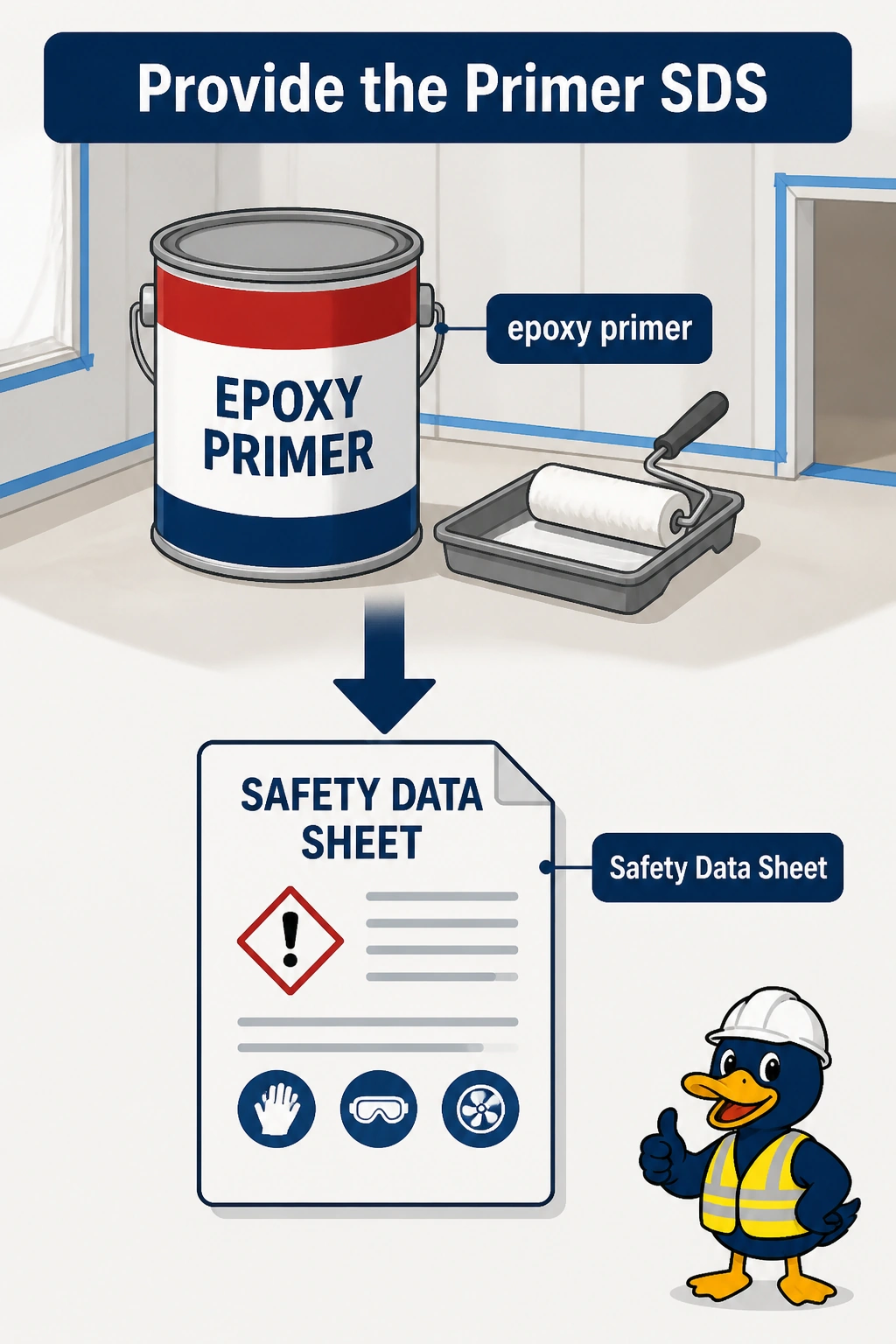
Providing The Safety Data Sheet for the epoxy primer used in the room gives emergency medical responders immediate access to exact chemical ingredients, acute health effects, first-aid measures, and medical treatment guidance. Keep the SDS readily accessible to employees under 1910.1200(g)(8), and hand that SDS to the paramedics so they have the first-aid and ingredient information. Handing responders The morning Job Hazard Analysis form listing the crew's planned tasks describes work steps and general controls, but it does not list chemical compositions or clinical treatment details. Providing The subcontractor's site orientation log and daily attendance roster only confirms who was briefed and present on site without identifying the toxic exposure. Supplying The project's weekly safety audit summary and corrective action tracker documents broad site conditions rather than the specific product involved in the emergency. As a caveat, responders also need to know the estimated duration of exposure and whether any other solvents were mixed nearby. Before every shift involving coatings or adhesives, verify that the current Safety Data Sheet is accessible at the work area so a supervisor can hand it directly to EMS.
Prefer to study offline? Printable PDF study book + test engine ($7.50, unofficial). These questions stay free here.